How to Know if a Water Heater Is Bad
Learn how to tell if your water heater is failing, diagnose common issues, and decide between repair or replacement with step-by-step guidance from Heater Cost.


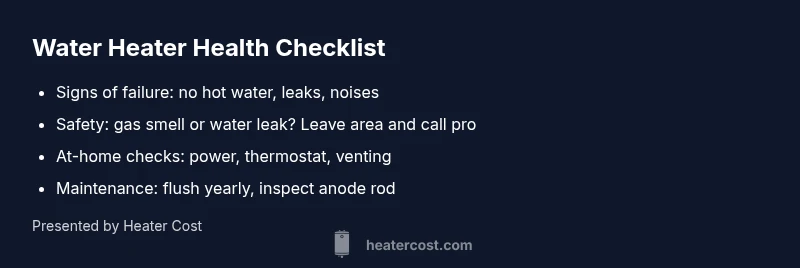
To know if your water heater is bad, start with clear signs: no hot water, fluctuating temps, and leaks. If you smell gas or notice a puddle, shut off fuel or power and call a pro immediately. According to Heater Cost, these symptoms are common early warnings that point toward repair or replacement as needed.
What to watch for when your water heater is failing
Few household issues are as disruptive as a failing water heater. When symptoms emerge, you need a calm, methodical approach. According to Heater Cost, the most common signs are a drop in hot water temperature, inconsistent temperatures, and longer heating times. You may also notice small puddles near the base of the unit, a rotten egg smell indicating gas issues, or rusty-looking water that stains laundry. If you see any of these signs, start with basic safety checks and then plan next steps. This section explains practical checks you can perform to decide whether a repair or replacement is warranted. The guidance reflects Heater Cost Analysis, 2026, which summarizes typical failure points and safe response strategies.
Common causes of water heater failures you can spot
Water heaters fail for a handful of reasons, and many are addressable without full replacement. Sediment buildup at the bottom of the tank is especially common in areas with hard water; it reduces efficiency and can lead to overheating. A failing thermostat or damaged electric heating element can produce insufficient hot water or inconsistent temperatures. For gas models, issues with the burner or venting can cause incomplete combustion or dangerous buildup. The anode rod protects the tank from corrosion; when it wears out, tank leaks may follow. Finally, a leaking tank or worn-out pressure-relief valve can appear after years of use. Understanding these causes helps you prioritize fixes, but some problems require a professional assessment to ensure safety and code compliance.
Safe, at-home checks you can perform before calling a pro
Before you call a technician, perform these safe checks. Visually inspect the area for leaks and moisture around the tank; a slow drip can escalate into a major problem. Check the power status for electric models or the gas supply for gas models; ensure switches or valves are on and accessible. Verify the thermostat is set to a reasonable temperature (often around 120°F/49°C). Listen for popping or rumbling sounds that indicate sediment; if heard, a flush may help. If your unit has an aluminum anode rod, check for excessive corrosion. If you smell gas or notice a hissing flame issue, leave the area and contact the gas company or emergency services immediately. These checks reduce risk and help you describe symptoms more precisely to a pro.
How to diagnose the most common failure: no hot water
Start with the easy checks: confirm power to an electric heater and fuel supply to gas units. For electric models, test the circuit breaker and reset if needed; for gas units, ensure the pilot and main burner are functioning. Next, verify the thermostat settings and test the upper and lower heating elements if accessible. If there is a consistent cold output, drain a small amount of water from the drain valve to observe water temperature changes and listen for any valve leaks. If the issue persists after these steps, the problem could be sediment buildup, a bad thermostat, or a failing heating element, which typically requires professional service or tank replacement.
Routine maintenance steps you can perform now
Proactively maintaining your water heater can prevent many issues. Start by turning off power to the unit and letting it cool. Then, drain a few gallons to remove loose sediment, following the manufacturer's instructions. Inspect the anode rod and replace if heavily corroded. Finally, test the pressure-relief valve and ensure the expansion tank (if present) is functioning.
When to seek professional help and what to expect
If you notice gas odors, pooling water that worsens over time, significant rust on outlet water, or you’ve exhausted basic at-home checks without a resolution, professional service is warranted. A licensed technician will assess electrical connections, venting, and safety devices, diagnose the root cause, and present repair or replacement options. Expect a diagnostic visit, a clear estimate, and an explanation of the pros and cons for repair versus replacement. Regular maintenance tips can help you avoid repeat visits.
Quick tips to avoid future problems
- Schedule annual inspections and keep up with flushing and safety checks.
- Use a filter or water softener if you have hard water to reduce sediment buildup.
- Set the thermostat to a safe, energy-efficient temperature and avoid abrupt changes.
- Address small leaks promptly to prevent corrosion and mold growth.
Steps
Estimated time: 60-120 minutes
- 1
Ensure safety and shut off utilities
Turn off power to an electric heater at the circuit breaker, or shut off the gas supply for a gas heater. If you detect a gas leak, evacuate and call emergency services. Allow the unit to cool before touching any components.
Tip: Never attempt repairs on a hot unit; wait until it’s cool. - 2
Check fuel, power, and basic controls
Confirm the appliance is receiving power or fuel. Reset any tripped breakers and verify the gas shutoff valve is open. Inspect the thermostat setting and adjust to around 120°F (49°C) if it’s set too high or too low.
Tip: Document current settings before changing them so you can revert if needed. - 3
Look for leaks and inspect the exterior
Visually inspect the tank and connections for puddles, corrosion, or damp spots. Tighten loose fittings if safe, and check the cold-water inlet and hot-water outlet for signs of dripping.
Tip: A flashlight helps you spot small leaks you might miss. - 4
Flush sediment from the tank
Shut off power/gas, connect a hose to the drain valve, and slowly open the valve to let water flow until clear. Close the valve, remove the hose, and restore power/gas. This helps restore efficiency and hot water delivery.
Tip: Take safety precautions: water may be hot; wear gloves and eye protection. - 5
Test the safety valve and anode rod
Carefully test the T&P valve per manufacturer instructions and replace the anode rod if severely corroded. These steps protect against tank failure and prolong life.
Tip: Only perform this if you’re comfortable; improper handling can cause injury. - 6
Evaluate need for repair or replacement
If leaks persist, or hot water quality remains poor after flushing and part replacements, consult a professional. They can provide a formal assessment and discuss options.
Tip: Keep a record of symptoms and dates to help the technician diagnose quickly.
Diagnosis: No hot water or irregular hot water; leaks; noises; rusty water
Possible Causes
- highPower or fuel supply issue
- mediumThermostat set incorrectly or faulty
- highSediment buildup in tank
- highLeaking tank or faulty pressure-relief valve
- mediumHeating element failure (electric models)
Fixes
- easyCheck power or gas supply and reset breakers or relight gas if needed
- easyAdjust thermostat to a safe setting and test temperatures
- easyDrain and flush the tank to remove sediment buildup
- mediumInspect/replace the pressure-relief valve or tank if leaking
- mediumReplace heating element or thermostat on electric units
Got Questions?
What are the early warning signs that my water heater is failing?
Watch for no hot water, fluctuating temperatures, leaks, and unusual noises. Rusty water or gas odors are red flags. If you notice these, stop using the unit safely and seek a professional assessment.
Common early signs include no hot water, temperature fluctuations, leaks, and unusual noises. Rusty water or gas odors require immediate attention.
Can I fix common water heater problems myself?
Some basic checks, like adjusting the thermostat or flushing the tank, can be DIY. More complex issues with gas lines, the heating element, or the tank should be handled by a licensed professional.
Some basic tasks you can do yourself, but major gas or structural issues need a pro.
Is flushing the tank worth it?
Flushing helps remove sediment that reduces efficiency and can cause overheating. Do it per the owner’s manual and consider annual maintenance for best results.
Yes, regular flushing improves efficiency and life. Follow the manual for the right frequency.
What should I do if I smell gas around the heater?
Leave the area immediately, avoid flames or sparks, and call your gas company or emergency services. Do not attempt repairs yourself.
If you smell gas, exit safely and call protection services right away.
How long do water heaters typically last?
Most water heaters last many years with proper maintenance, but wear and usage vary. If you frequently need repairs, replacement may be more cost-effective.
With good maintenance, many units last a long time; frequent repairs often point to replacement.
Should I replace the anode rod?
Yes, if the rod shows heavy corrosion or wear. Replacing it can slow tank corrosion and extend life, delaying a full replacement.
If the anode rod is badly corroded, replace it to protect the tank and extend life.
Watch Video
The Essentials
- Identify signs early to prevent costly failures
- Perform safe, simple checks before calling a pro
- Regular maintenance reduces emergency repairs
- Repair or replace based on safety and cost considerations