How to Tell When Your Hot Water Heater Is Going Bad
Urgent, practical steps to identify a failing hot water heater and decide between repair or replacement. Learn signs, safety notes, and budgeting tips from Heater Cost.


The most likely causes are a failed thermostat or heating element, power or gas supply issues, and sediment buildup. Start with the simplest checks: reset the circuit breaker (or gas valve), confirm the gas supply is on, and look for leaks. If hot water still won’t come, follow the diagnostic flow below.
Signs your hot water heater is failing
If you're researching how to tell when hot water heater is going bad, start with the most obvious indicators: inconsistent hot water temperatures, discolored or metallic-tasting water, unusual noises from the tank, visible leaks or damp spots, and unexpectedly high energy bills. These signals don’t always mean the unit is beyond hope, but they do suggest the internal components are wearing down. Early detection helps you plan maintenance or replacement on a schedule rather than in a crisis. Heater Cost’s approach is to empower homeowners to act calmly and safely, prioritizing quick checks you can perform before calling in a pro. The goal is to identify whether you need a simple fix, a repair appointment, or a full replacement.
Age and wear: how age impacts failure risk
Age is a practical clue when assessing a water heater’s health. While there is no universal expiration date, older units tend to develop more frequent leaks, harder-to-reach sediment, and reduced efficiency. The exact age at which to replace depends on usage, water quality, maintenance history, and the model. If you notice a spike in energy costs, a drop in hot water volume, or frequent repairs, those are common motivations to reassess value. The Heater Cost team emphasizes that age alone isn’t a guarantee, but it does correlate with a higher probability of failure. Consider your comfort with ongoing maintenance and the cost of replacements in your decision.
Common failure symptoms in detail
No hot water or wildly fluctuating temperatures are the most obvious symptoms. You might also observe rusty-looking water, a rotten-egg smell (more common with gas units due to anode rod corrosion), or sediment in the tank that causes cloudy water and reduced heating efficiency. Leaks around the base or a bath-tub-like status under the heater signal corrosion or a failed tank seal. Boiling or banging noises indicate mineral buildup or burner/element issues. If you notice any of these signs, do not ignore them; documenting when they began will help a technician diagnose the root cause faster.
Do-it-yourself checks you can safely perform today
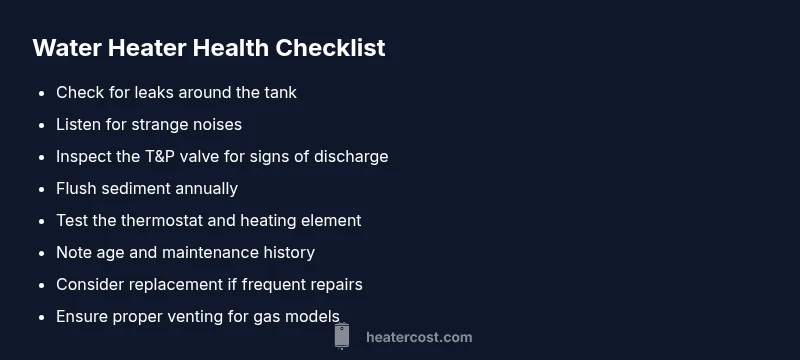
Before you call a professional, run through a few simple checks to avoid unnecessary service charges. First, cut power or shut off the gas to the heater. For electric heaters, reset the circuit breaker; for gas heaters, ensure the gas supply valve is fully open and the pilot/ignition is functioning. Inspect the thermostat setting and verify it’s not accidentally reduced. Look for visible leaks at the tank and nearby piping, and check the pressure/temperature relief valve for signs of leakage or corrosion. If you’re comfortable, you can flush a small amount of water from the drain valve to observe sediment, but avoid draining a full tank unless you know what you’re doing. If symptoms persist after these steps, it’s time to contact a professional.
When to repair vs replace: cost considerations and practical decision making
Repairs can be sensible for relatively new or well-maintained units with isolated issues like a faulty thermostat, igniter, or a leaking valve. Replacement becomes more sensible as the unit ages, when frequent repairs accumulate, or when efficiency losses would raise operating costs. Evaluate not just the upfront price but also long-term energy savings, warranty status, and the potential for future leaks or failures. A professional assessment can determine whether a repair or replacement offers the best value over the next several years. Heater Cost recommends weighing immediate costs against ongoing reliability and safety.
Safety reminders and prevention tips
Gas water heaters require proper venting and carbon monoxide awareness. If you smell gas, hear hiss or see condensation around the vent, evacuate and call the gas company immediately. Always shut off power/gas before inspecting, and never bypass safety devices. Regular maintenance reduces surprises: drain the tank annually to reduce sediment, inspect the anode rod if you know how, and test the T&P valve. Consider installing an expansion tank or upgrading insulation to improve efficiency and longevity. Keeping a maintenance schedule helps prevent unexpected failures.
Steps
Estimated time: 60-90 minutes
- 1
Power down and safety check
Turn off electrical power at the breaker or switch off the gas supply. Let the unit cool before touching any components. Safety first to avoid shock or burns.
Tip: Label the circuit to avoid accidental re-energizing. - 2
Verify supply & controls
For electric heaters, confirm the breaker is on and the thermostat is set correctly. For gas heaters, ensure the gas valve is fully open and the pilot light or ignition is functioning.
Tip: If the pilot won’t stay lit, do not attempt repeated relighting. - 3
Inspect for leaks and corrosion
Look along the tank bottom, fittings, and nearby pipes for signs of water or dampness. Any active leak means professional evaluation is advised.
Tip: Even small leaks can escalate—address promptly. - 4
Check the T&P valve
Carefully inspect the relief valve for leaks or mineral buildup. Do not block or force the valve, as it protects against overpressure.
Tip: If the valve discharges water unexpectedly, this is a red flag. - 5
Flush or drain a small amount
With the valve open and the unit cooled, attach a hose to the drain valve and run a small amount of water to inspect sediment color and amount.
Tip: Avoid draining a full tank unless you know how. - 6
Test the thermostat and heating elements
If you have access and training, test heating elements or the thermostat with appropriate tools and procedures. Replace faulty components.
Tip: If you’re unsure, skip to professional testing. - 7
Decide on repair vs replacement
Based on the unit’s age, frequency of issues, and safety concerns, decide whether to repair or replace. Schedule a pro visit if needed.
Tip: Keep a maintenance log for future reference.
Diagnosis: No hot water or inconsistent water temperatures
Possible Causes
- highThermostat or heating element failure
- highPower supply issues (tripped breaker or gas supply problem)
- mediumSediment buildup in the tank causing overheating or flow restriction
- lowLeaking tank due to corrosion or valve failure
Fixes
- easyReset the circuit breaker and verify power to the unit; check the gas valve and ignition for gas heaters
- mediumFlush the tank to remove sediment and test the thermostat/igniter; replace faulty components if needed
- mediumReplace the failed heating element or thermostat, or upgrade to a newer unit if efficiency is poor
- hardIf the tank is leaking or severely corroded, replace the water heater or consult a professional for tank replacement
Got Questions?
What are the most common signs my water heater is failing?
The most common signs include inconsistent hot water, higher energy bills, strange noises, and visible leaks. Rusty water or a sulfur smell can indicate internal corrosion or anode rod issues. Addressing these early can prevent complete failure.
Common signs are inconsistent hot water, leaks, and noises. Rusty water or a sulfur smell means corrosion or anode issues; act early and call a pro if needed.
Should I repair or replace an old water heater?
If the unit is older, leaks are frequent, or repairs are piling up, replacement may offer better reliability and efficiency. A professional can estimate current repair costs vs replacement savings.
If the heater is old or keeps failing, replacement may be more reliable and efficient. A pro can quote repair vs replacement.
Can a noisy water heater indicate a problem?
Yes. Discussed noises can come from sediment buildup or a failing heating element. A flush or component replacement often resolves the issue.
Yes, banging or popping usually means sediment or component wear. Flushing or replacing parts often helps.
Is sediment buildup dangerous?
Sediment isn’t typically dangerous, but it reduces efficiency, raises energy use, and can cause overheating. Regular flushing lowers risk and extends life.
Sediment reduces efficiency and can cause overheating. Regular flushing helps prevent problems.
How long should a water heater last?
Lifespan varies, but aging units are more prone to failures. Regular maintenance helps maximize life and minimize unexpected breakdowns.
Lifespan varies; regular maintenance helps maximize life and minimize surprises.
When should I call a professional?
If you’re unsure about any step, the unit shows active leaks, or you smell gas, call a licensed technician immediately. Professionals can diagnose safely and accurately.
Call a professional if you smell gas, see leaks, or feel unsafe. They diagnose and fix safely.
Watch Video
The Essentials
- Inspect signs early to avoid emergencies
- Differentiate repair vs replacement based on age and cost
- Check power or gas supply before deeper diagnostics
- Maintain safety and proper venting for gas models
- Schedule professional help when unsure