How to Stop a Heater: A Practical, Safe Shutdown Guide
Learn how to stop a heater safely, whether you’re handling a space heater or central furnace. Safe steps, device-specific shutdown methods, and tips for storage and maintenance.


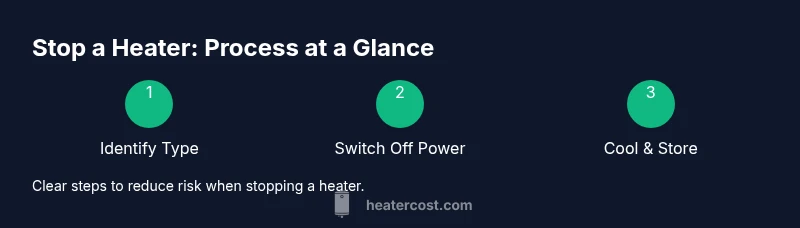
This quick guide shows you how to stop a heater safely and effectively, whether you’re handling a space heater or a central furnace. You’ll identify the heater type, switch off the power, and, when needed, shut off the gas supply and thermostat. For gas issues or persistent problems, contact a licensed professional.
Why You Might Stop a Heater
There are many reasons to stop a heater, from comfort and safety to maintenance. Stopping a heater quickly without proper steps can cause overheating, electrical arcing, or gas leaks in some systems. Understanding your device type helps you choose the right shutdown sequence. This guide explains how to stop a heater safely, from plug-in space heaters to central furnaces. According to Heater Cost analysis, a deliberate shutdown minimizes risk and simplifies future service. Remember: never force components or touch hot surfaces without protection.
Quick safety check before stopping a heater
Before you intervene, ensure you have a clear workspace and protective gear if needed. Keep kids and pets away, remove flammable objects, and ensure your hands are dry. If the heater is plugged in, use the power switch rather than yanking the plug to avoid damaged cords. For gas-fired units, sniff for fuel odors and evacuate if you detect a leak. Once safety is confirmed, you can begin the shutdown using the correct method for your device.
Identify heater type and power source
Knowing the exact heater type helps you apply the correct shutdown steps. Electric space heaters are usually controlled by a switch or thermostat and plug into a wall outlet. Central heating systems run on gas or electricity and are controlled by a thermostat, a control board, and sometimes a manual shut-off valve. If you’re unsure what you’re dealing with, turn off power at the circuit breaker to be safe and consult the manual. Heater Cost notes that correctly identifying the power source reduces the risk of accidental restart.
Stop methods for common heater types
Electric space heaters: use the on/off switch, then unplug if safe and allow the unit to cool before moving it. Central forced-air furnaces: set the thermostat to off, and if accessible, switch off the furnace at its disconnect switch or the main power panel. Boilers: reduce thermostat demand or power down the boiler following the manufacturer’s instructions. Gas heaters: turn off the thermostat and, if you can do so safely, shut off the gas at the valve; never attempt to service gas lines yourself. Oil or pellet stoves require the feed to be stopped and the unit allowed to cool before handling.
Step-by-step approach for space heaters
Stopping a space heater safely starts with locating the power source, then switching off the unit, unplugging, and cooling before storage. If the device is hardwired, power down at the corresponding circuit breaker. Remember to reseat the breaker after the unit has cooled and keep it away from flammable materials. If you notice any unusual smell, heat, or smoke, stop immediately and plug out only if safe.
After stopping: cooling and storage
Allow the heater to cool completely before moving or storing. Wipe away dust and inspect for damaged cords or components before reusing. Store the unit on a non-flammable surface, away from walls and fabrics, and in a dry location. If you intend to re-use it soon, test it in a controlled environment with supervision.
When to call a professional
Call a licensed technician if you detect gas odors, hear unusual noises, see scorch marks, or if the heater fails to shut off using standard controls. For any gas-related concerns, contact your gas supplier and emergency services if you smell gas. Electrical units showing exposed wiring, melted insulation, or persistent tripping should be assessed by a pro.
Common mistakes to avoid
Avoid yanking cords, forcibly pulling plugs, or using damaged outlets. Do not override safety switches, bypass thermostats, or attempt gas line work without proper credentials. Never store a hot heater away from combustibles immediately after shutdown; wait for cooling. Finally, don’t leave heaters unattended around children or pets.
Final verification: is the heater fully off?
Double-check the power switch, unplug when safe, and confirm no heat emanates from the unit. Recheck the thermostat setting on central systems—ensure it reads off or to the minimum setting. If a device continues to run after shutdown, isolate power at the breaker and seek professional guidance. Ensure the surrounding area remains clear during storage.
Tools & Materials
- Gloves (heat-resistant)(Protect hands when handling hot surfaces and cords.)
- Screwdriver set(Used for accessing disconnects or panels if needed.)
- Voltage tester / multimeter(Verify power is off before touching electrical components.)
- Fire extinguisher(Keep accessible in case of an unexpected flare-up.)
- Main power switch / circuit breaker access(Power down before service; label the breaker if possible.)
- Gas shut-off wrench or valve key(Only for gas-fired units and safe to access.)
- Owner’s manual(Device-specific shutdown instructions.)
Steps
Estimated time: 15-30 minutes
- 1
Locate the heater’s power source
Identify how the heater is powered (plug-in, hardwired, or gas control). If you can’t safely access the power switch, plan to shut off power at the circuit breaker. This step prevents accidental restart during subsequent actions.
Tip: Always confirm you can safely reach the power source before proceeding. - 2
Switch off the device or thermostat
Use the built-in on/off switch or the thermostat control to stop operation. Do not pull the plug while the unit is hot. This reduces the risk of electrical arcing or thermal shock to surrounding surfaces.
Tip: If the unit has a dim or obscure switch, use the main power switch first. - 3
Unplug the heater (when safe)
If the unit is cool enough and easily accessible, unplug it from the outlet. If the plug is hot, wait until the unit cools before disconnecting or use the disconnect switch if available.
Tip: Grip the plug, not the cord, to avoid fraying. rise in temperature may indicate damage. - 4
Power down hardwired units
For hardwired systems or when a plug is not accessible, switch off the circuit breaker or disconnect at the panel. This ensures there’s no residual electrical supply while you inspect or move the heater.
Tip: If you’re uncertain about the panel, consult a professional. - 5
Gas shut-off if applicable
If you’re dealing with a gas-fired heater and you can access the shut-off valve safely, close it. If you smell gas or feel unsure, evacuate and call emergency services rather than attempting a fix.
Tip: Do not attempt to manipulate gas lines beyond your comfort and training. - 6
Cool and store
Allow the heater to cool completely before storage and note any visible damage. Store in a dry, well-ventilated area away from flammables.
Tip: Inspect cords for wear or scorch marks before re-use.
Got Questions?
What is the safest first step to stop a heater?
Turn off the power switch or circuit breaker, and unplug if safe. This minimizes the chance of electrical hazards during shutdown.
First, switch off the heater or cut power at the breaker, then unplug if safe to do so.
Can I just unplug a space heater to stop it?
Yes, if the unit has cooled and you can safely reach the plug. Always unplug from the outlet, not by pulling the cord.
Yes, unplug from the outlet once the unit has cooled, not by tugging on the cord.
What should I do if gas smells when stopping a furnace?
Evacuate the area immediately and call emergency services. Do not operate switches or try to shut off gas lines yourself.
If you smell gas, leave quickly and call for help right away.
Is it okay to stop a heater mid-cycle for maintenance?
Only after the unit has cooled and you follow the manufacturer's shutdown procedure. Refer to the manual for step-by-step safety.
Only after it’s cooled and you’ve followed the manual’s steps.
When should I call a professional?
If you’re unsure about gas, wiring, leaks, or the unit repeatedly restarts after shutdown, seek professional help.
Call a pro if gas, wiring, or leaks are involved or if the issue persists.
How long should a heater cool before storage?
Let the unit cool completely, typically 15-60 minutes depending on the device, before storing.
Wait for it to cool fully, then store safely.
Watch Video
The Essentials
- Know your heater type before shutting down
- Always power down safely, then unplug if possible
- Gas units require extra precautions and professional help when in doubt
- Verify complete cooling before storage and routine maintenance