How to Make Heater Work Faster in Car
Learn practical steps to heat your car cabin faster, from coolant checks to HVAC settings. This Heater Cost guide covers safety, maintenance, and best practices so you can be warm sooner.


Goal: learn how to make heater work faster in car and get warm air sooner. Start by confirming the cooling system is healthy and your HVAC is set for rapid heat. According to Heater Cost, small preconditioning steps and a well-maintained coolant system can noticeably reduce warm-up time. This guide walks you through practical, safe actions you can take now.
How car heating works and why speed matters
In most cars, cabin heat comes from the engine’s cooling system. The heater core acts like a small radiator; hot coolant from the engine flows through the core, and a blower pushes air across it into the cabin. The result is warm air that raises interior temperature. The speed at which warm air arrives depends on several factors: engine temperature, coolant level, heater core flow, thermostat condition, and how you use the HVAC system. When the engine is cold, the coolant isn’t as hot, so warm air may take longer to arrive. In very cold weather, the difference can feel dramatic, and a slow start can waste fuel if you idle longer than necessary. Understanding this process helps you decide where to focus improvements. According to Heater Cost, ensuring the cooling system is healthy and using the HVAC options effectively can shave minutes off your warm-up time, especially on frosty mornings. The practical takeaway is simple: keep the coolant system in good shape, and use the HVAC controls promptly to move warm air where you want it. This section lays the groundwork for practical tweaks you can perform safely and without specialized tools.
Key factors that influence how fast heat arrives
Several elements interact to determine how quickly your cabin warms up. Engine temperature is primary: heaters cannot deliver hot air until the engine reaches its normal operating temperature. The coolant level must be adequate; a low level reduces heater core flow. The thermostat regulates engine warmth, so a sticking thermostat can slow warm-up. The heater core itself must be free of restrictions or leaks, and the cabin air filter should be clean to avoid obstructed airflow. Outside temperature and humidity also affect perceived warmth; very cold, windy days can slow warm-up even with a healthy system. Finally, HVAC usage matters: choosing hot air, using the fan at a reasonable speed, and whether you use recirculated air can tighten the time to warmth. If you notice persistent delays, start with these checks and then consider a professional assessment. These factors give you a realistic map of where to look first when heat arrives slowly.
Quick-start routine for faster heat (pre-drive checklist)
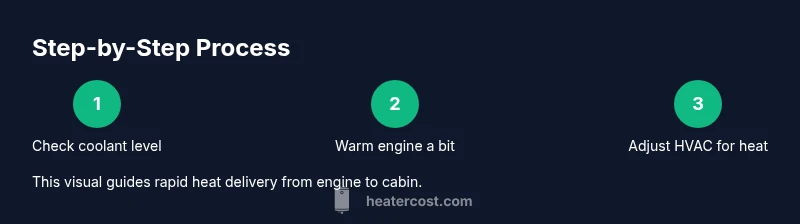
Use this sequence to coax heat out of your system quickly. 1) Check coolant level when the engine is cold to avoid burns, and top up if needed with the correct coolant type for your vehicle. 2) Start the engine and idle for 3–5 minutes to bring the engine to a safe operating temperature; this gives the heater core hot coolant to work with. 3) Turn the HVAC to heat, set the fan to a moderate speed, and enable fresh air if you’re concerned about odors or humidity; recirculation can help once you’re already warm. 4) If your vehicle supports remote start or preconditioning, use it to warm the engine and cabin before you enter. 5) If you still have slow heat, inspect the cabin air filter and consider a brief heater-core flush or professional check. Pro tip: avoid idling longer than necessary to save fuel and reduce wear. Time estimate for this routine is about 5–15 minutes before driving, depending on vehicle and outdoor temperature.
Safe coolant and heater core care to prevent delays
A healthy cooling system is foundational to fast heat. Always use the coolant type specified in your owner’s manual and keep the mixture correct for your climate. Do not mix old coolant with new or different formulations. Periodically inspect hoses for cracks and the radiator cap for proper seating. Tiny leaks reduce pressure and slow heat transfer. If you notice a sweet smell, steam, or dampness under the hood, stop and allow the engine to cool before checking. Regular flushes and coolant replacement per schedule help prevent heater-core buildup that can impede heat flow. Treat the heater core with care: avoid adding cleaners directly into the cooling system, which can cause deposits. By staying proactive about coolant health, you’ll maintain consistent heat performance and reduce the likelihood of cold-air blasts at odd times.
HVAC settings and airflow optimization for rapid warm air
Once the engine is warm, smaller settings can shave seconds off the final warm-up. In most cars, set climate control to hot and increase fan speed to move air faster. If you use recirculated air, you may feel warmth sooner, but monitor humidity to avoid fogging windows. Make sure the blend doors are functioning: a stuck door can send cool air regardless of the dial setting. In vehicles with manual controls, aim for a steady, comfortable temperature and a brisk fan speed rather than the hottest setting at full blast; this improves comfort while reducing energy draw. For digital climate controls, enable automatic heat if your system supports it, then fine-tune the fan as needed. The goal is efficient heat transfer, not just high fan speed. Small adjustments can accumulate into a noticeably warmer cabin within minutes.
When to upgrade or repair parts that slow heat
If you still experience slow heat after checking coolant, filters, and settings, some parts may need service. A thermostat that sticks, a failing water pump, or a clogged heater core causes delayed warmth. A blown heater fuse or actuator can also hinder airflow paths. A professional HVAC check is advised if you hear unusual sounds, notice inconsistent temperature, or see warning lights. If you own a diesel or hybrid, heat-up times may differ; consult your manual or a certified technician for climate control considerations. Regular maintenance, including coolant refresh and filter replacement, helps keep heat delivery predictable across seasons. Timely attention to these components avoids extended cold starts and improves overall driving comfort.
Climate-specific tips and long-term maintenance
Cold climates demand proactive heating strategies. In extreme cold, use preconditioning and park in sheltered spaces to reduce wind chill impact on the cabin. For hotter days, a quick test of the AC heat exchanger and fan can help verify there are no system faults that would slow heating in winter. Regular inspections by a technician or dealership service can catch issues before they become noticeable. The overarching principle is proactive maintenance—keeping coolant, filters, and HVAC controls in good shape yields the fastest heat response regardless of climate. By following these guidelines, you’ll achieve more consistent warmth, improve interior comfort, and reduce the energy cost of cabin heating over time.
Tools & Materials
- Owner’s manual and vehicle service manual(For model-specific heater and coolant specifications)
- Correct coolant (as specified by manufacturer)(Check the manual for recommended type and mixture)
- Funnel(For safe topping up of coolant without spills)
- Safety gloves and eye protection(Prevent burns and splashes when handling hot components)
- Rags or towels(Cleanup and prevent slips if spills occur)
- Coolant tester or hydrometer(Optional: check coolant concentration)
Steps
Estimated time: 30-45 minutes
- 1
Check coolant level and system health
With the engine cold, inspect the coolant reservoir and radiator for level and leaks. Top up only with the coolant type specified by the manufacturer. This initial check prevents insufficient heat transfer caused by low coolant.
Tip: Never open a hot cooling system; let it cool and wear gloves to avoid burns. - 2
Start engine and warm to operating temp
Start the engine and idle for 3–5 minutes so the coolant reaches a temperature where the heater core can deliver heat. This step is essential because a cold engine cannot supply hot coolant efficiently.
Tip: Avoid aggressive revving during warm-up to reduce stress on the coolant system. - 3
Set HVAC to heat and adjust airflow
Turn the climate control to hot, set a moderate fan speed, and use fresh air initially. Recirculation can help once you’re warm, but avoid it if humidity fogs the windows.
Tip: Prefer steady airflow over blasting the blower at max; it heats faster with controlled airflow. - 4
Use preconditioning or remote start if available
If your car supports remote start or preconditioning, activate it to warm the engine and cabin before you enter. This reduces cold-start heat lag and saves time.
Tip: Check local laws and safety guidelines for using remote start in your area. - 5
Check cabin air filter and heater core access
Inspect the cabin air filter and ensure it’s clean. A clogged filter reduces airflow and slows heat delivery. If you suspect a heater-core restriction, seek professional assessment.
Tip: Replace the cabin filter every 12–24 months or as recommended. - 6
Consult a professional if heat remains slow
If heat still lags after the above steps, a thermostat, water pump, or heater-core issue could be affecting performance. A professional HVAC service can diagnose and repair faults safely.
Tip: Document symptoms and timing to help the technician pinpoint the issue.
Got Questions?
What is the quickest way to warm my car heater on a freezing morning?
The fastest approach is to precondition the engine with remote start if available, then switch the HVAC to hot with a moderate fan as soon as you start driving. Ensure coolant is healthy and the engine reaches operating temperature.
Precondition the engine if you can, then set the heater to hot with a steady fan as you begin driving.
Why is my car heater slow to warm up after starting the engine?
Common causes include a low coolant level, a stuck thermostat, a failing heater core, or a clogged cabin air filter. Start with coolant checks and air flow, then inspect the filter.
Check coolant and thermostat first, then look at airflow and filter if warm air is delayed.
Does using recirculated air speed up heating?
Recirculated air can feel warmer faster because the system is heating air that’s already inside. However, it can raise humidity and fog up windows, so use it briefly and switch back to fresh air as needed.
Recirculation can speed up warm air briefly, but watch humidity and window fogging.
How long should I idle to warm up the engine?
Aim for a short idle of 3–5 minutes to bring the engine to operating temperature without wasting fuel. Then drive gently to continue heating.
Keep idle to about 3–5 minutes, then start driving to finish heating.
Can a dirty cabin air filter slow down the heater?
Yes. A clogged filter reduces airflow and can delay heat delivery. Replace the filter per the manufacturer’s schedule.
Yes—a dirty filter slows heat delivery; replace it regularly.
When should I seek professional HVAC service for heat delays?
If heat remains slow after basic checks and maintenance, a thermostat, heater core, or water pump issue may exist. A professional diagnostic is recommended.
If basic checks don’t fix it, get a professional diagnostic for the HVAC system.
Watch Video
The Essentials
- Check coolant health before attempting heat fixes
- Use HVAC settings to push heat early
- Precondition when available to cut warm-up time
- Replace clogged cabin air filter regularly
- Keep coolant and heater core well-maintained
- Seek professional help if heat remains slow