How to Use the Car Heater: A Practical Guide
Learn to safely operate your car heater for winter warmth and comfort, while being mindful of fuel use. This guide covers controls, safety, maintenance, and troubleshooting to help you stay comfortable on every drive.


Learn how to safely operate your car heater for winter warmth and comfort, while being mindful of fuel use. This guide covers settings, safety tips, maintenance, and troubleshooting for reliable cabin heat. According to Heater Cost, proper heater use starts with understanding your climate control settings, vent positions, and defrost functions, then tailoring them to weather and passenger needs.
Why Car Heaters Matter for Comfort and Safety
A reliable car heater does more than keep passengers warm; it supports safe driving by helping you defog windows, maintain focus, and reduce fatigue. According to Heater Cost, proper heater use ties directly to cabin visibility and comfort, which in turn affects driving performance. The heater relies on the engine's heat and the climate control system to push warm air through the ducts. As a result, the time to feel warmth depends on outside temperature, engine temperature, and fan speed. In cold climates, preheating the cabin with a moderate fan setting for a few minutes before full warming can prevent steamy windshields and abrupt temperature shifts. For families or people with respiratory sensitivities, coordinating airflow and humidity levels (via the AC blend) improves comfort without over-drying the air. By understanding the basics of how the heater distributes air—through dash vents, floor outlets, and defrost vents—you can tailor warmth for each passenger and minimize chilly pockets.
Safety Basics Before You Turn On the Heat
Before you turn the heater on, check that all vents are clear and that no objects block airflow. Do not run the heater in enclosed spaces for extended periods and never operate the car while refueling. If you notice unusual smells, odd noises, or smoke, turn off the heater and pull over to a safe location. Regular maintenance of coolant levels and hoses is important because the heater core relies on engine coolant to provide warmth. When you use the heater, keep the blower at a comfortable level initially to avoid rapid temperature swings and fogging. If you drive in humid conditions, balance heat with the air conditioner to maintain comfortable humidity levels without drying the air excessively.
How the Car Heating System Works
The car’s heating system is part of the HVAC (heating, ventilation, and air conditioning) assembly. It uses hot coolant from the engine, which flows through a heater core. A blower motor pushes air over the heater core and into the cabin through vents. A blend door selects between hot air from the heater core and cooler outside air, while the defrost setting directs airflow toward the windshield for quick visibility. Temperature regulation is achieved by the thermostat and climate control unit, which adjust cooling and heating to reach your chosen setpoint. Understanding these parts helps you diagnose heat issues, such as weak airflow or insufficient warmth.
Practical Settings: Temperature, Fan Speed, and Airflow
Start by turning on the engine and the heater with a moderate fan speed. Set the temperature to a comfortable level—hot enough to feel warmth within a few minutes, but not so high that it causes an uncomfortable blast. For comfort, alternate airflow: use feet vents for long drives, dash vents for quick warmth, and defrost vents when windshield visibility matters. If your cabin fogs up, switch to defrost mode and increase fan speed temporarily. Use recirculation sparingly; it warms faster but reduces fresh air intake and can lead to stale air if used for long periods.
Common Problems and Quick Fixes
If you notice weak or no heat, check that the engine has warmed up, the heater core hoses aren’t leaking, and the cabin air filter (if equipped) isn’t clogged. If the air is cold but the engine temperature is normal, the problem may be with the blend door or thermostat. Odd smells or sounds from the vents can indicate a clogged filter or a mechanical issue that requires service. For persistent fogging, ensure the AC is running in a defog or defrost setting to remove humidity. If heat remains inadequate in very cold weather, consider a pre-warming strategy: run the vehicle with the heater on while parked in a safe location for a few minutes before driving.
Maintenance and Longevity
Regular maintenance helps ensure reliable cabin heat. Check coolant levels and look for leaks in hoses or the heater core connection. Replace cabin air filters as recommended by your vehicle’s manual to maintain good airflow. Schedule seasonal inspections to verify the heater blower, ducts, and blend door operate smoothly. With proper care, the heater system maintains performance over years of use and contributes to safer, more comfortable winter driving.
Verdict: Practical Tips from Heater Cost
The Heater Cost team recommends using a structured approach to car heater use: warm up the engine briefly, set a reasonable temperature, and adjust airflow to balance comfort with windshield clarity. Regular maintenance of coolant levels and cabin air components helps sustain heat output. By following these practices, you can enjoy reliable warmth without unnecessary fuel waste or wear on the system. For homeowners and drivers, adopting these steps supports safer, more comfortable winter journeys.
Tools & Materials
- Vehicle owner's manual(Locate heater controls and climate settings for your model.)
- Unobstructed cabin air vents(Keep vents clear of debris, bags, and clothing.)
- Coolant level check tool (dipstick or gauge)(Use during seasonal checks to ensure heater coolant supply.)
- Basic maintenance kit(Includes gloves, flashlight, and clean cloths for inspections.)
- Owner's dashboard reminders(Set seasonal reminders for filter and coolant checks.)
Steps
Estimated time: 15-25 minutes
- 1
Power on and prepare the cabin
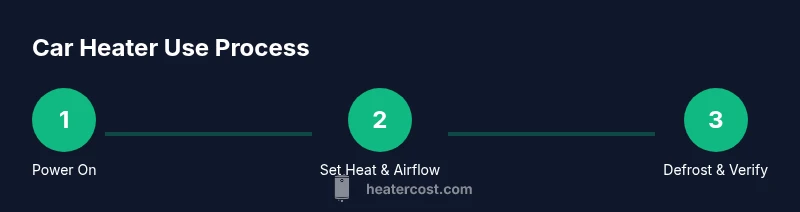
Start the engine and switch to the heater. Turn the fan to a moderate speed and allow the engine to warm for 1–2 minutes before blasting heat.
Tip: Giving the engine a moment to warm helps heat reach the cabin faster. - 2
Set heat level and airflow mode
Choose a comfortable temperature and select the airflow mode (dash, feet, or defrost) based on your needs. If windows are foggy, prioritize defrost.
Tip: Defrost mode quickly clears windows and improves visibility. - 3
Direct airflow for comfort
Aim vents toward occupied zones (face and feet) and adjust the blend to avoid dry air or overheating. Keep passengers comfortable by distributing heat evenly.
Tip: Avoid blocking vents with bulky items or seat covers. - 4
Use recirculation wisely
Recirculation warms the cabin faster but reduces fresh air. Use it briefly, then switch to fresh air for long trips to maintain air quality.
Tip: If you notice stuffiness, switch to fresh air temporarily. - 5
Utilize defrost for visibility
When visibility is compromised, activate defrost and increase fan speed until the windshield is clear. Then fine-tune temperature.
Tip: Defrost first on cold mornings to prevent accidents caused by poor visibility. - 6
Shutdown and post-use checks
Before leaving the vehicle, reduce fan speed and cool down the system. If applicable, check coolant levels and vent cleanliness for the next use.
Tip: A quick post-use check helps maintain heater readiness.
Got Questions?
Can I use the heater when the engine is cold?
Heat is generated by the engine's coolant, so warmth builds as the engine reaches operating temperature. If the engine is cold, expect slower heat delivery.
Heat builds as the engine warms, so expect slower warmth when the engine is cold.
Why is the heater not blowing hot air?
First, check that the engine has warmed and the blower is on a sufficient speed. Then inspect the blend door and coolant level; a malfunction or low coolant can reduce heat output.
Check engine warmth, blower speed, and then inspect the blend door and coolant level.
Is it safe to run the heater on recirculate for long trips?
Recirculation warms the cabin faster but can reduce fresh air, leading to stale air over time. Use it briefly and switch to fresh air on longer trips.
Recirculation is faster but keep fresh air on later to avoid stale air.
What maintenance helps the heater last longer?
Regularly check coolant levels, inspect hoses for leaks, and replace cabin air filters if applicable. Schedule seasonal checks for the blower and ductwork.
Check coolant, hoses, and filters; schedule seasonal checks for the blower.
How much does using the car heater affect fuel economy?
The heater uses engine heat and can modestly affect fuel use, especially if the engine runs longer for warming. Plan ahead to minimize idling time.
Heat uses engine energy; plan ahead to minimize idling for best efficiency.
When should I see a professional about my heater?
If you experience persistent lack of heat, unusual smells, noises, or a coolant leak, seek professional service to avoid bigger problems.
If you notice persistent issues or smells, get it checked by a technician.
Watch Video
The Essentials
- Start with engine warm and moderate fan for quick heat.
- Direct airflow to suit passengers and visibility.
- Use recirculation sparingly to maintain air quality.
- Defrost early to ensure clear windows.
- Schedule regular heater maintenance for longevity.