How to Make Heater Come On: Step-by-Step Guide
Learn safe, practical steps to diagnose and start a heater that won't turn on. This guide covers common causes, thermostat checks, and a proven process for different systems.


If your goal is how to make heater come on, start with safety checks, then verify power, thermostat settings, and system controls. For gas systems, confirm the gas valve is open and the pilot or ignition is functioning. If the unit still won’t start, proceed to a guided diagnostic or call a pro.
How to Make Heater Come On: Core Causes and First Moves
When homeowners ask how to make heater come on, they often overlook simple safety and control checks. According to Heater Cost, most no-start issues stem from power interruptions, a mis-set thermostat, or a tripped safety switch. Start by confirming power at the outlet or control board, then inspect the thermostat for correct mode and temperature. If you are dealing with a gas or oil system, make sure the gas supply is open and the ignition sequence is ready. By methodically checking these basics you can avoid unnecessary service calls and preserve energy efficiency. This section lays the groundwork for a safe, effective diagnostic, with a focus on practical steps you can perform yourself before escalating to a professional.
Why the Thermostat Is Often the Culprit
A faulty or misconfigured thermostat can prevent your heater from cycling on even when other parts are fine. Look for dead batteries, loose wiring, or a fan setting that keeps the system idle. If the thermostat is digital, verify it communicates with the furnace by listening for a relay click when you raise the set point. For older units, consider lubrication and cleaning of mechanical connections. A thermostat that incorrectly reads room temperature can cause frequent cycling or no ignition at all, so a quick verification often resolves the issue.
Power, Breakers, and Fuses: The Invisible Barriers to Start-Up
Electrical power is the quiet barrier between a cold room and comfortable heat. Check the main breaker panel and dedicated circuit breakers for the heater. A tripped breaker, blown fuse, or loose wire can silently stop a start sequence. When testing, use a non-contact voltage tester to confirm live voltage before touching any wires. If you find a tripped breaker, reset it and observe whether the heater responds. If it trips again, do not ignore it—there may be a short or overload that needs professional attention.
Gas, Ignition, and Safety: Handling Fuel-Based Systems with Care
Gas-fired furnaces and boilers require extra caution. Confirm the gas valve is fully open and that the pilot light or electronic ignition is functioning. If the pilot won’t stay lit or you hear a clicking sound without ignition, there may be a gas supply issue, dirty orifice, or ignition sensor fault. Do not attempt to force ignition if you smell gas or suspect a leak—leave the area, avoid flames, and contact your gas provider or emergency services. For electric systems and heat pumps, ignore fuel checks and focus on electrical and auxiliary heat components.
When to Seek Professional Help and How to Prepare
If you have followed the checks above and the heater still won’t come on, it’s time to plan a service call. Prepare by listing symptoms, recent changes, and any error codes from the control board. A licensed technician can diagnose control faults, fuel supply irregularities, and safety switch malfunctions with proper tools and training. Before the visit, gather the model and serial numbers, the age of the system, and any maintenance records. Proactive maintenance can reduce future no-start events and improve efficiency over time.
Tools & Materials
- Non-contact voltage tester(To verify power without exposing live wires)
- Multimeter(Check voltage and continuity on control circuits)
- Screwdrivers (flathead and Phillips)(For panel and terminal screws)
- Flashlight(Illumination for dark access panels)
- Safety gloves(Protect hands during inspection)
- Owner's manual for your heater(Model-specific guidance and safety precautions)
- Gas detector (optional)(Detects gas leaks in the area)
Steps
Estimated time: 60-90 minutes
- 1
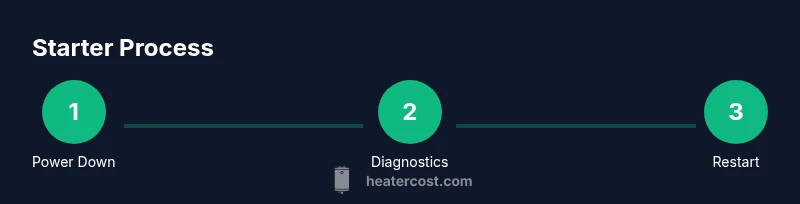
Power down and safety check
Locate the heater's power switch or the corresponding circuit breaker and switch it off. Use a non-contact tester to confirm no live voltage before touching any components. This protects you from shocks while you inspect connections or panels.
Tip: Always confirm the main power is OFF before removing any covers. - 2
Identify your heat source
Determine whether you have a gas furnace, electric resistance, boiler, or heat pump. Each type has distinct start sequences and safety interlocks. Knowing the system helps you perform the right checks without risking incorrect adjustments.
Tip: If you’re unsure of your system type, consult the manual or label on the unit. - 3
Check thermostat settings and control
Set the thermostat to heat and higher than room temperature. If available, verify the system mode (auto or heat) and ensure the thermostat is communicating with the furnace. Listen for a relay click when the thermostat calls for heat.
Tip: Replace dead batteries in wireless or battery-powered thermostats. - 4
Inspect electrical connections
Look at access panel wiring, control board fuses, and any visible signs of damage or loose wires. Tighten connections if you’re comfortable and safe to do so, and inspect fuse status or breaker's labeling for the heater circuit.
Tip: Do not bypass fuses or protective devices; they exist for safety. - 5
Assess gas supply and ignition (for gas systems)
If your system runs on gas, confirm the gas valve is open and the ignition sequence is clean. Dirty orifices, a faulty thermocouple, or a dirty flame sensor can prevent ignition. If you smell gas, exit and call the gas company or emergency services.
Tip: Never relight a furnace if you smell gas; leave the area immediately. - 6
Attempt a controlled restart
If the manual allows, reset the control board or power cycle the system by turning off power for a few minutes and then back on. Observe for ignition cues or error codes on the display after restart.
Tip: Record any error codes shown on the control panel for the technician. - 7
Test and observe
Restore power, set thermostat, and note if the burner engages, blower runs, and the space heats. If you hear unfamiliar noises, or if ignition fails again, stop and call a professional.
Tip: Keep a log of temperatures and times to share with the technician.
Got Questions?
Why won't my heater turn on after power is restored?
Often a tripped breaker, blown fuse, or a thermostat mismatch causes no-start. Verify power at the unit, reset breakers, and confirm the thermostat is in heat mode with a functional battery.
Check the breaker, replace any blown fuses, and ensure the thermostat is set to heat with working batteries.
Is it safe to reset the furnace control board?
Resetting can help if the manual allows it and there are no fault codes indicating a safety shutoff. Always follow the manufacturer guidance and document codes if they appear.
Only reset if the manual approves it and no safety codes are present.
What should I do if I smell gas?
Leave the area immediately, avoid creating sparks, and call the gas emergency line or your provider. Do not operate electrical switches or relight anything on-site.
Get to safety first, then contact gas services.
Why is my thermostat not responding to temperature changes?
Check batteries, wiring, and whether the thermostat is paired to the system. If wires are loose or a relay is stuck, call for service.
Check batteries and simple wiring first, then seek professional help if unchanged.
Can I replace a faulty thermostat myself?
If you have experience, you may replace a basic thermostat following the model's instructions. For complex systems or gas appliances, hire a pro to ensure safety and proper function.
Only DIY if you’re confident and follow the manual; otherwise hire a technician.
What maintenance helps prevent no-start events?
Schedule annual professional service, replace filters, and clean any dirty flame sensors or ignition areas. Regular checks reduce surprise outages.
Get yearly service and keep filters clean.
Watch Video
The Essentials
- Check safety and power first before any inspection
- Thermostat and control settings are common no-start culprits
- For gas systems, verify supply and ignition—do not relight if odor detected
- If unresolved, a licensed technician protects safety and efficiency