How to Know If Your Water Heater Is Leaking
Learn how to know if your water heater is leaking with clear signs, safe steps, and practical fixes. Urgent guidance from Heater Cost helps homeowners act fast and prevent damage.


The most common sign a water heater is leaking is visible water or damp spots around the tank, fittings, or drain valve. Also listen for running water sounds, check if the cold water supply line shows moisture, or if the floor is stained. If you detect a leak, shut off the power and water supply and call a professional.
Signs a Water Heater Is Leaking
Leaks don’t always look the same, but several indicators consistently point to a problem. You may notice water pooling on the floor around the heater, dampness at bootom seams, or mineral deposits forming a crust on the tank. A slow drip from the drain valve or a steady stream from supply lines can also be a leak. Oddly behaving indicators—like dampness in an otherwise dry space, musty odors, or mold growth near the unit—should raise suspicion. In addition to visible moisture, listen for hissing or dripping sounds, especially after the unit has been heating. If you see condensation on cold piping or a noticeable humidity increase in the utility area, treat it as a leak until proven otherwise. Remember, early detection saves you from costly water damage and energy waste, so don’t delay checking these signs when you suspect a leak.
Signs a Water Heater Is Leaking
Leaks don’t always look the same, but several indicators consistently point to a problem. You may notice water pooling on the floor around the heater, dampness at bottom seams, or mineral deposits forming a crust on the tank. A slow drip from the drain valve or a steady stream from supply lines can also be a leak. Oddly behaving indicators—like dampness in an otherwise dry space, musty odors, or mold growth near the unit—should raise suspicion. In addition to visible moisture, listen for hissing or dripping sounds, especially after the unit has been heating. If you see condensation on cold piping or a noticeable humidity increase in the utility area, treat it as a leak until proven otherwise. Remember, early detection saves you from costly water damage and energy waste, so don’t delay checking these signs when you suspect a leak.
Immediate Safety Actions If You Suspect a Leak
Safety comes first. If you detect water near your water heater, consider turning off the power supply to prevent electrical hazards—switch off the circuit breaker for electric units or close the gas valve for gas-fired heaters. Then shut off the cold-water supply to the heater to minimize further water flow. If the leak is substantial, evacuate the area and use towels or a bucket to catch drips, but avoid contacting hot surfaces. Do not attempt to move a hot tank or perform risky repairs yourself. Once power and water are shut off, contact a licensed plumber or a professional HVAC technician to assess the situation. For serious leaks or damage, call emergency services or your local utility if there’s a risk of flooding.
How to Confirm a Leak Without Guessing
To confirm a leak, wipe down the area first to establish a clean baseline, then observe for a few minutes. Inspect the drain valve, T&P relief valve, cold water inlet, and hot water outlet connections for moisture. A dye test can help differentiate between a small weep and a real leak: apply a food-safe dye near suspected joints and watch for color migration. If the indicator is the discharge from the relief valve, that’s a sign of excess pressure or temperature and requires professional evaluation. Keep a moisture meter handy in the utility space to monitor dampness over time. In many homes, a small leak may originate from loose fittings rather than the tank itself—tightening connections or replacing gaskets might stop the issue but only if done correctly.
What to Do After You Detect a Leak
After confirming a leak, prioritize stopping further damage. If you can safely reach the shut-off valves, turn off the water supply first, then power next if you can do so safely. If the leak is coming from a valve or joint, you may be able to tighten or reseal it temporarily, but permanent repairs generally require a professional. Keep a record of any sounds, the drip rate, or visible moisture, as this information will help the technician diagnose quickly. If you rent, notify your landlord or property manager promptly—leak-related damage can affect neighboring units and insurance claims often require timely reporting. Finally, document the area with photos for your records and possible warranty or insurance claims.
Maintenance Tips to Prevent Future Leaks
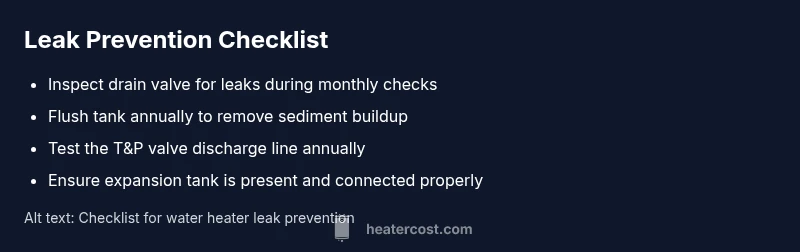
Regular maintenance reduces the chance of leaks. Schedule annual tank flushing to remove sediment buildup that can corrode internal surfaces. Inspect the pressure relief valve and ensure the discharge line is properly routed to a safe location. Check an expansion tank and verify its connection is secure. Periodically inspect inlet/outlet connections and tighten as needed, but avoid overtightening metal fittings which can cause damage. Replace corroded fittings and consider installing a drip pan with a secondary drain if your heater sits in a high-traffic or moisture-prone area. Keeping the area clean and dry also helps you spot leaks early and prevent mold growth.
When to Replace vs Repair
Deciding between repairing and replacing depends on leak severity, age, and overall system condition. If the tank shows rusting, significant corrosion, or cannot hold pressure, replacement is usually the more cost-effective option in the long run. For older units with minor, isolated leaks at fittings or valves, a repair may suffice, but verify that labor and parts costs don’t exceed a substantial portion of a new unit. Assess energy efficiency and potential ongoing maintenance costs when choosing. Your local climate, water quality, and household water usage can influence the optimal choice—consult a licensed professional for an accurate assessment.
Quick Maintenance Checklist
- Inspect for damp spots around the base monthly
- Listen for unusual hissing or dripping sounds
- Test the T&P relief valve discharge annually
- Flush the tank to remove sediment every 1–2 years
- Replace aging or corroded fittings promptly
Steps
Estimated time: 45-60 minutes
- 1
Identify the source of the leak
Carefully inspect the area around the base of the heater, drain valve, and pipe connections to locate the exact leaking point. Use a dry cloth to wipe surfaces and watch for fresh moisture.
Tip: Take photos from multiple angles to document before doing any work. - 2
Shut off power and water supply
For electric heaters, switch off the circuit breaker. For gas heaters, close the gas shut-off valve. Then turn off the cold-water supply to minimize water flow and protect electrical components.
Tip: Never work on energized components; ensure hands are dry. - 3
Assess the valve or fitting
Check drain valve threads, T&P valve outlet, and inlet/outlet pipes for moisture and tightness. If a connection is loose, tighten gently with the correct tools, taking care not to overtighten.
Tip: Use thread sealant carefully and only as recommended by the manufacturer. - 4
Determine whether to repair or replace
If the tank shows rust, pitting, or large leaks, replacement is likely the safer option. Minor leaks from valves or connections may be repairable, but a professional assessment is advised.
Tip: Weigh long-term costs and safety when deciding. - 5
Arrange professional service
Contact a licensed plumber or HVAC technician to perform a definitive diagnosis and perform the repair or replacement. Request a written estimate and warranty information.
Tip: Ask about warranty on parts and on the work performed. - 6
Post-repair testing and maintenance
After repair, restore power and water, and monitor for any signs of leakage. Schedule regular maintenance to prevent future issues, including annual flushes and valve checks.
Tip: Keep a maintenance log for future reference.
Diagnosis: Visible water pooling around the heater or damp spots on the floor
Possible Causes
- highLeaking drain valve
- highLoose or corroded fittings (inlet/outlet or T&P valve)
- mediumCracked or corroded tank
Fixes
- easyTighten or reseal the drain valve and fittings as needed
- easyReplace the faulty valve or corroded fittings, then retest for leaks
- hardIf the tank itself is leaking, replace the unit and arrange professional installation
Got Questions?
What counts as a water heater leaking?
A leak is any moisture or water escaping from the heater, including drips from the drain valve, moisture on connections, or pooling on the floor. Persistent dampness or frequent puddles indicate a problem needing attention.
Water around the heater or damp spots mean a leak. If you notice pooling, plan to inspect and, if needed, call a professional.
What should I do immediately if I see water around the heater?
First, shut off the power to the heater and then the cold-water supply to stop more water from entering. If safe, drain the remaining water and remove standing water quickly. Call a licensed technician to diagnose and repair.
Turn off power and water, drain if safe, and contact a professional right away.
Can a leaking water heater be repaired?
Some leaks from fittings or valves can be repaired, but leaks from the tank itself usually require replacement. A professional can assess the cost and decide whether repair or replacement is more economical.
Sometimes repairs work, but tank leaks often mean replacement. A pro can tell you what’s best.
Is it safe to operate a water heater that leaks?
Operating a leaking heater can pose electrical or gas hazards and cause property damage. Shut off power and water immediately and seek professional service before using again.
No. Leaks can be dangerous. Shut off power and water and call a pro.
How much does it cost to fix a water heater leak?
Repair costs vary widely and depend on the leak source and unit age. A professional assessment will provide a range of options, from valve replacements to full tank replacement.
Cost varies; a pro will advise whether repairs or replacement is better.
When should I replace rather than repair a leaking water heater?
If the tank shows obvious corrosion or frequent issues persist after repairs, replacement is often the better long-term choice for reliability and efficiency.
If corrosion is visible or leaks keep returning, replacement is usually best.
Watch Video
The Essentials
- Act quickly to minimize damage and mold risk.
- Identify the leak source before attempting fixes.
- Shut off power and water before any inspection.
- Know when to call a professional for safe repair.
- Regular maintenance reduces future leak risk.