How to Tell if Your Water Heater Element Is Bad
Learn how to know if your water heater element is bad, identify symptoms, safely test with a multimeter, and steps to replace it—with expert guidance from Heater Cost.


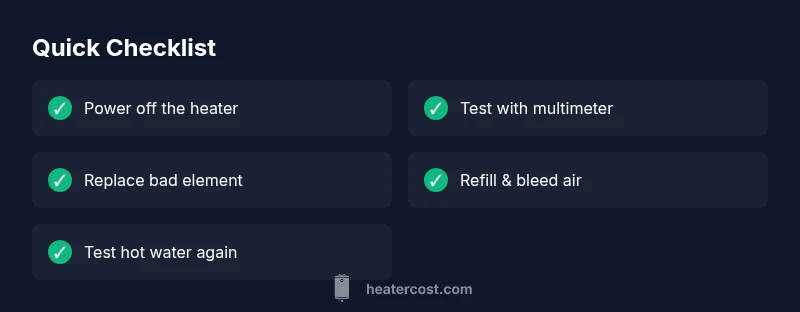
Symptoms like no hot water or uneven heating are the quickest clues that a water heater element may be bad. Start by powering the unit off, then test the element with a digital multimeter for proper resistance. If you see open or short readings, replace the element and recheck hot water performance.
What contributes to a bad water heater element
Electric water heater elements fail for several reasons. Over time mineral buildup, especially in hard water areas, can insulate the element and cause overheating and eventual burnout. Corrosion at the terminal connections can create bad contacts, leading to erratic heating or no heat. Age is a major factor; even with normal use, elements wear out and lose their ability to heat efficiently. Regular maintenance and flushing can slow wear, but a failed element can happen suddenly after years of service. If you're asking how to know if water heater element is bad, symptoms like cold water or uneven temperatures are typical signs.
According to Heater Cost, aging elements are a common failure point in many residential electric water heaters. The quick fix is to identify symptoms early and test with a multimeter to confirm whether the element has failed. If you know how to diagnose the problem, you can decide whether to replace one or both elements rather than replacing the entire unit. This approach helps homeowners minimize downtime and energy waste.
If your system uses two elements (upper and lower), both may fail at different times; in many cases, replacing both at once is worth considering to restore even heating and reduce future outages. Always ensure you have the right replacement element matched to your unit's wattage and diameter.
Symptoms that signal a bad element
No hot water or sudden drops in temperature are red flags that your electric water heater element may be failing. Other signs include water that never reaches the desired temperature, or water that heats unevenly between taps. If you notice popping, crackling, or sizzling sounds inside the tank, mineral buildup around the element could indicate wear. In some cases, higher energy bills without a clear cause hint at reduced system efficiency tied to a failing element. When diagnosing, consider whether you recently installed hard water solutions or if the unit is older; both can influence element health. Heater Cost's guidance emphasizes checking symptoms early to prevent a complete outage.
Safe preliminary checks you can perform before removing panels
Before you touch any electrical parts, ensure safety first. Start by turning off the power at the breaker and, if possible, at a service switch on the heater. Use a non-contact voltage tester to confirm there is no live current near the access panel. Inspect the area for any signs of water leaks around connections, loose wires, or corrosion. Clear the surrounding area to prevent accidental contact with hot surfaces. If you smell burning insulation or see obvious damage, stop and call a pro. These basic checks reduce risk while you assess whether a fault is electrical or mechanical. According to the Heater Cost team, many minor issues masquerade as bigger failures, so a careful inspection saves time and money.
How to test the element with a multimeter
Testing the heating element requires the right tools and careful steps. First, ensure the power is off and the tank is drained to a safe level if your unit requires it for element access. Remove the access panel and disconnect the wires from the element terminals. Set your digital multimeter to the resistance (ohms) setting and measure across the two terminals. A healthy element will show a measurable resistance, while an open circuit or a near-zero reading indicates a failure. If you have a dual-element tank, repeat the test for the second element. Always compare readings between elements if both exist. If either element tests bad, you’ll likely need a replacement before restoring hot water.
Replacing or servicing the element: DIY vs professional
If tests show a bad element, you have two options: replace the element yourself or hire a professional if you’re unsure about wiring and safety. When replacing, match the wattage, diameter, and thread type of the original element. Install a new gasket to prevent leaks, tighten evenly, and reassemble the panel. Refill the tank, bleed air, and restore power. After installation, run hot water to verify even temperatures and absence of leaks. If you’re uncertain about electrical steps or if any part of the system seems compromised, a licensed technician will ensure safe, compliant service. Heater Cost recommends choosing replacement elements from reputable suppliers and keeping a maintenance log for future care.
Safety considerations and common mistakes
Safety first: always de-energize the unit before touching electrical components. Use insulated tools, wear protective gear, and keep the work area dry. Common mistakes include over-tightening fittings, forgetting to replace the gasket, or failing to bleed air after refilling the tank. Avoid mixing different brands of elements or mismatched wattage, which can cause overheating or poor performance. If you smell burning or see exposed wires, stop immediately and call a pro. These guidelines help prevent injuries and water damage while you work.
When to call a professional and how to decide on replacement
If you’re unsure at any step, or if the tank has signs of leakage, corrosion, or a history of frequent outages, contact a licensed plumber or HVAC technician. A pro can confirm whether the issue is the element, thermostat, or wiring, and can test electrical circuits safely. In many cases, replacing both elements at once provides more consistent heating and can prevent future failures. The decision to replace the element versus the entire unit depends on unit age, capacity, and energy efficiency goals; a professional can advise on the most economical option for your home.
Preventive maintenance tips to extend element life
To extend the life of your water heater element, consider regular flushing to reduce mineral buildup, especially in hard-water areas. Schedule annual inspections to check wiring, thermostat function, and seals. If your water is highly mineralized, install a water-softening system or periodic scale-management practices to slow corrosion. Keeping the heater in a controlled environment, like a dry area away from cold drafts, helps reduce the risk of sudden element failure. Heater Cost recommends routine checks as a proactive way to preserve performance and energy efficiency.
Steps
Estimated time: 45-90 minutes
- 1
Power down and verify safety
Turn off the circuit breaker feeding the water heater and, if present, switch off the local service disconnect. Confirm no voltage remains with a non-contact tester. This prevents shock or arc flash during inspection.
Tip: Double-check downstream outlets aren’t on a separate circuit. - 2
Check the electrical supply
Inspect the breaker panel for tripped breakers or obvious signs of wear. If a breaker trips repeatedly, there may be an underlying issue beyond the element. Do not bypass a tripped breaker.
Tip: If you’re unsure about panel work, call a pro. - 3
Access and prepare the element
Remove the access panel on the side of the tank and disconnect the wires from the element terminals. Have a shallow pan nearby in case of any drips and keep track of screw locations.
Tip: Take a quick photo of wiring before removing connections. - 4
Test the element with a multimeter
Set the multimeter to the resistance setting. Measure across the two terminals of the element. A readable resistance indicates a potentially good element; an open circuit or very low reading suggests failure.
Tip: Test both elements if your unit has two. - 5
Replace the bad element
Install a new element of the same wattage and diameter. Replace the gasket, reassemble the panel, and ensure a watertight seal. Refill the tank and bleed air before restoring power.
Tip: Keep the new gasket in place and avoid over-tightening. - 6
Test operation and confirm
Turn the power back on and run hot water to verify consistent heating. Check for leaks around the element area and ensure there are no unusual noises.
Tip: If hot water is still inconsistent, call a professional for a thermostat check.
Diagnosis: Water not heating or fluctuating temperatures
Possible Causes
- highBurned-out heating element
- mediumFaulty thermostat or high-limit switch
- highElectrical power issue (tripped breaker or loose wiring)
Fixes
- easyReset breaker and verify power to the unit is restored
- mediumTest both elements with a multimeter and replace the bad one
- mediumInspect wiring connections and replace thermostat if faulty
Got Questions?
Can a water heater element fail without tripping the breaker?
Yes. An element can fail electrically without affecting the breaker. Use a multimeter to test resistance and confirm.
Yes—an element can fail without tripping the breaker; test with a multimeter to be sure.
What tool do I need to test a water heater element?
A digital multimeter is used to measure the element's resistance between its terminals.
Use a digital multimeter to check the element's resistance.
Is it safe to replace a water heater element myself?
Only if you’re comfortable with electrical work, power is off, and you follow safety steps. If unsure, hire a pro.
Yes, but only if you take proper safety steps and feel confident with electrical work.
How long does a replaced element last?
Lifespan varies with water quality and usage, but replacements can last several years.
Replacement elements can last several years.
Should the thermostat be replaced with the element?
If the thermostat shows wear or tests faulty, replace both to prevent repeat failures.
If it’s worn or faulty, replace both.
Watch Video
The Essentials
- Test elements with a multimeter to confirm failure.
- Replace bad elements rather than guessing at thermostat fixes.
- Power down and follow safety steps to avoid shocks.
- When in doubt, consult a professional for a safe outcome.