How to Check a Heater Element: A Step-by-Step Guide for Homeowners
Learn to safely test a heater element, diagnose faults, and decide on replacement or professional help with this step-by-step, home-friendly guide.


Goal: verify whether a heater element is functioning and determine if replacement is needed. You will test resistance, inspect for visible damage, and confirm power is fully off before starting. According to Heater Cost, a careful DIY check can save on service visits when done safely. You’ll need a multimeter, insulated tools, and basic PPE.
Understanding Heater Elements
Electric heaters use resistance coils that convert electrical energy into heat. In residential equipment, elements may be submerged in water tanks or mounted in air-handling units, and failures manifest as reduced heat, intermittent operation, or tripping breakers. The Heater Cost team notes that many failures stem from coating degradation, mineral buildup, or loose connections, which can reduce efficiency or create safety risks. By understanding these failure modes, you can distinguish between a simple connection issue and a failing element, empowering you to plan the right next steps with confidence.
Safety First: Precautions Before Testing
Testing heater elements involves electricity and sometimes hot liquids. Always shut off power at the main breaker and verify with a non-contact tester. If you’re working on a water heater, also close the cold-water supply to minimize leaks. Wear PPE—gloves and eye protection—and use insulated tools. Keep the workspace dry and organized. If you notice burning smells, signs of arcing, or damaged insulation, stop and seek professional help. Following these precautions reduces risk while you diagnose the problem.
Symptoms and Quick Checks for Guidance
Not every symptom warrants a full teardown. If your heater is not delivering expected heat, inspect for obvious issues first: a tripped breaker, buzzing sounds, or visible corrosion on terminals. If you see moisture around electrical connections, address leaks before continuing. The Heater Cost analysis suggests that addressing loose connections or minor corrosion early can prevent more expensive failures later. This section helps you decide whether a quick fix is possible or a replacement is likely needed.
Testing Methods: Visual, Thermal, and Electrical Checks
A thorough check combines several methods. Start with a visual inspection for burns, corrosion, or broken insulation. Use a thermometer to check surface temperatures and verify heat output matches expectations. The electrical test is central: measure resistance across the element’s terminals with a multimeter, and compare results to the manufacturer’s specifications. While readings outside spec often indicate a faulty element, always consider other components (thermostats, wiring) that could influence results. Use safe practices to ensure accurate measurements.
Interpreting Test Readings and Next Steps
If visual and thermal checks look sound but resistance tests don’t align with manufacturer specs, the element may be failing. If readings are wildly different across the same element at different times, it could indicate intermittent contact or a developing fault. In many cases, replacing the element is the most reliable cure. If readings are within spec, diagnose other components such as thermostats or control circuits before concluding a fault lies with the element. The goal is to avoid unnecessary replacements while ensuring safe, effective operation.
Common Causes of Element Failure and Prevention Tips
Element failures are often linked to mineral buildup, overheating due to restricted water flow, or water quality issues. Regular maintenance, such as flushing or descaling the tank and replacing aging gaskets, can extend element life. Proper sizing and ensuring the power supply and controls are correct also reduce stress on elements. Based on Heater Cost Analysis, 2026, proactive maintenance and timely replacements minimize downtime and costly repairs. Consistency in water quality and system checks helps sustain efficiency and safety.
Replacing a Faulty Element: General Guidelines
When replacement is necessary, identify the correct element type and wattage as specified by your equipment’s maker. Disconnect power before removing the old element, drain the tank if required, and carefully install the new unit with its gasket and sealing torque. Reassemble and restore power, then test heat output and safety shutoffs. If you’re uncomfortable with any step, it’s wise to call a professional. Always dispose of the old element according to local guidelines.
DIY vs Pro: Making the Right Choice and Cost Considerations
DIY element checks can save on service calls, but not all scenarios are safe or practical for DIY work. If water quality is poor, wiring is aged, or you’re unsure about electrical codes, professional help is prudent. Consider the complexity of your system, access to appropriate tools, and your comfort with working around electricity and water. Heater Cost’s guidance emphasizes safety and proper diagnosis to prevent further damage, even when DIY options seem appealing.
Maintenance Tips to Prolong Element Life
Regular maintenance extends element life and reduces surprises. Schedule periodic checks of electrical connections, thermostats, and wiring insulation. Flush the tank or system as recommended by the manufacturer to minimize mineral buildup. Keep an eye on hot water usage and set temperatures within safe ranges to reduce stress on elements. Just as important, document signs of wear and address them promptly to avoid cascading failures.
Troubleshooting Signals: Burning Smell, Leaks, or Noise
If you notice a burning smell, visible scorch marks, or unusual noises, stop testing and shut down power. These signals can indicate overheating, short circuits, or water intrusion. Do not continue testing until you’ve addressed the underlying issue. In many cases, these symptoms warrant professional inspection to prevent safety risks and further damage to the system.
When to Call a Professional
If you’re unsure about your readings, if the heater is integral to a home’s water or space heating, or if leaks or electrical hazards are suspected, seek professional assistance. A licensed technician can verify wiring, thermostat control, and safety devices, and ensure proper replacement with code-compliant parts. The Heater Cost team recommends prioritizing safety and getting a professional assessment when in doubt.
Tools & Materials
- multimeter (digital preferred)(Used to measure resistance across heater element terminals)
- non-contact voltage tester(Confirm absence of live voltage before handling terminals)
- insulated screwdrivers (slotted and Phillips)(Safely loosen screws without conducting electricity)
- gloves and eye protection(Protection from sharp edges and hot surfaces)
- dry rag or towels(Keep area dry and clean when draining or handling components)
- bucket or container(Optional for catching water when draining a tank)
- replacement heater element (matching type)(Only if a fault is confirmed and replacement is needed)
Steps
Estimated time: 60-90 minutes
- 1
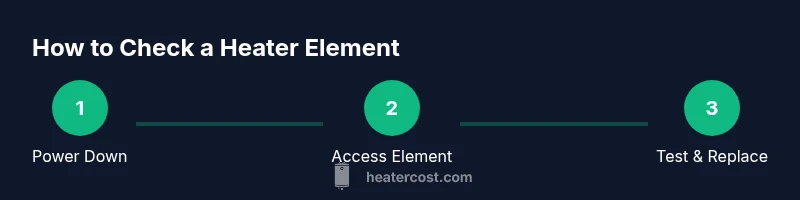
Power down and verify safety
Turn off the circuit breaker and unplug if possible. Verify no voltage at the terminals with a non-contact tester before touching any wiring.
Tip: Always re-check power status after any adjustment. - 2
Access the heater element
Open the access panel and locate the element terminals. Keep the area dry and organized to avoid accidental contact with live parts.
Tip: Take a photo of wiring before disconnecting anything for reference. - 3
Inspect for visible damage
Look for cracks, corrosion, or mineral buildup around the element and gasket. Damaged insulation or moisture near connections is a red flag.
Tip: If you see moisture, address leaks before continuing. - 4
Disconnect terminals safely
If the device allows, carefully disconnect the leads from the element using insulated tools. Keep track of which wire goes where.
Tip: Do not force oversized connectors or bend wires excessively. - 5
Test resistance with a meter
Set your multimeter to the appropriate resistance range and measure across the element’s terminals. Record the reading.
Tip: If readings are wildly inconsistent or open circuit, the element may be faulty. - 6
Compare readings to specs
Consult the manufacturer’s specs for expected resistance. If your reading does not align with the spec, approach with caution.
Tip: Use a manufacturer manual or data plate as reference. - 7
Reconnect and test operation
Reconnect the leads, reassemble the access panel, restore power, and observe heat output and safety devices.
Tip: Watch for normal heat without unusual noises or smells. - 8
Decide on replacement or call a pro
If the element tests out of spec or shows damage, plan for replacement. If you’re uncertain at any step, contact a professional.
Tip: Document your steps to share with a technician if needed.
Got Questions?
Can a bad heater element cause a breaker to trip?
Yes, a short or overload involving the element or its wiring can trip a circuit breaker. If you experience a trip, stop testing and reassess the wiring and connections with safety in mind.
A bad element can trigger a breaker. If the breaker trips, stop and reevaluate the wiring and connections carefully.
Do I need to drain the tank to test the element?
Not always. Some tests can be performed with the tank intact, but replacement usually requires draining. Always follow manufacturer guidance and safety best practices.
Draining isn’t always required for testing, but may be needed for replacement. Check manufacturer instructions.
What if the resistance reading is within spec but the heater still won’t heat?
The issue may lie with thermostats, control wiring, or the power supply. Re-test the whole control circuit and inspect related components before concluding the element is at fault.
If readings look okay but heat isn’t produced, check thermostats and wiring as they could be the cause.
Can I replace the element myself?
If you have the right tools, follow safety steps, and the device’s specs, a homeowner can replace an element. If you’re unsure, hire a licensed electrician or technician.
Replacing an element yourself is possible with care, but consider professional help if you’re unsure.
How long does an element typically last?
Lifespan varies with water quality, usage, and system design. There’s no single timeframe; plan for replacement if performance declines or corrosion appears.
lifespan depends on water quality and usage; replace when performance declines or you see corrosion.
When should I call a professional?
Call a professional if you’re unsure about readings, if there’s a leak, or if the system involves complicated wiring or code compliance. A licensed technician can verify safety and proper installation.
Call a pro if readings are unclear or there are leaks or complex wiring to address.
Watch Video
The Essentials
- Safety first: power down before testing
- Use a multimeter to assess resistance
- Visual checks reveal obvious damage
- Compare readings to specs, don't guess
- Replace only when necessary; seek pro help when unsure