How to Check Water Heater for Hot Water: Quick Guide
Urgent, practical troubleshooting guide to diagnose no-hot-water issues. Learn to inspect power, gas supply, thermostat, heating elements, and sediment buildup on your water heater.


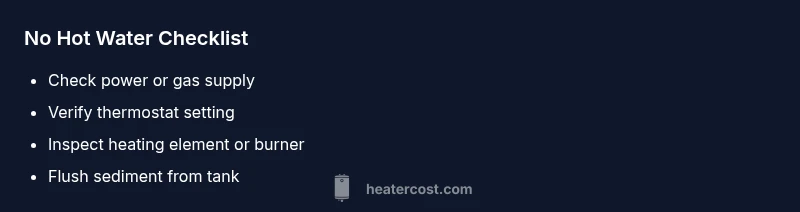
Most likely causes of no hot water are a tripped breaker, an off gas valve, or a thermostat set too low. Start with the simplest checks: confirm power to an electric unit or gas supply and verify the thermostat setting. According to Heater Cost, power issues are the leading cause, followed by incorrect settings and sediment buildup.
No Hot Water? Quick Diagnostic Start
No hot water is a common issue homeowners face, and many times the cause is simple. In this section, you’ll find a practical, step-by-step approach to identify the problem quickly without expensive tools. The focus is on the most likely culprits first—power, gas supply, and thermostat settings—so you can restore hot water fast. According to Heater Cost, starting with quick checks saves time and money, and reduces the need for premature service calls. By following these steps, you’ll narrow down the root cause and decide whether a DIY fix is feasible or professional help is needed.
This guide keeps safety front and center and uses a logical sequence so you’re not jumping around the system. Expect to verify that the unit is receiving power or gas, that the thermostat is set correctly, and that there isn’t a clogged burner or sediment compromising heat transfer. If you’re unsure at any point, err on the side of caution and consult a professional. The goal is to empower you with a clear path to hot water again, not to overwhelm you with jargon or expensive tools.
Safety First: Power, Gas, and Shutoffs
Safety is non-negotiable when working around water heaters. Before touching any component, switch off power to the unit at the breaker or disconnect, and shut off the gas supply if you have a gas heater. If you’re not sure how to shut off gas, locate the shutoff valve near the heater and turn it perpendicular to the pipe. After you finish the checks, restore power and gas sources only if you confidently completed each step and found no hazards. Heater Cost emphasizes safety as the top priority; if you smell gas or hear a hissing sound, evacuate immediately and call emergency services. This initial step protects you from shock, fire, and gas-related risks while you troubleshoot.
Check Power and Breaker Status
Electric water heaters rely on a dedicated circuit. A tripped breaker stops heating and yields cold water. Start by locating the panel and the water heater’s circuit breaker, then switch it off and back on to reset. If your panel has a GFCI outlet or AFCI breaker, test those as well. If the breaker trips again, there may be a circuit overload or short, and a licensed electrician should inspect wiring and connections to prevent a fire hazard. Regular breaker testing can catch issues before they affect the heater’s operation. According to Heater Cost, power issues are the leading cause of no hot water, making this one of the most effective first steps.
Thermostat Settings and High-Limit Switch
Set the thermostat to a safe, effective heating range, commonly around 120°F (49°C). If your unit has a high-limit switch, ensure it has not tripped. A tripped safety switch will prevent the burner from firing even when the thermostat is set correctly. After adjusting, allow 30-60 minutes for the temperature to rise and then test the hot water. If temperatures stay cold, you may need to replace the thermostat or high-limit switch. Small changes in temperature settings can dramatically alter hot water output, so document any adjustments for future reference.
Gas Burner and Pilot Light Evaluation
For gas water heaters, check that the burner is clean, the flame is steady, and the pilot light is burning a bright blue. A yellow or flickering flame can indicate a draft or dirty orifice. If the pilot is out, follow the manufacturer’s relighting procedure. If you smell gas, leave the area and call your gas provider immediately. Gas systems require extra caution; any uncertainty should trigger a call to a licensed technician to confirm safe operation. Heater Cost notes that gas-related faults are a common reason for losing hot water and often require professional service.
Electric Heating Elements and Burner Diagnostics
For electric models, test the upper and lower heating elements for continuity using a multimeter. If either element shows open circuit or burns out, replacement is often necessary. Make sure to disconnect power and discharge the tank before testing. If you’re unsure how to test, or if the heater is older, a licensed technician can perform measurements and safe testing. Faulty elements significantly reduce heat output and can mimic other issues, so a precise diagnosis matters for a lasting fix.
Sediment Buildup and Tank Maintenance
Over time, mineral sediment settles in the tank and insulates the heating elements, delivering lukewarm water or no hot water. To flush, turn off power, shut the cold-water inlet, attach a hose to the drain valve, and open the valve to flush until the water runs clear. Refill, restore power, and test hot water after briefly running it. Regular flushing—annually or every 1-2 years—helps sustain efficiency and extend the life of your heater. If sediment is severe, consider a professional flush or descaling service.
Intermittent No-Hot-Water Causes and Quick Fixes
Some issues are intermittent, including temperature fluctuations or uneven heating. Keep a log of when hot water is delivered and how long it lasts; this data can help a tech diagnose the problem. Quick fixes include reseating the thermostat, tightening connections at the thermostat, and cleaning the burner or element terminals. Intermittent problems can indicate a loose or worn component, so note symptoms and timing to aid a future diagnosis.
When to Call a Professional and Maintenance Schedule
Not every no-hot-water problem should be a DIY project. If you smell gas, hear hissing, see water leaks, or the heater is old and showing signs of corrosion, contact a licensed pro. The pro can safely test gas lines, inspect venting, verify electrical connections, and replace worn components. For ongoing reliability, follow a maintenance schedule—annual inspections, yearly flush, and thermostat checks. The Heater Cost team recommends documenting maintenance tasks and keeping receipts for future budgeting and warranty protection.
Steps
Estimated time: 60-90 minutes
- 1
Shut off power and gas safely
Turn off the main power to the water heater at the breaker panel, and if you have a gas heater, shut off the gas supply at the valve. This prevents accidental shocks or leaks while you inspect components.
Tip: Use a flashlight and keep a clear path to the panel - 2
Verify power and breakers
Check the dedicated circuit breaker for the water heater; flip it off and then on again to reset. If you have a hard-wired unit, test for voltage with a multimeter to confirm power.
Tip: If the breaker trips again, there may be a short—stop and call a pro - 3
Check thermostat settings
Inspect the thermostat; ensure it's set to at least 120°F (49°C). If it has a high-limit switch, ensure it has not tripped. After adjusting, allow 30-60 minutes for the temperature to rise and then test the hot water.
Tip: Record the current setting before adjusting - 4
Gas burner/pilot safety check
For gas heaters, verify the pilot light is lit or electronic ignition is functioning. If there’s a gas odor, evacuate and contact the gas company or emergency services.
Tip: Never light a gas appliance if you smell a leak - 5
Inspect heating element (electric)
For electric models, test the upper and lower heating elements for continuity with a multimeter. Replace any element that reads open circuit or very high resistance.
Tip: Power off and discharge the tank before testing - 6
Flush sediment from the tank
Turn off power, close the cold water inlet, and attach a hose to the drain valve to flush out sediment. Refill, restore power, and test hot water after a short cycle.
Tip: Do not drain completely if you lack proper drainage tools - 7
Test hot water delivery
After completing steps 1-6, run hot water from a faucet to verify warmed water. If output remains cold, there may be a more complex problem or a failed component.
Tip: Keep a log of tests and temperatures
Diagnosis: No hot water from the water heater
Possible Causes
- highTripped circuit breaker or blown fuse (electric heater)
- mediumThermostat set too low or faulty high-limit switch
- mediumInsufficient gas supply or pilot light out (gas heater)
- lowSediment buildup in tank or faulty heating element
Fixes
- easyReset circuit breaker or replace blown fuse; restore power
- easyIncrease thermostat to recommended range and/or replace high-limit switch
- mediumRelight gas pilot or restore gas supply; check for outages
- mediumFlush sediment and inspect heating element for electric models
Got Questions?
What is the first thing I should check if my water heater has no hot water?
Start with power, gas supply, and thermostat settings. These are the most common culprits and the quickest fixes. If the issue persists, continue with the rest of the troubleshooting steps.
First check power, gas, and thermostat settings, as these are the most common causes.
Is a tripped breaker a common cause of no hot water?
Yes. Electric water heaters rely on a dedicated circuit. A tripped breaker cuts power to the unit and stops heating. Reset the breaker and re-test.
A tripped breaker often stops heating; reset and test.
How do I tell if the thermostat is the issue?
Check the thermostat setting and test water temperature. If the setting is correct but water is lukewarm, the thermostat or high-limit switch may be faulty.
Check the setting and test the water temperature.
Can sediment buildup affect hot water?
Yes. Sediment settles at the bottom, reducing efficiency and heating ability. Flushing the tank helps restore heat delivery.
Sediment can block heat transfer—flush the tank to fix it.
When should I replace a heating element?
If an electric unit shows open circuit or burnout on the element, replacement is often required. Consider a professional if you’re unsure.
If the element burns out, replace it; call a pro if you’re unsure.
When is professional help necessary?
Call a professional if you smell gas, hear hissing, or cannot safely perform basic checks. Complex gas or electrical work should be handled by licensed technicians.
Call a pro if you smell gas or can’t safely do the work.
Watch Video
The Essentials
- Verify power and gas first to restore hot water.
- Set thermostat to a safe, effective range (around 120°F).
- Flush sediment regularly to maintain efficiency.
- Call a pro for gas issues or dangerous conditions.