How to Get Heater Working in a Car: A Practical DIY Guide
Learn how to diagnose and fix a car heater that won’t heat. This step-by-step guide covers coolant checks, thermostat tests, blower issues, and safe DIY tips from Heater Cost to restore warm air quickly and safely.


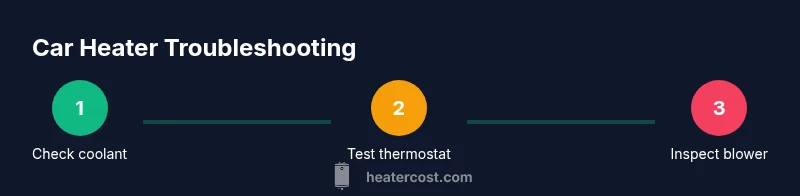
To get the car heater working again, start with simple checks: ensure the engine coolant level is correct, the thermostat opens, and the blower motor runs. Next, verify fuses, wiring, and the climate controls for proper signals. If the heat is still weak or absent, follow the detailed step-by-step guide below to diagnose valves, heater core flow, and potential air pockets. According to Heater Cost, most issues are resolved without professional help when caught early.
Why your car heater might not work
When a car heater fails to produce warm air, the cause is usually straightforward but can hide behind a few different systems. The most common culprits are low engine coolant level, a stuck thermostat, a failed blower motor, or a blown fuse in the HVAC circuit. Less obvious problems include air trapped in the cooling system, a faulty blend door that blocks heat from reaching the cockpit, or a clogged heater core that restricts flow. In many cases, the issue is nothing exotic—just a simple maintenance task that was overlooked. According to Heater Cost analysis, the majority of DIY fixes center on coolant management and proper airflow, which means you can often fix the heat without expensive parts. If you notice intermittent heat, fluctuating temperatures, or a sweet chemical smell, these are red flags that point to leaks or blocked passages. The Heater Cost team found that early identification and routine checks dramatically reduce repair time and cost. The goal is to restore consistent warmth while keeping you safe and comfortable on winter drives.
timeToReadEstimateInMinutes": null},{
Tools & Materials
- Coolant tester or hydrometer(Use the correct type for your engine (green, orange, or blue). If you’re unsure, consult your owner’s manual.)
- Coolant(Have a bottle of the correct pre-mixed coolant for your vehicle; avoid mixing types without guidance.)
- Flashlight(Shine light into the heater core area and HVAC ducts to spot leaks or blockages.)
- Multimeter(Test electrical signals to the blower motor and climate controls.)
- Screwdrivers and basic hand tools(Screw panel covers and access panels for the HVAC system.)
- Spare fuses(Replace any blown HVAC fuses with the same amperage.)
- Rags or shop towels(Clean up coolant spills and keep the work area dry.)
- Gloves and eye protection(Protect hands and eyes from coolant and sharp edges.)
Steps
Estimated time: Estimated total time: 60-120 minutes
- 1
Safety first and prepare the vehicle
Turn off the engine, set the parking brake, and allow the car to cool. Disconnect the negative battery terminal if you’ll be handling wiring near the HVAC system. This minimizes the risk of sparks and burns when you access electrical components.
Tip: Take a photo of any disconnections before removing plugs so you can reconnect them correctly. - 2
Check coolant level and look for leaks
Open the coolant reservoir and radiator (if accessible) and verify the level is within the recommended range. Inspect hoses for cracks or damp spots that indicate leaks. Low coolant can prevent proper heater operation and lead to overheating if ignored.
Tip: Top up with the correct type of coolant when the engine is cool to avoid burns. - 3
Test the thermostat operation
With the engine cold, start the car and observe how quickly the needle moves toward operating temperature. If it lags or never reaches temp, the thermostat may be stuck open or closed. A thermostat issue prevents hot coolant from circulating through the heater core.
Tip: Replace a suspected thermostat promptly to restore proper heat transfer. - 4
Inspect HVAC fuses, wiring, and blower
Check the HVAC fuse(s) in the interior fuse box. If fuses are intact, use a multimeter to test for power at the blower motor when you adjust heat settings. A non-responsive blower is a common reason for no heat even when the engine is hot.
Tip: Swap in a known-good fuse to confirm the fault isn’t a blown fuse. - 5
Verify climate control signals and blend doors
Ensure the controls respond to temperature and mode changes and listen for the blend door motor operating. A malfunctioning blend door can block heat even when cooling air is available. You may need to access the dash panel to observe the door’s movement.
Tip: If you hear clicks or clunks when changing settings, the blend door mechanism may be failing. - 6
Bleed air from the cooling system
Air pockets can block hot coolant flow to the heater core. Follow your vehicle’s bleed procedure (usually involving radiator cap removal with engine cold and running the heater to bleed air). Check for any lingering air that might cause bursts of cold air.
Tip: Never open a hot radiator cap; confirm the system is cool before lifting any cap. - 7
Test heater core flow and hoses
Feel the heater core hoses after the engine has warmed up. Both should become hot; if one remains cool, there may be flow restriction or a clogged core. Consider flushing the heater core if flow is insufficient and you have access to the necessary equipment.
Tip: A core flush is a straightforward procedure but can be messy—prepare towels and containment. - 8
Reassemble and perform a final heat test
Reconnect any covers and panels you removed. Start the engine, set the heater to maximum heat, and confirm consistent warm air output. Observe whether heat remains steady as you drive and idle; address any residual issues if heat fluctuates.
Tip: Document any changes you made so you can reverse them if needed. - 9
Document fixes and plan maintenance
Record what you checked, replaced, or flushed. Schedule regular coolant checks and seasonal heater tests to avoid future outages. A simple maintenance plan helps prevent spontaneous heat loss during cold months.
Tip: Keep a small log in the glove compartment for quick reference.
Got Questions?
What are the most common signs my car heater is failing?
Frequent cold air from the vents, weak heat when the engine is warm, unusual noises, or a burning coolant smell are common indicators. If heat drops when you idle or drive, the issue may be airflow or coolant flow problems.
Look for weak heat or unusual noises—these usually point to airflow or coolant flow issues.
Can low coolant cause the heater to stop working?
Yes. Low coolant reduces heat transfer to the heater core, resulting in little or no warm air. Ensure the coolant level is correct and check for leaks.
Low coolant often means no heat, so start by checking the coolant level and leaks.
Is it safe to drive with a malfunctioning heater?
A faulty heater is generally safe to drive with, but low coolant or leaks can indicate broader cooling-system problems that could overheat the engine. Address issues promptly.
It’s usually safe to drive short distances, but don’t ignore cooling-system problems.
What DIY fixes can I try before calling a professional?
Basic steps include checking fuses, ensuring blower operation, topping up coolant if needed, and bleeding air from the cooling system. If heat remains weak, seek professional help.
You can try fuse checks, blower tests, coolant topping, and air bleeding first.
Should I replace the heater core or thermostat first?
Start with the thermostat if it’s suspected to be faulty, as it’s often the cause of heating problems. The heater core replacement is more involved and usually requires a shop.
Begin with the thermostat; heater-core replacement is more complex and usually a pro job.
How long does a heater repair typically take?
DIY tweaks like fuses or bleed air can take under a couple of hours. A heater-core replacement or professional diagnostic may require longer—often a few hours to a day depending on access and parts.
Simple fixes can be quick; major repairs take longer and may need a shop visit.
Watch Video
The Essentials
- Check coolant level and thermostat first.
- Test blower and climate controls for electrical faults.
- Bleed air from the cooling system if heat fluctuates.
- Inspect heater core flow and consider a flush if needed.
- Document fixes and schedule preventive maintenance.