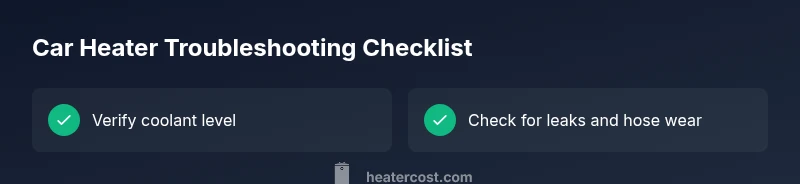
Car Heater Not Working? Troubleshooting Guide
Learn how to diagnose and fix a car heater that's not working. This step-by-step guide covers causes, tests, and practical fixes to restore heat safely and efficiently.


Car heater not working? The most likely causes are low coolant, a thermostat stuck open, air in the cooling system, or a faulty blend door. Start with simple checks: verify coolant level and radiator cap, ensure the engine reaches normal temperature, and confirm the blower is functioning. If heat remains absent, proceed to inspect heater hoses and thermostat, or book a professional diagnostic.
Why the heater may fail in a car
When the car heater stops delivering warmth, the problem usually sits in either the engine cooling loop or the HVAC (heating, ventilation, and air conditioning) system. The most common culprits include a low coolant level or air in the cooling system, a thermostat that won’t close properly, a faulty heater core, or a malfunctioning blend door that controls how much heat reaches the cabin. Less frequent but possible causes are a blown fuse, a failed blower motor, or a faulty climate control actuator. Start with the simplest checks: look for obvious coolant leaks under the car, inspect the coolant reservoir’s level when the engine is cool, and verify the radiator cap isn’t cracked or worn. If the engine runs hot or the gauge behaves unusually, the issue may lie in circulating coolant rather than producing heat in the cabin. For older vehicles, a clogged heater core can block heat entirely and require professional cleaning or replacement. Safety note: avoid opening pressurized cooling components when the engine is hot.
Quick checks you can perform safely
Begin with the easiest and safest steps first to confirm whether the problem is superficial or more serious. Check that the engine is cool before touching anything. Verify the coolant level in the reservoir and radiator (if accessible) and inspect for visible leaks. Make sure the HVAC settings are correct: fan speed up, temperature toward heat, and mode directing air toward the cabin. If you hear the blower but feel cool air, the issue could be the blend door or a faulty heater control valve (where applicable). Confirm the radiator and heater hoses feel warm after the engine reaches operating temperature—a sign that coolant is circulating. If the car runs without overheating and heat still won’t come, proceed to deeper checks or professional service.
Inspecting the cooling system and heater core
A key reason the heater is not delivering warm air is poor coolant circulation. Start by inspecting visible hoses for cracks or bulges and ensuring clamps are secure. If you suspect air in the cooling system, you may need to bleed the system according to the vehicle’s service manual. Air pockets can prevent coolant from circulating through the heater core, leading to cool air in the cabin. Look for signs of rust or sludge in the coolant, and consider a coolant flush if it’s discolored or smells off. A clogged heater core can mimic other issues; in this case, professional cleaning or replacement is typically required. Always use the correct coolant type and never mix different formulations without guidance.
Diagnosing thermostat and blend door issues
A thermostat that doesn’t regulate temperature can prevent heat from reaching the cabin. Check whether the upper radiator hose eventually gets hot after the engine reaches operating temp; if it stays cool, the thermostat may be stuck open. Conversely, a thermostat that sticks closed can overheat the engine and fail to supply heat consistently. The blend door (or actuator) controls how much hot versus cold air enters the cabin. If the blend door is stuck or the actuator malfunctions, you’ll get inconsistent or no heat even if the engine and heater core are fine. In many vehicles, diagnostics can be performed with basic tools, while some systems require a scan tool to read HVAC actuator status. If you’re uncomfortable with these checks, a professional service is advised.
Blower motor, fuses, and climate control
If the heater core and engine circuit seem fine, the issue may lie with the blower motor, fuse, or climate control system. A non-working blower can prevent heat from entering the cabin even when the heater core is hot. Check the fuses related to the HVAC system and test the blower motor by setting the fan to different speeds. If the motor runs intermittently or is noisy, the motor or wiring could be failing. Some vehicles require a diagnostic scan to verify the operation of the HVAC control module and actuators. In these cases, replacing a faulty blower motor or actuator is common but may require professional installation to ensure proper calibration.
When to seek professional help
If basic checks don’t reveal a cause, or if you notice signs of coolant leakage, engine overheating, or a persistent failure to heat the cabin, schedule a professional diagnostic. Dealing with cooling systems, heater cores, and HVAC actuators often requires specialized tools and knowledge. Professional service can prevent further damage and ensure the correct parts are replaced. If your vehicle is under warranty, contact the dealer or authorized service center to avoid voiding coverage. Document symptoms and any steps you performed so the technician has a clear starting point.
Preventive maintenance to avoid future heater problems
The best way to limit future heater failures is through proactive maintenance. Regularly inspect for coolant leaks and monitor the coolant level, especially before winter driving. Schedule periodic coolant flushes as recommended by the vehicle manufacturer, and replace worn hoses and clamps. Keep fuses for the HVAC system in good condition and test the blower motor periodically. Finally, ensure the cabin air filters are clean, as restricted airflow can amplify heat delivery problems and mask underlying HVAC faults.
Steps
Estimated time: 60-120 minutes
- 1
Ensure safety and prepare
Park on level ground and let the engine cool. Disconnect the battery if you’ll be working near electrical components. Gather tools and wear gloves to protect yourself from hot surfaces and coolant. This initial step reduces the risk of burns and injuries while you inspect the system.
Tip: Never open hot coolant components; wait until the engine is fully cooled. - 2
Check coolant level and hoses
With the engine cool, inspect the coolant reservoir and radiator (if accessible). Top up to the recommended level if it’s low, and check for signs of leaks around hose clamps and the radiator. Inspect hoses for cracks or bulges that could impede coolant flow.
Tip: Use the correct coolant type for your vehicle and never mix old and new coolants aggressively. - 3
Verify engine warms up and thermostat status
Start the engine and monitor the temperature gauge. If the temperature stays consistently low, the thermostat may be stuck open. If it climbs too high, it could indicate another cooling issue. Do not remove the radiator cap while the engine is hot.
Tip: If in doubt, perform the thermostat check with the help of a service manual or technician. - 4
Bleed air and check heater core flow
If you suspect air in the system, follow the vehicle’s bleeding procedure to remove air pockets. This helps restore proper coolant flow through the heater core. Look for any signs of air pockets or restricted flow in the heater hoses.
Tip: Air bleeding procedures vary by model; consult the owner’s manual for exact steps. - 5
Test blower and HVAC controls
Turn on the blower and set to heat. If the blower is silent or weak, inspect the fuse and blower motor. If you can hear noise but no airflow, the issue may be the blower wheel or ducting. Check climate control settings and actuator operation if available.
Tip: Listen for air movement and feel for airflow at each dash vent to localize the problem. - 6
Inspect thermostat and blend door operation
With the engine at operating temperature, observe whether the heater core gets warm and the output changes with temperature settings. A stuck blend door or faulty actuator can produce inconsistent heat. For some vehicles, a scan tool is helpful to confirm actuator status.
Tip: If the blend door is at fault, replacement may be necessary and should be done by a professional. - 7
Decide on professional help
If the heat issue persists after these checks, or if you find coolant leaks, a malfunctioning heater core, or a damaged HVAC module, arrange professional diagnostics. A trained technician can perform pressure tests and access specialized tools.
Tip: Keep a record of symptoms and steps you’ve taken to streamline the repair process.
Diagnosis: Car heater not working
Possible Causes
- highLow coolant level or air in the cooling system
- highThermostat stuck open
- mediumAir trapped in heater core or clogged heater core
- lowBlower motor, fuse, or HVAC actuator fault
Fixes
- easyCheck coolant level and top up if needed; c heck for leaks
- easyBleed air from cooling system and inspect radiator cap
- mediumTest thermostat operation and replace if stuck/open
- mediumDiagnose and repair blower motor or HVAC actuators; replace fuses as needed
Got Questions?
Why is my car heater not working?
Common causes include low coolant, a stuck thermostat, air trapped in the cooling system, or a faulty blend door. Begin with coolant level, engine temperature, and blower checks, then proceed to more advanced diagnostics if needed.
Most heater failures start with coolant or thermostat issues. Check basic cooling and blower problems first, then seek professional help if heat remains absent.
Can I fix a car heater myself?
You can handle basic checks such as coolant level, cap integrity, and blower operation. More complex tasks like diagnosing the blend door or heater core usually require professional tools and expertise.
Yes for basic checks, but more advanced heat system problems are best left to a pro.
How much does it cost to repair a car heater?
Costs vary by issue and vehicle, from simple hose or fuse replacements to thermostat or blower repair. A professional diagnostic can provide a clearer estimate based on your car’s make and model.
Costs depend on the problem and the vehicle; get a diagnostic quote for accuracy.
How do I tell if the thermostat is stuck?
If the engine runs cold or the heater never warms up, the thermostat may be stuck open. Monitor the temperature gauge and consider replacing the thermostat if symptoms persist.
A cold engine and no heat can indicate a stuck thermostat.
What if the blower motor still won’t blow air?
A non-working blower could indicate a failed motor, blown fuse, or faulty control module. Check fuses and test the motor at different speeds; replace the motor or actuator if necessary.
If the blower won’t run, inspect fuses and the motor; replacement may be needed.
Watch Video
The Essentials
- Check coolant level and thermostat status first
- Bleed air from the cooling system if needed
- Verify blower and climate controls work
- Consult a professional if heat remains absent