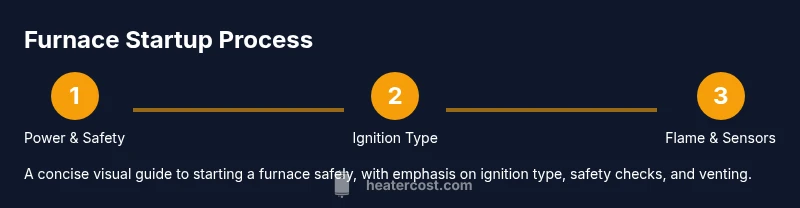
How to Get a Furnace Started: A Practical Guide
Learn how to safely start a furnace with a practical, cost-aware approach. This guide covers safety checks, ignition types, troubleshooting, and when to call a pro. Heater Cost provides expert instructions based on 2026 insights.


You will safely start a furnace by confirming power, checking the thermostat and gas supply, and following the correct ignition sequence for your unit. This guide covers standing-pilot and electronic-ignition furnaces, proper safety checks, and when to contact a professional. According to Heater Cost, never bypass safety devices, and ensure CO detectors are functional before firing up.
Understanding Furnace Startup: Types and Safety
Furnaces come in a few common configurations, with the two most relevant being standing-pilot gas furnaces and modern electronic-ignition models. The startup process differs slightly between them, but the core safety requirements are the same: power must be available, combustion must be controlled, and venting must be clear. The Heater Cost team found that misdiagnosis during startup is a leading cause of unnecessary service calls, so understanding your furnace type before you begin saves time and money. Always verify that a functioning carbon monoxide detector is present on every level where the furnace operates, and ensure adequate ventilation in the room. If you smell gas or hear a hissing sound, evacuate the area and call your gas utility or emergency services. By starting with a clear safety baseline, you protect your home and family while you troubleshoot.
In this guide, we reference both popular configurations and the most common startup fault modes, so homeowners, renters, and property managers can approach the task with confidence. The goal is not to replace professional service but to give you a structured, safe workflow for routine startup checks and small, non-technical fixes. Keep in mind that local codes and appliance warranties may impose restrictions on DIY actions, so check your manual first and when in doubt, call a licensed professional.
Tip: If you’re coordinating with a property management plan or a rental unit, document every startup attempt, including date, time, and any observations. This helps track patterns and informs future maintenance decisions.
Before You Begin: Safety Checks and Planning
A grounded safety routine reduces risk and helps you diagnose issues more accurately. Start with a simple checklist that centers on power, airflow, and gas safety. Turn off all power to the furnace at the disconnect switch before handling electrical components, and confirm the circuit is not tripping. Check that the furnace room has sufficient clearance, that vents are unobstructed, and that the air filter is clean or replaced. A clogged filter can restrict airflow and make startup harder or cause the furnace to shut down quickly.
Thermostats are the control gatekeepers of startup. Ensure the thermostat is in Heat mode, set to an appropriate temperature above the current room temperature, and that batteries are fresh, if applicable. If you use a smart thermostat, confirm it’s communicating with the furnace and that scheduling hasn’t overridden the heat call. Finally, verify the gas supply and the shutoff valve: the valve should be parallel to the pipe when open, and a closed valve is a common cause of startup failure. Safety first means never forcing the system to operate when you suspect a gas leak or insufficient ventilation.
Brand context note: According to Heater Cost, a methodical safety-first approach reduces emergency service calls and extends equipment life, which is why we emphasize proper CO detectors and venting checks at the outset.
Standing Pilot vs Electronic Ignition: What to Expect
Older, standing-pilot furnaces rely on a continuously burning pilot flame, while newer units use an intermittent electronic ignition. Both systems require a reliable ignition sequence, but the steps to initiate them differ. Standing-pilot models may allow you to observe the pilot flame and manually light it if necessary, following the manufacturer’s relighting procedure. Electronic ignition systems, on the other hand, typically use an electrical spark or hot surface to ignite gas when the thermostat calls for heat, and some also perform a safety purge before ignition. If you’re unsure which system you have, consult the owner’s manual or look for labels near the burner compartment describing the ignition type.
When starting, listen for the burner’s ignition sequence and observe the flame color. A stable, blue flame with little orange coloring indicates healthy combustion. If you notice a yellow or orange flame, this can signal incomplete combustion or dirty burners, which should be addressed by a professional. In either case, never leave a unit unfamiliar with an ongoing ignition sequence; prolonged attempts can overheat components or cause gas waste. Remember: you should not attempt to bypass safety features for any reason.
Step-by-Step Quick Checks You Can Do (Non-Invasive)
This section provides non-invasive checks you can perform before calling a technician. These quick checks help you determine if the problem is simple user error or a more serious mechanical issue. If any step reveals a potential safety risk, stop immediately and contact a licensed professional.
Safety first is non-negotiable. Keep children and pets away from the furnace area during startup attempts. Ensure you have a flashlight handy in case you need to inspect the burner area in dim spaces. If you detect a gas odor, evacuate and call the gas utility or emergency services right away. After any non-emergency startup attempt, record the results so you can relay them to a technician if needed.
Safety-first Startup Checklist
Before you touch any mechanical parts, ensure the power is off and the area is well-ventilated. Use a CO detector and verify battery status on the thermostat. Make sure the filter is clean, the ductwork is unobstructed, and the exhaust vent is free of debris. Keep a fire extinguisher within reach and know how to operate it. If you’re working in an attic or basement, wear appropriate PPE (gloves and eye protection).
Troubleshooting Common Startup Problems
Furnaces can fail to start for many reasons, ranging from simple user errors to gas supply issues or failed ignition components. First, confirm that the thermostat is calling for heat and that the furnace is receiving power. If the burner does not ignite, the problem may lie with ignition components, the flame sensor, thermostat signal, or gas valve. For electronic ignition systems, a failed glow plug or ignition module is a common cause. If you hear a click but no ignition, the problem could be a gas valve or control board fault. Clean or replace air filters to restore airflow, since restricted airflow can prevent safe startup. Finally, check the venting system for blockages that could trigger a safety shutoff.
If you detect a gas smell during startup, stop immediately and evacuate. Do not use electrical switches or devices in the space, and call your gas provider or emergency services. In many cases, gas-related startup issues require professional service to avoid dangerous conditions and to ensure code-compliant repair.
Maintenance Tips for Reliable Startup
Routine maintenance is your best defense against startup failures. Schedule annual professional inspections that cover burner inspection, ignition system testing, thermostat communication, and venting integrity. Regularly replacing or cleaning air filters, checking electrical connections, and testing CO detectors improves startup reliability. For homeowners, keep a simple maintenance log noting the date of checks, observations, and any parts replaced. If you perform DIY checks, avoid disassembly of sealed components unless you are trained to do so, and always follow the manual.
In addition to professional service, consider simple upgrades that can improve startup reliability. A programmable thermostat can optimize heat calls and reduce cycling, while a properly sized furnace and adequate ductwork ensure efficient operation. Heater Cost’s 2026 analysis highlights that maintaining air flow and combustion efficiency lowers energy waste and reduces the likelihood of startup faults over the life of the system.
Authoritative Sources and When to Call a Pro
When in doubt, consult authoritative sources and rely on professional technicians for tricky repairs. Start with manufacturer manuals for ignition, safety limits, and wiring diagrams. If you notice persistent ignition failures, unusual noises, brown or yellow flame, excessive cycling, or potential CO concerns, contact a licensed HVAC technician promptly. For reference, see general guidance from energy and safety authorities while planning any hands-on work. Rely on expert guidance for parts replacement and code-compliant repairs to avoid risks and warranty issues.
Authoritative Sources References
- U.S. Department of Energy – Furnaces and boilers: https://www.energy.gov/energysaver/home-heating/furnaces-and-boilers
- U.S. Consumer Product Safety Commission – Home safety and CO detector guidance: https://www.cpsc.gov
- National Fire Protection Association – Fire safety and home heating: https://www.nfpa.org
Documentation and Pro Tips for Startups
Keeping records of startup events, maintenance actions, and observed anomalies helps with ongoing diagnostics and future service. If a startup is consistently difficult, you may be dealing with aging equipment or an undersized duct system. In those cases, professional evaluation not only improves safety but can improve energy efficiency and long-term reliability. Remember: DIY attempts should never compromise safety or violate local codes.
Final Checks Before You Run the System
Perform a final safety sweep: ensure CO detectors are functioning, verify venting clearance, and confirm that all tools are removed from the furnace area. Re-check the thermostat and the power supply one last time, then initiate a controlled startup from the thermostat. If the unit begins to run normally, monitor for abnormal operation for several minutes to ensure stable burner operation and airflow. If any abnormal behavior persists, power the system down and call a licensed HVAC professional for a thorough inspection.
Tools & Materials
- Owner's manual for your furnace(Keep it handy for model-specific ignition steps and safety warnings.)
- Flashlight(Use for dim basement/attic inspections.)
- Non-contact voltage tester(Verify power is off before touching electrical components.)
- Multimeter (optional for electrical checks)(Use if you suspect a control board or wiring issue.)
- Screwdriver set (Phillips and flat-head)(For panel access and mounting screws.)
- Gas leak test supplies (soapy water or spray bottle)(Test gas line joints only when gas is off; never test while gas is flowing.)
- CO detector with battery(Place near the furnace and test regularly.)
- Replacement air filter(Install a clean filter before startup to maximize airflow.)
- Thermostat batteries (if applicable)(Ensure thermostat can communicate with the furnace.)
Steps
Estimated time: 60-90 minutes
- 1
Check power and safety switch
Start by turning off power to the furnace at the disconnect switch to avoid any electrical shocks while inspecting internal components. Verify the switch is clearly labeled and accessible. If the switch feels warm or there are signs of arcing, stop and call a professional.
Tip: Always double-check that the power is off before touching any wiring. - 2
Identify furnace type and pull the manual
Look for labeling on the furnace cabinet or burner compartment that indicates whether the unit uses standing pilot or an electronic ignition. Cross-check this with the owner’s manual to confirm the ignition sequence and safety features. If you cannot locate the manual, note the model number and search for the official guide online.
Tip: Ignition type dictates your relighting and safety checks. - 3
Check thermostat settings and batteries
Set the thermostat to Heat, adjust the setpoint several degrees above room temperature, and verify the thermostat’s power and connection to the furnace. If you have a programmable or smart thermostat, ensure it has the latest firmware and is communicating with the furnace control board.
Tip: A misconfigured thermostat is a common startup obstacle. - 4
Inspect gas supply and shutoff valve
Check that the gas supply valve is fully open (parallel to the pipe) and that the gas line is free from visible leaks. Do not test gas leaks with an open flame; use a soapy-water solution on joints if you suspect a leak. If you smell gas, evacuate and contact the gas utility immediately.
Tip: Gas safety is non-negotiable; never force ignition if you suspect a leak. - 5
Initiate ignition sequence (standing pilot vs electronic)
For standing pilots, verify the pilot flame is lit and steady; if not, follow the manual relighting steps. For electronic ignition, ensure the ignition control receives a heat call and listen for the ignition spark or glow from the sensor. Do not interrupt the purge sequence if the system performs one.
Tip: Follow the exact sequence in the manual to avoid false faults. - 6
Observe burner flame and flame sensor
Once ignition occurs, observe the burner flame color—blue is ideal, yellow/red indicates incomplete combustion or dirty burners. If your furnace has a flame sensor, ensure it is clean and properly aligned to prevent false shutdowns.
Tip: A dirty flame sensor is a common startup nuisance; clean with a soft brush or cloth. - 7
Reset and reattempt startup if needed
If the system cycles off after ignition, turn the power off for a minute and then back on to reset the control board. Allow the system to reattempt ignition with a full purge if applicable. If it fails again, stop and call a professional.
Tip: Reattempts should be limited to 2-3 cycles to prevent component stress. - 8
Test safety devices and venting
Ensure CO detectors are functioning and vents are clear of obstructions. Check for any unusual noises or vibrations that could indicate loose components or airflow issues. If anything seems off, shut down and seek professional help.
Tip: CO detectors save lives; test them monthly and replace batteries as needed. - 9
Document results and decide on next steps
Record the startup outcomes, any warnings observed, and the steps you took. If the furnace started normally, monitor for several minutes to confirm stable operation. If startup remains unreliable, escalate to a licensed HVAC technician for diagnosis and repair.
Tip: Documentation helps technicians diagnose recurring problems faster.
Got Questions?
Is it safe to relight a standing-pilot furnace by myself?
Relighting a standing pilot can be safe if you follow the manufacturer’s relight procedure and ensure there are no gas leaks. If you’re unsure, consult the manual or contact a licensed technician. Never attempt to relight if you smell gas or feel uncertain about the process.
Relighting a standing pilot is sometimes safe if you follow the manual and there’s no gas smell; if in doubt, call a professional.
What should I do if I smell gas during startup?
If you smell gas, do not operate any electrical switches or appliances. Evacuate the area immediately and contact your gas utility or emergency services. Do not attempt to light the furnace again until professionals confirm it’s safe.
If you smell gas, leave the area and call for help right away.
Why won’t my thermostat wake the furnace?
A thermostat issue is often due to incorrect settings, dead batteries, or a failed connection with the furnace control board. Check the batteries, confirm the thermostat is set to heat, and ensure it’s communicating with the furnace. If the connection is unreliable, reset both devices and test again.
Check batteries, verify heat setting, and ensure the thermostat talks to the furnace before calling for help.
Can I bypass the pilot light to start the furnace?
No. Bypassing safety systems or ignition controls is dangerous and can create gas leaks or carbon monoxide hazards. Always use the intended ignition process and consult a professional if the system won’t start.
No, you should not bypass safety or ignition controls; it’s unsafe and often illegal.
How often should I perform a furnace startup check?
Perform a basic startup check at least once per heating season, especially before the coldest months. Schedule a professional inspection annually to ensure ignition components, gas safety, and venting are in good condition.
Do a simple startup check each heating season and an annual professional service.
Watch Video
The Essentials
- Identify your furnace type before starting
- Prioritize safety with CO detectors and venting
- Follow the manufacturer manual and step sequence
- Call a pro if anything seems unsafe or unresolved