Heater Not Working at Home: Troubleshooting Guide
Urgent, step-by-step troubleshooting for a heater that won’t turn on. Safe checks, practical fixes, and when to call a professional—brought to you by Heater Cost.


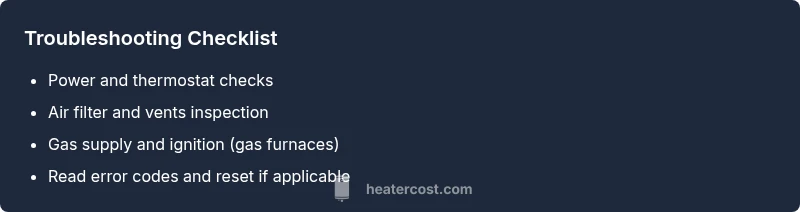
Start with the basics: verify power at the outlet or breaker, confirm the thermostat is set correctly, and replace batteries if needed. Check that the furnace switch is on and that the filter isn’t clogged. If there’s a gas furnace, listen for ignition and look for error codes. If nothing works, contact a licensed professional. According to Heater Cost, safety comes first.
Immediate safety and quick checks
In any urgent heating issue, safety comes first. If you smell gas, hear hissing, or notice a persistent flame or fuel odor, evacuate the area and call emergency services. Do not operate the heater until a licensed professional has inspected it. For typical non-emergency outages, begin with the basics: ensure the unit is plugged in, the circuit breaker is in the ON position, and the thermostat is awake and programmed correctly. If you’re renting, review your lease for maintenance responsibilities and any required reporting steps. According to Heater Cost, keeping the area clear of debris and ensuring proper clearance around combustion equipment reduces risk and improves efficiency.
Common causes of a non-working heater
Most home heaters fail for a handful of predictable reasons. A tripped breaker or blown fuse is common, as are thermostat malfunctions and clogged air filters. On gas systems, ignition problems or a gas supply interruption can stop heat production. For electric furnaces, a failed contactor or control board can prevent startup. Vent blockages, dirty heat exchangers, or safety shutoffs due to overheating also play a role. Understanding these culprits helps you triage quickly and avoid unnecessary part replacements.
Electrical and thermostat checks you can safely perform
Power issues are the simplest to verify. Start by confirming the breaker hasn’t tripped and that the unit is receiving power. If you use a programmable thermostat, replace batteries and test with a known-good unit or a simple room thermostat. Ensure the thermostat wires are securely connected to the furnace control board. If your thermostat displays error codes, note them and consult the manual or the manufacturer’s support site. Do not bypass safety features or attempt rewiring; electrical work can be hazardous if you’re not trained.
Gas furnace checks: ignition, gas supply, and safety interlocks
Gas furnaces require extra caution. First, check the gas valve to ensure it’s open. If the system lights but then goes out, the ignition sensor or flame sensor may be dirty or misaligned. Listen for the burner’s ignition sound; if you don’t hear it, do not attempt to relight the system yourself. Any odor of gas, pilot flame irregularities, or failure to ignite warrants a professional inspection. Regular maintenance helps prevent ignition failures and can catch loose connections before they fail.
Airflow, vents, and maintenance that prevent outages
Restricted airflow can trigger safety protections that shut the system down. Inspect and replace dirty air filters, and ensure supply registers and return vents aren’t blocked by furniture or debris. Check the blower compartment for loose components and listen for unusual noises indicating worn belts or loose wiring. Keeping the ducts clean and the condensate line clear (if applicable) improves efficiency and reduces the chance of future outages.
Reading error codes and using basic tools
Many modern furnaces display error codes on the control panel or via a flashing LED. Document the code pattern and consult the manual or Heater Cost’s troubleshooting resources for interpretation. A simple multimeter can confirm power at the furnace control board, but avoid testing live circuits if you’re unsure. When in doubt, capture the code and contact a pro for accurate diagnosis.
When to call a professional and what to expect
If basic checks fail to restore heat, or if you encounter gas odors, persistent ignition problems, or signs of damage, schedule a professional inspection. A licensed technician will verify gas pressure, test ignition components, inspect the heat exchanger for cracks, and evaluate the control board. Expect a diagnostic visit to include a safety assessment, recommendations for repair or replacement, and a preventative maintenance plan. The Heater Cost team recommends erring on the side of caution when dealing with gas systems or uncertain electrical issues.
Steps
Estimated time: Total time: 25-45 minutes
- 1
Check power and breaker status
Begin by locating the main power switch and the breaker panel. Reset any tripped breakers, and unplug and re-plug the furnace if applicable. Confirm the furnace is receiving power with a simple outlet tester or by checking the control panel indicators.
Tip: Always ensure hands are dry and you’re standing on a dry surface before touching electrical components. - 2
Verify thermostat settings and batteries
Set the thermostat to a temperature higher than the current room temperature and listen for a response from the furnace. If you use a programmable thermostat, replace batteries and re-sync with the system. Confirm wiring connections are secure and that the thermostat is calling for heat.
Tip: If you have a smart thermostat, try temporarily bypassing it with a known-good mechanical thermostat to identify if the problem is the device. - 3
Inspect air filter and ducts
Remove and inspect the air filter; replace if dirty. Check supply and return ducts for obstructions near floor or ceiling vents. A clogged filter can trigger safety shutoffs and reduced heat output.
Tip: Mark the date of replacement to maintain a regular maintenance schedule. - 4
Check the furnace switch and safety reset
Ensure the furnace power switch is in the ON position and the unit’s safety reset (if present) was not triggered. Some models require a reset button after a safety event; follow the manual for the correct procedure.
Tip: Do not force a reset if you’re unsure of the reason for the shutdown. Safety first. - 5
Assess gas supply and ignition (gas furnaces)
If you have a gas furnace, verify the gas valve is open and listen for the ignition sequence. If you don’t hear a burner ignite within a few seconds, do not attempt repeated relights. Gas-related issues require a licensed technician.
Tip: Never attempt to adjust gas pressures or service gas lines yourself. - 6
Read error codes or lights and document
Note any flashing lights or error codes on the control board. Consult the manual or Heater Cost resources for code meanings, and record them for the technician.
Tip: Take clear photos of the code panel to share with the pro. - 7
Test for simple sensor or limit switch issues
Some furnaces have limit switches that shut the system off if temperatures are too high. Check for obvious loose wires or burn marks; if unsure, stop here and call a pro.
Tip: Avoid touching live circuits; misadjusted switches can cause further problems. - 8
Call a professional if unresolved
If heat still isn’t restored after these steps, schedule a professional visit. A tech will check gas pressures, electrical integrity, ignition components, and safety interlocks.
Tip: Prepare notes on observed symptoms and any error codes to expedite diagnosis.
Diagnosis: Heater not turning on or not producing heat
Possible Causes
- highPower issue (tripped breaker, blown fuse, or unplugged unit)
- mediumThermostat malfunction or wrong settings
- mediumClogged air filter or blocked vents causing safety shutoff
- highGas supply problem or ignition failure (gas furnaces)
- lowFaulty ignition module or control board
- lowSafety lockout due to extreme cold or other system protection
Fixes
- easyReset the circuit breaker and verify the unit is powered
- easyReplace thermostat batteries and check settings; test with a known-good thermostat
- easyReplace or clean the air filter and clear blocked vents
- mediumConfirm gas supply that is open and attempt ignition only if you are trained; otherwise call a pro
- hardHave a professional inspect ignition module or control board
- easyClear obvious vent obstructions and verify proper venting
Got Questions?
Why won’t my heater start even though the power is on?
Common causes include a tripped breaker, blown fuse, or a faulty thermostat. Recheck the panel and thermostat settings, then retest the unit.
Check the breaker and thermostat first, then retry the heater.
Is it safe to relight the pilot light myself?
Relighting a pilot light can be risky if you’re not familiar with the manual and proper safety steps. If unsure, contact a pro.
Relighting a pilot light can be dangerous—follow the manual or call a professional.
What maintenance can prevent heater outages?
Regularly replace filters, keep vents clear, and schedule an annual professional inspection to catch issues early.
Keep up with filter changes and annual inspections to prevent outages.
Should I replace a thermostat that seems faulty?
If batteries and wiring checks don’t restore function, a thermostat replacement is reasonable. Use a compatible model and verify compatibility with your system.
If the thermostat isn’t responding after checks, replacement is often the fix.
When should I call a professional?
If you can’t identify or fix the issue after basic checks, or if gas is involved, call a licensed technician.
If basic checks don’t fix it or gas is involved, call a pro.
Why does my heater make strange noises?
Unusual noises often indicate loose components, motor wear, or airflow problems. Have a pro inspect to prevent further damage.
Strange noises can mean loose parts or airflow issues; get a pro if persistent.
Watch Video
The Essentials
- Verify power, thermostat, and airflow first.
- Gas systems require caution—call a pro if ignition fails.
- Regular maintenance prevents outages and extends heater life.
- Know when to escalate to professional help.