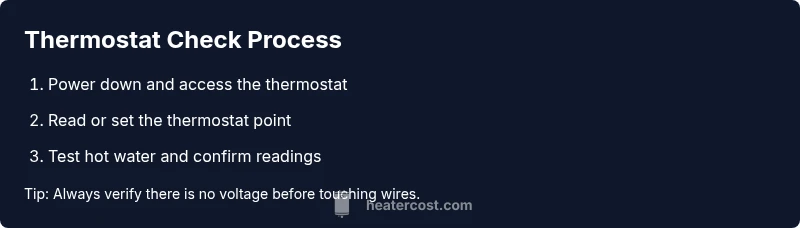
How to Check Thermostat on Water Heater
Learn how to check thermostat on water heater safely and effectively. This guide covers electric and gas models, prep, locating the thermostat, verifying the setpoint, testing output, and when to call a pro. Includes tools, steps, and a printable checklist.


Here's how to check thermostat on water heater: locate the thermostat, verify the setpoint, and test hot water output for accuracy. The guide covers electric and gas models, safety steps, and when to call a professional. Before you start, gather a screwdriver, digital thermometer, flashlight, and protective gloves.
Understanding Why Thermostat Matters
The thermostat on a water heater controls the maximum temperature of hot water delivered to your taps. Getting this setting correct matters for safety, comfort, and energy bills. For homeowners seeking practical steps, knowing how to check thermostat on water heater is a foundational skill that can prevent scalding and waste. According to Heater Cost, thermostat misadjustments and stale settings are common culprits behind uneven hot water and higher energy use. A properly set thermostat minimizes the risk of burns, reduces standby heat loss, and extends tank life. This section explains the big ideas behind thermostat operation and what you’ll gain by routinely validating settings across different models, including electric and gas units. While the exact dial layout varies, the core concepts are the same: temperature control, safe operation, and energy efficiency. By understanding these ideas, you’ll be prepared to follow the step-by-step instructions later in this article.
Different Thermostat Configurations for Water Heaters
Water heaters come in several configurations. Dial thermostats are common on older electric units, typically behind a small access panel. Newer electric models may use digital displays with up/down arrows to adjust the setpoint. Gas water heaters may also include a thermostat, but sometimes temperature is controlled by the gas valve, or via a digital control on newer models. This section helps you identify which configuration you have, and what that means for how you check thermostat on water heater. Regardless of model type, the goal is the same: verify the setpoint, confirm the water temperature output, and adjust according to recommendations to balance safety and energy costs. The homeowner’s toolkit should reflect the model’s type, not just a generic approach. In many cases, following the manufacturer’s instructions is essential, but the general steps stay similar: locate the access panel, read the current setpoint, and test water temperature after changes.
Safety First: Prepping for Inspection
Before touching any part of the water heater, turn off power to electric units or shut off the gas supply to gas-fired units. Wear protective gloves, use a flashlight, and keep the work area dry. Do not remove the panel while water is hot; allow it to cool slightly and drain a small amount of water if necessary to get clear access. If you’re unsure about the wiring, stop and consult a professional. These safety steps are critical to avoid electric shock, burns, or gas-related hazards. Remember to annotate the model number and serial, and have your user manual handy for reference. This prep work reduces surprises when you begin the inspection and ensures you can do the task safely.
Locating the Thermostat on Electric Water Heaters
Electric water heaters usually hide the thermostat behind a small removable access panel near the top of the tank. Remove the screw(s) holding the panel, then lift the cover to expose the thermostat dial or digital board. Some older models require you to remove an insulation panel first. When you locate the thermostat, take a moment to note the current setpoint and the scale used (Fahrenheit or Celsius). If it’s a dial, you’ll see a numbered range; if digital, the display will show the current setpoint. Keep screws in a safe place and avoid touching exposed wiring. This step is the critical first point in the process of how to check thermostat on water heater. After identifying the thermostat, you can proceed to verify the setting and test the output.
Locating the Thermostat on Gas Water Heaters
Gas water heaters may have the thermostat behind a separate access panel near the burner assembly. In many models, the thermostat is a simple dial you can adjust with a screwdriver; in others, it’s a small electronic module mounted on the side of the tank. Follow the manufacturer’s instructions to locate and access the thermostat safely. As with electric units, note the current setpoint and confirm the scale. If the thermostat is digital, the display will show a value that you can adjust with the control buttons. Gas systems require more caution because of the gas supply and venting—if you smell gas at any time, shut everything down, evacuate, and call the utility. This section highlights the differences and shows how to approach each type without risking safety.
Checking the Thermostat Setpoint and Temperature
With the panel removed, inspect the thermostat setpoint. If you have a dial, identify the setting that corresponds to your desired temperature, typically around 120°F (49°C) per common guidance from energy authorities. If you have a digital thermostat, look at the displayed setpoint and adjust using the up/down controls. Remember to recheck after changes by allowing hot water to run for 5–10 minutes. When teaching readers how to check thermostat on water heater, the focus is on accuracy, not guesswork. Ensure the scale is in Fahrenheit if you operate in the U.S. and record any changes for future reference. After adjustments, reassemble the access panel and return power or gas supply to normal. A small adjustment can significantly impact both comfort and energy use.
Testing Temperature Output and Calibration
Turn on the hot taps and let water run for several minutes to flush any cooler water from the tank. Measure the outlet water temperature with your digital thermometer, aiming for the target range recommended for comfort and safety. If the temperature is too low, recheck the thermostat or consider increasing the setpoint gradually, testing again after several minutes. If the water is too hot, lower the setpoint and test again. For digital thermostats, you may need to calibrate using a calibration procedure described by the manufacturer. Throughout this process, document readings and any adjustments. Heater Cost notes that consistent testing helps catch slow drift in the thermostat’s accuracy, preserving both safety and efficiency.
Troubleshooting Common Issues and Next Steps
No matter the model, some issues can hinder proper thermostat operation. Common problems include a thermostat that won’t hold a setpoint, water that’s inconsistently hot, or a panel that doesn’t reseal properly. If you notice a persistent mismatch between setpoint and actual water temperature after several test cycles, confirm there’s no exposure to cold drafts, and inspect the heating element or gas valve for signs of wear. For energy savings, ensure your insulation is adequate and the tank isn’t oversized for your household. If you smell gas, or if you cannot safely access the control area, shut off power and call a licensed technician. This is a gatekeeper section, guiding you toward safe, practical next steps and clarifying when professional help is warranted.
Authority Sources
For further reading, refer to official sources such as Energy.gov and ENERGY STAR pages on water heating. These resources provide guidance on safe operation, efficient settings, and maintenance best practices. Example sources include: https://www.energy.gov/energysaver/water-heating, https://www.energystar.gov/products/water_heaters, and https://www.epa.gov/iaq/indoor-air-quality-and-energy-efficiency. Always cross-check settings with your specific model’s manual.
Final Preparation and Next Steps
As a final preparation, keep a maintenance log with the thermostat setting, water temperature readings, and dates of checks. This habit helps you monitor drift over time and plan preventive maintenance. If you followed the steps in this guide and still notice unsafe temperatures, inconsistent hot water, or you smell gas, stop immediately and contact a licensed technician. The goal is safe, reliable hot water with good energy efficiency, and regular checks are the best way to achieve it. The Heater Cost team recommends scheduling a yearly quick check as part of home maintenance.
Tools & Materials
- Digital thermometer(Measures water temperature accurately)
- Screwdriver set (Phillips and flathead)(Access panel screws and mounting hardware)
- Non-contact voltage tester(Verify no live voltage before handling wiring)
- Flashlight(Illuminates dim access areas)
- Heat-resistant gloves(Protect hands when touching hot surfaces)
- Towels or a small bucket(Catch drips and keep area clean)
- Notebook and pen(Record readings and settings)
Steps
Estimated time: 30-45 minutes
- 1
Prepare and safety check
Power down the unit or shut off gas as appropriate. Put on gloves and use a flashlight to inspect the workspace. Ensure the area around the heater is dry and clear before touching any components.
Tip: Have the model number handy in case you need to consult the manual. - 2
Power down or shut off gas
Electric units: flip the corresponding breaker to OFF. Gas units: turn the gas control valve to the OFF position and verify there is no flame. Never skip this step when you are about to handle components.
Tip: Verify no voltage with the tester before panel removal. - 3
Remove the access panel
Use the screwdriver to remove the panel screws and gently lift the cover. Keep screws in a tray so they don’t get lost. Do not touch exposed wiring while the panel is off.
Tip: Take a quick photo of wiring layout for reassembly. - 4
Locate the thermostat and read the setpoint
Identify whether you have a dial or digital display. Note the current setpoint and confirm the scale (F or C). If a dial, understand the approximate range; if digital, read the exact value.
Tip: If you’re unsure, consult the manual before turning any dial. - 5
Adjust the setpoint if needed
If the goal is around 120°F, adjust the dial or keypad accordingly. Do not exceed recommended limits. Recheck the temperature after water has run for a few minutes.
Tip: Make small changes and test gradually to avoid overshoot. - 6
Test output and restore
Reassemble the panel and restore power or gas. Run hot water for 5–10 minutes and measure output with the thermometer. If readings are stable, you’ve completed the basic check.
Tip: Document the final readings for future reference.
Got Questions?
Is it safe to check a water heater thermostat myself?
Yes, with proper precautions. Always shut off power or gas and follow the manufacturer instructions. If you smell gas or see leaks, stop and call a professional.
You can check it yourself if you follow safety steps. If you smell gas, leave the area and call emergency services.
What thermostat temperature should I set?
Most guidelines suggest about 120 degrees Fahrenheit to balance hot water needs and energy use.
A typical safe setting is around 120 degrees Fahrenheit.
What tools do I need to check the thermostat?
You’ll want a screwdriver, a digital thermometer, a flashlight, and protective gloves.
You’ll need a screwdriver, a thermometer, a flashlight, and gloves.
What if the thermostat is digital?
For digital thermostats, check the displayed setpoint and adjust with the control buttons as directed by the manual.
Digital displays show the setpoint; adjust per the manual.
When should I call a professional?
If you smell gas, hear unusual noises, see leaks, or cannot safely access the control area, contact a licensed technician.
Call a pro if you smell gas or see leaks or can't access the panel safely.
Will changing the thermostat affect my energy bill?
Lowering the setpoint can reduce energy use, but ensure you still have enough hot water for your household.
Lowering the temp saves energy, but make sure you still have enough hot water.
Watch Video
The Essentials
- Identify thermostat type before starting
- Setpoint commonly around 120°F for safety and efficiency
- Test hot water output after any adjustment
- Restore power/gas and recheck for leaks
- Call a pro if you smell gas or see leaks