How to Make Water Heater Hotter: Safe, Practical Guide
Discover safe, practical steps to raise your water heater’s temperature and get warmer showers. This guide covers thermostat basics, testing methods, and maintenance tips from Heater Cost.


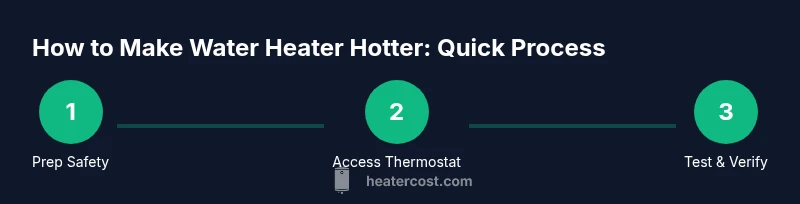
Learn how to safely adjust your water heater to hotter settings. This quick answer outlines the core steps, safety boundaries, and testing methods you’ll use to verify hotter water without compromising system health. You’ll understand safe temperature targets, how to measure outcomes, and when to involve a professional. Use these steps as a practical pathway to warmer showers with responsible care for equipment.
The goal: how to make water heater hotter safely
If you’re wondering how to make water heater hotter, this guide will walk you through safe adjustments, testing methods, and maintenance steps to help you enjoy warmer showers without compromising safety or system life. You’ll learn practical temperature targets, how to verify temps, and when to call a pro. By following these steps, you’ll understand both the appeal of hotter water and the responsibilities involved. The Heater Cost team emphasizes that safety and reliability come first, and any change should be approached in measured steps. This guide will help homeowners balance comfort with risk reduction, so you can enjoy warmer water without unintended consequences.
Safety boundaries and safe operation
Raising water heater temperature must be done within safe and manufacturer-recommended limits. Most homes target a maximum around 120°F (49°C) for everyday use to minimize the risk of scalds, especially for children and older adults. If you’re exploring how to make water heater hotter, recognize that hotter water increases energy use and can shorten appliance life if done carelessly. Always respect the unit’s wattage or gas burner capacity, and avoid bypassing safety features. Before any adjustment, inspect for leaks, listen for strange noises, and ensure your area remains dry and well-ventilated. If the heater is old or shows signs of corrosion, the safer route may be upgrades rather than a higher temperature.
Understanding thermostat types and what changes them
Water heaters come in electric and gas varieties, each with different thermostat arrangements. Electric models commonly have dual thermostats (upper and lower) that control heating elements, while gas models regulate via the burner and a thermostat. The goal is to adjust heat within safe limits while ensuring thermostats respond accurately. When you ask how to make water heater hotter, you’re really asking how to optimize thermostat settings without overburdening the system. If you’re unsure about your model, consult the manual or Heater Cost’s maintenance guides to identify which thermostat you’ll actually adjust. Do not attempt to modify burners or wiring beyond the documented settings.
Tools and safety prep you’ll need
Before touching any heater, gather the essentials: a non-contact voltage tester to confirm the absence of live power, a screwdriver suitable for accessing panels, heat-resistant gloves for protection, a digital thermometer to verify water temperature, and towels to keep the area dry. Optional but helpful is a small thermostat adjustment tool if your unit uses recessed set screws. Clear the workspace, turn off power where applicable, and keep fluids away from electrical components. With these precautions in place, you’re ready to proceed to measured temperature adjustments.
Electric water heaters: step-by-step thermostat adjustments
If you have an electric water heater, start by turning off power at the circuit breaker to avoid shock while you access the thermostat. Remove the access panel and insulation to expose the thermostat. Use your thermometer to verify current outlet water temperature, then adjust the upper thermostat slightly higher in small increments (e.g., 5°F at a time) while confirming that the lower thermostat remains within safe limits. After each adjustment, reassemble the panel, restore power, and run hot water from a faucet for several minutes to stabilize the temperature. Remember: never exceed the manufacturer’s stated maximum, and document each change so you can revert if needed.
Gas water heaters: burner settings and safety considerations
Gas-fired heaters rely on a burner and thermostat that control flame height. When increasing heat, do so gradually by adjusting the thermostat setting if your unit provides one, or by consulting the user manual for recommended ranges. Do not tamper with the gas valve beyond what the thermostat allows. After adjustment, observe the flame color (steady blue with no yellow tips) and listen for abnormal sounds. Test water temperature at multiple taps after several minutes of use. If you sense gas smell, pilot instability, or excessive noise, shut down and contact a licensed technician immediately.
Verifying temperatures: accurate testing methods
To determine whether your changes achieved hotter water, consistently test the faucet outputs. Run hot water for several minutes from two different taps and measure the temperature with a calibrated digital thermometer. Record readings at regular intervals to verify stability and even heat distribution. If you notice cold pockets or uneven warmth, there may be circulation issues, sediment buildup, or a failing thermostat. In such cases, you may need to purge the tank or schedule a service. For households with children or seniors, ensure the final temperature remains within safe limits.
Alternatives to cranking up the thermostat without sacrificing safety
If you’re uncomfortable increasing the temperature, consider strategies to make hot water feel hotter without raising the thermostat. A recirculation pump can deliver hot water faster to taps, reducing wait times and improving perceived warmth. Upgrading to a larger or more efficient unit, installing a point-of-use heater for busy bathrooms, or insulating hot-water pipes can also boost perceived warmth and efficiency. These options can yield faster hot water delivery without the higher energy draw associated with higher tank temperatures.
Maintenance tips that help warmth last longer
Regular maintenance supports consistent hot water. Flush the tank to remove sediment buildup that can insulate heating elements and reduce heat efficiency. Check the anode rod for corrosion, replace as needed, and inspect T&P relief valves for proper operation. Keep the area around the heater clean and dry, and ensure the thermostat is accessible for future adjustments. Simple insulation of exposed pipes reduces heat loss, making the warmer water you already have stay hotter longer between uses.
Troubleshooting: why your water isn’t hotter after adjustments
If hotter water remains elusive after adjustments, several issues could be at play. A thermostat that’s failing to read temperatures will prevent proper heating, while sediment buildup can shield heating elements. Gas heaters might have burner issues or flame misbehavior, and electric heaters may need their elements replaced. Check wiring connections if you’re comfortable, but avoid risky work that requires specialized tools. If problems persist, escalate to a licensed plumber or HVAC technician who can diagnose electrical or combustion concerns safely.
When to call a professional and what you’ll gain
If you notice persistent underheating, frequent temperature fluctuations, or signs of heat loss, it’s wise to consult a professional. A licensed technician can perform a precise thermostat calibration, inspect the heating elements or burner, and verify venting and combustion safety for gas units. They can also assess insulation and piping for heat retention. A pro can prevent unsafe temperature spikes and ensure your system remains within safe operating limits while delivering warmer water reliably.
Quick safety checklist before your next test
- Confirm the area is dry and clear of combustible materials. - Verify no water leaks around connections. - Use PPE, including gloves and eye protection. - Keep a thermometer handy to measure actual water temperature. - Document any changes and test temperatures at multiple taps. These steps help ensure you stay on track toward warmer water while maintaining safety and equipment longevity.
Tools & Materials
- Non-contact voltage tester(Verify power is off before servicing electric heaters)
- Screwdriver set (Phillips/flathead)(Open access panel and thermostat cover)
- Heat-resistant gloves(Protect hands when handling hot components)
- Digital thermometer(Accurately measure water temperature at taps)
- Thermostat adjustment tool (optional)(If thermostat has recessed screws)
- Towels or rags(Wipe spills and keep area dry)
Steps
Estimated time: 60-180 minutes
- 1
Power down and prep safely
Turn off power at the circuit breaker for electric models and use the voltage tester to confirm there is no live current before touching any wiring. This minimizes shock risk during panel removal. Gather your tools and lay towels to catch any drips as you work.
Tip: Double-check power off at the breaker before removing any panels to avoid shocks. - 2
Access the thermostat and inspect
Remove the access panel and insulation to expose the thermostat(s). Identify which thermostat you’ll adjust (upper vs lower on electric models or the single unit on gas models). Read the logo or model number in case the manual is needed for safe ranges.
Tip: If you’re unsure which thermostat controls heating, start with the upper thermostat on electric models. - 3
Determine a safe temperature target
Decide on a conservative target within safe limits (for most households, 120°F is the starting point; you may test up to around 130°F if your household has higher hot water demand and no children or elderly nearby). Avoid exceeding 140°F unless a professional confirms it is safe for your setup.
Tip: Do not jump more than 5–10°F per adjustment to avoid sudden scald risk. - 4
Adjust the thermostat
Using the appropriate screwdriver or tool, adjust the thermostat setting by small increments. If your thermostat has two settings, only adjust one at a time and test after stabilization. Reassemble panel and insulation when finished.
Tip: Keep notes of the starting setting so you can revert if needed. - 5
Restore power and run hot water
Turn the power back on and run hot water from a faucet for several minutes to confirm the new temperature. Use the thermometer to verify actual output and record the result.
Tip: Test at multiple taps to ensure even heat distribution. - 6
Verify stability and safety
Allow the system to operate for a few hours and re-check the temperature. If it drifts or feels too hot, dial back slightly. Make sure the water remains within safe limits for household members.
Tip: If temperature keeps drifting, consider professional inspection. - 7
Gas heater considerations
For gas heaters, avoid modifying the burner beyond thermostat controls. If the flame is yellow or unstable, or you smell gas, shut off and call a licensed technician. Re-confirm temperatures after adjustments.
Tip: Constrained burner adjustments should be done with care and professional support. - 8
Evaluate alternatives before further heating
If you’re uncomfortable with higher temperatures, try recirculation, point-of-use heaters, or improved insulation to improve perceived warmth without raising thermostat.
Tip: Better insulation can reduce heat loss and improve efficiency. - 9
Plan maintenance for longevity
Schedule regular maintenance: flush sediment, check the anode rod, inspect relief valve, and test performance. Regular care helps keep hotter water available with less risk.
Tip: Annual checks often prevent performance dips. - 10
Know when to call a pro
If results are inconsistent, temperatures overshoot, or you notice leaks, odors, or gas issues, contact a licensed professional. A pro can calibrate safely and verify system integrity.
Tip: Professional assessment safeguards against hidden issues.
Got Questions?
Is it safe to increase the temperature of my water heater?
Increasing the thermostat within manufacturer-recommended ranges can provide hotter water, but exceeding safe limits increases scald risk and may harm the tank. Always follow the manual and test temperatures carefully.
Yes, but only within safe limits and with proper testing.
What is the ideal temperature for hot water at taps?
Most households aim for around 120°F (49°C) to balance comfort and safety. If you need hotter water for a short period, you can test up to 130°F under supervision and with caution.
Aim for about 120 degrees, but you can test slightly higher if you monitor safety.
Can increasing the temperature save energy?
Raising the temperature generally increases energy use because the unit must heat more to reach and maintain the higher target. Efficiency gains come more from reduced standby losses when heat is used promptly and well-insulated.
Higher temps can use more energy; consider efficiency and usage patterns.
Why doesn’t my water get hotter after adjustments?
Possible causes include a faulty thermostat, sediment buildup, a failing heating element (electric), or burner/vent issues (gas). A professional can diagnose electrical or combustion problems and verify thermostat accuracy.
Several problems could keep water from heating properly; a pro can diagnose safely.
Should I install a recirculation pump to get hotter water faster?
Recirculation can deliver hot water faster and improve perceived warmth without raising tank temperature. It’s a feasible option for large homes, but it adds equipment cost and potential energy considerations.
Recirculation helps you feel hotter water faster without cranking temps up.
When should I call a professional?
If you notice leaks, gas smells, persistent underheating, or unstable temperatures, contact a licensed technician. They can safely calibrate thermostats, inspect burners or elements, and verify safety devices.
Call a pro if you’re unsure or detect safety concerns.
How often should I maintain my water heater?
Periodic maintenance—annually flushing the tank, inspecting the anode rod, and checking the relief valve—helps maintain performance and prolongs life. Regular checks also help sustain warmer water when temperature targets are updated.
Do annual checks for best performance.
Watch Video
The Essentials
- Set safe temperature targets before adjusting.
- Test temperatures at multiple taps for accuracy.
- Document changes to revert if needed.
- Gas heaters require careful monitoring; call a pro if unsure.
- Maintenance supports longer-lasting warmth and efficiency.