Hot Tub Heater Repair: A Practical Homeowner Guide
Learn how to diagnose, troubleshoot, and safely repair your hot tub heater with practical steps, tools, and maintenance tips from Heater Cost.


By following this guide, homeowners will learn how to diagnose and safely repair common hot tub heater issues, perform essential safety checks, and decide when to call a professional. You'll understand how a hot tub heater functions, how to test critical components with basic tools, and practical maintenance steps to extend heater life and maintain consistent warmth.
Understanding hot tub heater repair basics
According to Heater Cost, repairing a hot tub heater can save homeowners money and prevent costly damage when done safely. The Heater Cost team found that most heater failures stem from thermostat wear, mineral buildup, or electrical issues. A functional heater is essential for consistent water temperature, energy efficiency, and comfort. In this section, we’ll cover how heaters work in typical residential hot tubs, the most common failure modes, and what a repair plan should include. We’ll also clarify what parts are usually replaceable and what signs indicate you should replace rather than repair.
Safety first: risks and precautions before repair
Electrical power, water exposure, and high-temperature components create real safety hazards when working on a hot tub heater. Before you touch any wiring or panel, shut off power at the main breaker and test for no voltage using a non-contact meter. Wear insulated gloves and eye protection, and keep a dry workspace. If your spa is on a shared circuit, consider coordinating with others to avoid accidental energization. This section reviews best practices, including lockout/tagout procedures and staying within the heater’s rated specifications to prevent further damage.
Diagnosing a hot tub heater problem: symptoms and tests
Diagnosing heater issues starts with symptoms. Common signs include no heat or inconsistent temperature, a trip by the GFCI breaker, a clicking noise that isn’t followed by heating, or visible mineral buildup around fittings. Start with electrical checks: verify the power supply, inspect the high-limit switch, thermostat, and pressure switch if applicable, and test for continuity with a multimeter. For many units, the heating element failure is revealed by an open circuit or burned smell. Document symptoms and test results before replacing parts.
Common fixes and replacement parts for hot tub heaters
Many issues are repairable with standard replacement parts and some basic tools. Replacements frequently include the heating element, thermostat, high-limit switch, and gaskets or seals that prevent leaks. Mineral buildup can impede heat transfer; a proper flush and descaling routine can restore efficiency. In some cases, loose connections or corroded terminals trigger faults; cleaning and tightening these connections can resolve intermittent heating. Always verify compatibility with your spa model and service manual before buying parts.
DIY repair steps you can perform safely
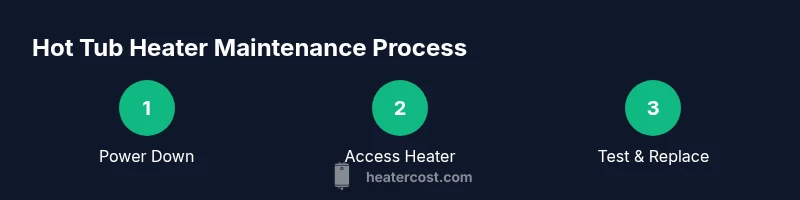
This section focuses on practical, hands-on actions you can take without specialized equipment. You’ll learn to safely disconnect power, access the heater assembly, test critical components, replace a failing thermostat or element (when accessible), reassemble with proper seals, and perform a final system test. Use a non-contact voltmeter to confirm power is off, and keep spare gaskets on hand to ensure a leak-free seal. If any step feels uncertain, pause and seek Professional help.
When to call a professional and cost considerations
Some heat-related issues require professional service, especially when electrical wiring or the spa’s control board is involved. If you notice burning smells, flickering lights, or persistent tripping of breakers after a repair, disconnect power and contact a licensed technician. A pro can verify electrical safety, test the control circuitry, and replace complex components such as the control valve or circuit board. How much does hot tub heater repair cost? Prices vary by part and labor, but you can expect a range that reflects your model and local rates.
Maintenance steps to extend heater life and prevent future failures
Preventive care extends heater life and reduces the chance of repeat failures. Regular water chemistry maintenance reduces mineral buildup that can coat heating elements. Schedule annual inspections and flushes to remove scale, replace worn seals, and inspect electrical connections for corrosion. Keep the surrounding area clean and dry, ensure proper venting if applicable, and monitor the thermostat settings to avoid oversizing the heater. Consistent maintenance lowers energy use and prolongs heater reliability. The Heater Cost team also notes that regular maintenance helps preserve warranty coverage and reduces unexpected downtime.
Tools & Materials
- Multimeter (digital, with continuity testing)(Set to appropriate range for voltage/continuity)
- Insulated screwdriver set(Flat and Phillips heads)
- Needle-nose pliers(For gripping small terminals)
- Non-contact voltage tester(Verify power off before touching wires)
- High-temperature silicone sealant(For minor gasket leaks)
- Replacement thermostat (compatible with your model)(Only if test indicates failure)
- Replacement heating element(Only if heater element is measured open)
- Gasket kit and replacement seals(Leak prevention around fittings)
- Soft rags and mineral deposits descaler(For simple descaling)
- Safety gloves and eye protection(Electrical safety and splash protection)
Steps
Estimated time: 60-120 minutes
- 1
Power down and verify readiness
Turn off the spa breaker and switch off all associated disconnects. Use a non-contact tester to confirm no voltage is present at the heater circuit. This prevents shock and damage during inspection.
Tip: Double-check the main service disconnect, not just the spa control. - 2
Access the heater assembly
Remove access panels and carefully locate the heater housing. Take photos of wiring before disconnecting anything to aid reassembly.
Tip: Keep track of wire colors and terminal positions. - 3
Inspect for obvious faults
Look for loose terminals, burnt wires, and visible corrosion. Tighten loose connections and clean corrosion with a dry brush.
Tip: Patience matters; rushed reconnections cause future faults. - 4
Test heater components
With the power off, test the thermostat and high-limit switch for continuity. If the element shows an open circuit, replacement is likely needed.
Tip: Compare readings to the service manual spec. - 5
Replace faulty parts
Install the replacement thermostat or heating element following the manufacturer’s instructions and torque specs. Replace gaskets to prevent leaks.
Tip: Use manufacturer-approved parts to avoid compatibility issues. - 6
Reassemble and seal
Reconnect all wiring, reseal the heater housing, and replace the service panels. Do not overtighten fittings, as this can crack plastic housings.
Tip: Apply silicone sealant only to intended joints. - 7
Test the system
Restore power and run the heater through a complete cycle. Check for leaks and verify stable water temperature. Watch for trip events on the breaker.
Tip: Allow the heater to cycle through a few times to confirm reliability. - 8
Document and schedule maintenance
Record parts used and test results. Schedule a routine descaling and inspection every 6-12 months depending on water quality.
Tip: Preventive maintenance is cheaper than emergencies.
Got Questions?
What are common signs my hot tub heater is failing?
No heat, temperature swings, or frequent breaker trips commonly indicate heater problems. Mineral buildup and faulty thermostats also cause reduced performance.
Common signs include no heat, temperature swings, and frequent breaker trips.
Can I fix a hot tub heater myself?
Minor issues on accessible components can be repaired safely with the right tools and replacement parts. More complex electrical faults should be handled by a licensed technician.
Some fixes are doable with the right parts and safety precautions; others should be left to pros.
What maintenance prevents heater failure?
Regular water chemistry, periodic descaling, and inspection of electrical connections reduce mineral buildup and corrosion that harm the heater.
Keep water clean, descale occasionally, and check connections to prevent failures.
Is replacing a heater expensive?
Costs vary by model and labor. DIY part replacements are cheaper than full professional service, but warranties may restrict self-repairs.
Costs depend on parts and labor; DIY can save money but watch warranty terms.
What safety precautions are essential?
Always power down, use insulated tools, and wear protective gear. Confirm no voltage before touching any wiring.
Power down, wear protection, and test for voltage before touching wires.
How long does a typical heater repair take?
A simple thermostat or element swap can take under two hours; more complex wiring or board work may require longer.
Most basic repairs take a couple of hours; complex jobs need more time.
Watch Video
The Essentials
- Identify likely failure points and test safely.
- Use manufacturer parts to maintain warranty and fit.
- Regular maintenance reduces long-term costs.
- Know when professional help is warranted.