Why Your Heater Stops Before Reaching Temperature and What to Do
Urgent, practical troubleshooting for a heater that stops before reaching temperature. Identify causes, safe fixes, and when to call a pro. Includes a diagnostic flow, step-by-step fixes, and maintenance tips. Based on Heater Cost Analysis, 2026.


If your heater stops before reaching temperature, start with quick, safe checks you can perform right away. Most outages stem from thermostat missettings, airflow restrictions, or ignition issues. A clean filter, unobstructed vents, and recalibrating the thermostat often restore heat quickly. If it persists, consult the diagnostic flow below. Heaters benefit from annual care, according to Heater Cost.
Quick Diagnosis: Start Here
If the heater stops before reaching temperature, begin with a quick, safe inspection to rule out obvious faults. This is especially crucial when you rely on heat for comfort. According to Heater Cost, most outages are caused by thermostat issues, airflow restrictions, or ignition problems that are quick to confirm. Start with simple checks you can perform with the unit powered off and, if applicable, with the power switch set to emergency off for gas appliances. Gather a flashlight, a clean cloth, and a notepad to record what you find. Temperature targets can drift over time as settings are lost or batteries die in wireless thermostats. Take notes so you can share precise details with a technician if needed. If you notice a gas odor or if you smell burning, leave the area immediately and call the utility or emergency services. With safety in mind, this guide emphasizes non-destructive checks you can perform before calling for service.
Common Causes for a Heater That Won't Reach Temperature
Several factors can cause this problem. Thermostat miscalibration or incorrect setpoint can stop heat early. Dirty air filters reduce airflow and trick the system into thinking it has reached temperature. In gas systems, ignition failure or flame-probe issues can stall heating. Blocked or leaky ducts can damage performance, and an overheated safety switch may trip, cutting heat. Based on Heater Cost Analysis, 2026, focus on the most accessible checks first and document any patterns (time of day, outside temperature, or run cycles).
Check Thermostat Settings
Make sure the thermostat is set higher than the current room temperature and that modes like heat or auto are active. If you have a programmable thermostat, verify schedules and batteries. A misconfigured timer can prevent the unit from engaging, or a dead battery can cause false readings. After adjusting, give the system 5–10 minutes to respond; if it still fails to reach target, proceed to the next checks.
Inspect Air Filter and Vents
A clogged air filter is a frequent culprit. Replace or clean the filter according to the manufacturer’s instructions, and inspect supply and return vents for blockages. Clear obstructions from furniture, drapes, or storage near vents. If airflow improves but the surface temperature remains low, the issue is likely downstream in the system (ductwork, blower, or damper).
Ignition and Burners (Gas) or Electric Elements
Gas furnaces rely on a reliable ignition sequence. If the pilot light won’t stay lit or the electronic ignition fails, heat won’t reach the setpoint. Electric heaters can have a failed heating element or thermal fuse. In either case, do not attempt to repair gas components yourself unless trained. The next steps depend on your system’s age and warranty.
Electrical and Safety Components
Inspect breakers and fuses for trips or burns. A tripped breaker or a blown fuse can silence the system, making it seem like the heater is malfunctioning. Check for loose connections at the thermostat, control board, or blower motor. If you notice buzzing, burning smell, or visible damage, shut down power immediately and call a pro.
Resetting, Recalibrating, and Testing
After performing the checks, reset the thermostat, clear any fault codes (if your system has a display), and run a manual heat call. Wait for the unit to cycle through a full heat-up. If the problem persists, you likely need professional assessment of ignition, gas pressure, or control circuitry.
Maintenance to Prevent Recurrence
Set a schedule for seasonal maintenance including filter changes, duct cleaning, and thermostat calibration. Replace aging components before failure and keep a log of service dates. Regular care improves reliability and reduces the risk of sudden outages.
What a Pro Will Do and How to Prepare
If you’re calling a pro, provide the model number, recent maintenance history, and any fault codes. Note when the issue started and whether it occurs during cold starts or under load. A technician can safely diagnose gas-related issues, electrical faults, and control-board problems that require specialized tools.
Steps
Estimated time: 30-60 minutes
- 1
Power down and ensure safety
Turn off the heater and, if applicable, switch off the circuit breaker. If you smell gas, evacuate and call the utility immediately. Wait 5 minutes for any residual pressure to dissipate before removing access panels.
Tip: Always prioritize safety; do not bypass gas safety procedures. - 2
Check thermostat settings
Verify the thermostat is set to heat and higher than the room temperature. If you have a programmable model, review current schedules and ensure batteries are fresh.
Tip: If you have a smart thermostat, try a manual heat call from the device. - 3
Inspect and replace air filter
Locate the air filter, remove it, and inspect for dirt. Clean or replace it following the manufacturer’s guidelines. A clogged filter reduces airflow and can prevent full heat.
Tip: Use the correct filter rating and size. - 4
Clear vents and inspect ductwork
Check supply and return vents for blockages. Ensure vents are open and free of obstructions. If you notice visible leaks or significant dust, schedule duct cleaning.
Tip: Keep furniture away from vents to maintain airflow. - 5
Inspect electrical and ignition components
For gas systems, check the ignition sequence; for electric systems, inspect heating elements. If you’re unsure, stop and call a professional to avoid shock or gas hazards.
Tip: Don’t attempt gas repairs; only perform safe, non-metalwork checks. - 6
Reset and test the system
After checks, reset the thermostat and run a test heat cycle. If the system still won’t reach temperature, escalate to professional service.
Tip: Document fault codes or symptoms to share with the tech. - 7
Schedule professional maintenance
Even if the heater works now, schedule a safety inspection and preventive maintenance. Regular care reduces future outages and saves energy.
Tip: Keep service receipts for warranty purposes.
Diagnosis: Heater stops before reaching target temperature
Possible Causes
- highThermostat miscalibration or incorrect setpoint
- highClogged air filter or restricted airflow
- mediumIgnition issues or heating element failure
- mediumBlocked or leaky ducts or vents
- lowOverheat safety switch triggered
Fixes
- easyReset thermostat and recalibrate; replace batteries if wireless
- easyClean/replace air filter; ensure vents unobstructed
- mediumInspect ignition/burner or heating element; call pro if unsure
- mediumCheck ductwork for obstructions and seal leaks
- hardTest safety switches and limit controllers; replace faulty parts
Got Questions?
What should I do first if my heater stops before reaching temperature?
Start with safety checks: confirm power, inspect the thermostat, and examine airflow. If you smell gas or hear abnormal noises, exit and call emergency services. These steps cover the most common causes and reduce risk before professional help.
First, check safety and thermostat settings, and look for airflow issues. If you smell gas, leave the area and call for help.
Can a dirty air filter cause the heater to stop short of temperature?
Yes. A clogged filter restricts airflow and can fool the system into ending heat cycles early. Replacing the filter is an easy first fix that often restores normal operation.
A dirty filter can block airflow and cause early heat cutoff; replace it and test again.
Is thermostat calibration the most common cause?
Thermostat miscalibration or a failing sensor is a frequent reason for early heat. Recalibrating or replacing the thermostat often resolves the issue.
Thermostats are a common culprit; recalibrate or replace if needed.
When should I call a professional?
If you smell gas, hear hissing, see damaged wiring, or the unit won’t heat after basic checks, call a licensed technician. Gas and electrical work can be dangerous.
If you smell gas or see damage, call a pro—gas and electric work can be risky.
Can power cycling fix the problem?
Power cycling can reset some fault codes but isn’t a cure for all issues. Use it after safe checks have been completed.
Turning it off and on again can reset some faults, but it won't fix underlying hardware.
Are there safety risks if I ignore the issue?
Yes. Continuing to operate a malfunctioning heater can cause carbon monoxide buildup, fires, or energy waste. Seek professional evaluation if symptoms persist.
Ignoring issues can be dangerous—get a pro if it persists.
Watch Video
The Essentials
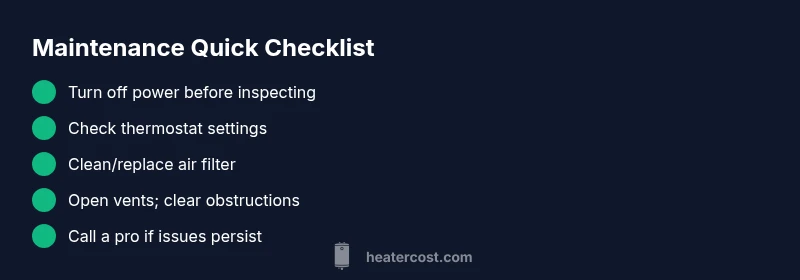
- Test thermostat and settings first
- Clean/replace air filters regularly
- Clear vents and check airflow paths
- Call a pro for ignition/electrical issues
- Maintain annual heating-system care