Heater Is On But Not Heating: Troubleshooting Guide
If your heater is on but not heating, start with simple checks, a clear diagnostic flow, and safe fixes. This urgent guide from Heater Cost helps homeowners diagnose, fix common no-heat issues, and know when to call a pro.


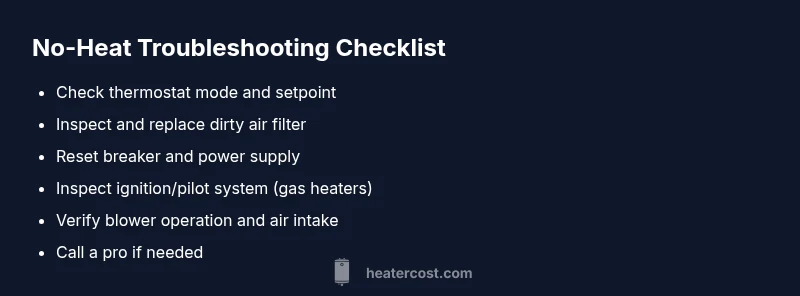
Most often, a heater that is on but not heating is caused by a thermostat misread, a clogged air filter, or a safety shutdown. Start with the simplest checks: verify the thermostat is in heat mode and set higher than the room temp, replace a dirty filter, and reset power at the breaker. If heat still won't come, follow the diagnostic flow.
Why the heater is on but not heating
When a furnace or space heater runs without producing warmth, the diagnosis often starts with a few common, easily fixable issues. The symptom “heater is on but not heating” is most frequently caused by a thermostat misread or mis-set, a dirty air filter that blocks airflow, or safety interlocks that have tripped. In many homes, these root causes are straightforward to test and correct. According to Heater Cost, addressing these basic factors first resolves the majority of no-heat situations without specialized tools. As you work through the checks, you’ll gain a clearer picture of whether the problem is the control system, airflow, or a safety mechanism that needs a professional eye.
Safety first: quick checks you can do safely
Safety is the priority. Before you touch any electrical components, turn off power to the heater at the thermostat and, if you can, switch off the dedicated breaker. Use a flashlight to inspect, keep loose clothing away from moving parts, and avoid working inside the cabinet when you’re unsure about wiring. Simple checks include confirming the thermostat display is active, ensuring vents are open and unobstructed, and verifying there’s no visible damage to wires. If you see signs of a gas smell or burning odor, leave the area and call a professional immediately.
Common causes explained
There are several frequent culprits behind a heater that stays on but doesn’t heat. A thermostat that’s in the wrong mode (Auto instead of Heat) or setpoint too low is a common offender. A clogged air filter reduces airflow and makes the system struggle to heat. A tripped breaker or blown fuse interrupts power to the heating circuit, and ignition or pilot-light problems can prevent heat production in gas furnaces. Finally, faulty safety switches or a failed limit switch can prevent heat without turning off the unit entirely. Understanding these causes helps you diagnose efficiently and safely.
How to assess comfort and energy use
Evaluate how well the heat output matches the room temperature. If parts of your home stay cold while other areas warm, drafts and insulation problems may be the real culprit. Check for leaks around windows and doors, seal air gaps, and try closing vents in unused rooms to balance airflow. This step identifies whether the issue is the heater itself or the building envelope. Document your observations so you can share them with a technician if needed.
How to interpret thermostat and control settings
Many no-heat issues stem from simple control settings. Confirm the thermostat is set to Heat, not Auto, and that the fan is on Auto rather than On. If you use a programmable or smart thermostat, ensure schedules aren’t dropping heat unexpectedly and that the device is communicating with the furnace. If batteries were changed recently, re-sync the receiver and verify that it’s receiving a signal from the thermostat.
When to call a professional
If basic checks don’t restore heat, or you encounter signs of danger like gas odor, persistent clicking or ignition failure, or carbon monoxide alarms, stop and contact a licensed technician. Gas furnaces require specialized training, tools, and permits. For most no-heat situations where heat fails after simple checks, a professional diagnostic saves time and ensures safety. Maintain a repair log to help the technician diagnose the issue faster.
Preventive maintenance to avoid future no-heat issues
Regular maintenance dramatically reduces no-heat events. Change or clean filters every 1–3 months, schedule annual professional inspections, and keep vents clear. Update thermostat firmware if applicable, and note any changes you make to the system. A consistent maintenance routine lowers energy costs, extends equipment life, and minimizes unexpected cold snaps.
Steps
Estimated time: 45-60 minutes
- 1
Power and safety check
Turn off power to the unit at the thermostat and the dedicated breaker. Confirm there is no visible hazard before touching wiring or components. Then turn the power back on after initial checks.
Tip: Always prioritize safety; if unsure, skip to professional help. - 2
Verify thermostat settings
Make sure the thermostat is in Heat mode and set point above room temp. If you have a programmable thermostat, confirm schedules aren’t dropping the heat unexpectedly.
Tip: Test by temporarily increasing setpoint by 5–10 degrees. - 3
Check and replace air filter
Locate the air filter, inspect for dirt, replace with the correct size if dirty. Clogged filters impede airflow and heat distribution.
Tip: Hold filter up to light; if you can't see light, replace. - 4
Reset power and observe
Switch off the unit, wait 30 seconds, then power back on and listen for ignition or blower start. Watch for abnormal sounds or error indicators.
Tip: Note any blinks or error codes on the display. - 5
Inspect gas ignition/ignition system
If you have a gas furnace, observe the pilot light or electronic ignition. If the flame won’t light or stays off, do not attempt risky repairs.
Tip: Gas systems require professional service. - 6
Call a professional for persistent no-heat
If the heater still doesn't heat after basic checks, schedule a diagnostic with a licensed technician. Mention any recent changes you made.
Tip: Keep a maintenance log for reference.
Diagnosis: Heater is on but not heating
Possible Causes
- highThermostat in incorrect mode or mis-set
- highDirty air filter restricting airflow
- mediumTripped breaker or blown fuse
- lowIgnition or safety interlock issue (gas heater)
Fixes
- easyTest/adjust thermostat: set to heat, verify temperature, and remove any scheduling conflicts
- easyReplace or clean the air filter; ensure blower/fan operates
- easyReset the circuit breaker and power switch; inspect wiring only if safe
- mediumIf ignition/safety interlock is suspected, call a licensed technician
Got Questions?
Why no heat when the heater is on?
No heat is most often caused by thermostat mis-configuration, dirty filters, or a safety interlock. Start with simple checks, then move to a diagnostic flow if needed.
No heat is usually due to thermostat settings, a dirty filter, or a safety interlock; begin with basic checks, then progress to the diagnostic flow.
What should I check first if the thermostat isn’t working?
First ensure it’s set to Heat, not Auto, and that the setpoint is above room temperature. If it’s a smart thermostat, verify app syncing and device pairing.
First, confirm the thermostat is in Heat mode with a higher setpoint, and check any app syncing if you have a smart thermostat.
Can a dirty filter cause no heat if the unit runs?
Yes. A dirty filter can restrict airflow and prevent proper heating even if the fan runs. Replacing the filter often resolves the issue.
Yes. A clogged filter can stop proper heating even if the system runs; replace it to restore airflow.
Is it safe to reset the breaker myself?
Resetting a breaker is generally safe if you know what you’re doing. If you’re unsure or see damage, call a pro instead.
Resetting a breaker can be safe if you know what you’re doing; if in doubt, contact a professional.
When should I call a professional for a gas heater?
Call a professional if you smell gas, hear unusual ignition noises, or fail basic no-heat checks. Gas furnaces require specialized knowledge and permits.
Call a professional if you smell gas or ignition issues; gas furnaces need trained technicians.
How often should I maintain my heater to prevent this issue?
Aim for annual professional inspections plus routine filter changes and quick checks every few months to keep heat consistent.
Have an annual professional check, plus regular filter changes to prevent no-heat problems.
Watch Video
The Essentials
- Check thermostat settings and filter first.
- Reset power and inspect breakers safely.
- Different causes require different fixes.
- Call a pro for gas or electrical safety concerns.