Gas Heater Not Working at Home: Urgent Troubleshooting Guide
Urgent troubleshooting guide for a gas heater not working at home. Safety first, then step-by-step checks, diagnostics, and when to call a pro—brought to you by Heater Cost.


Immediate steps: If the heater not working in house gas is detected, prioritize safety, check for gas smells, and evacuate if necessary. Shut off the gas valve, ventilate, and call emergency services if odor persists. Then verify gas supply is on, power to the unit, and thermostat settings. If ignition still fails, reset the circuit breaker and arrange a professional visit.
Immediate safety steps when the heater not working in house gas
When you notice the heater not working in house gas, safety must come first. If you smell gas, evacuate people and pets from the home immediately and call your gas utility or emergency services. Do not operate electrical switches or lighting during a suspected gas leak. If there is no strong odor, you can proceed with caution: ventilate the area by opening doors and windows, and turn off the gas supply at the appliance shutoff valve if you know how to do so safely. This initial safety window buys time for a proper diagnostic without risking a gas-related incident. According to Heater Cost, acting quickly reduces risk and cost over the long term while you assess the next steps for heating recovery in 2026.
Understanding a gas heater: key parts and why they fail
A gas furnace comprises the gas valve, ignition system (pilot or electronic), burners, heat exchanger, thermostat, and the exhaust vent. Any one of these parts can fail and stop heat production. A blocked vent or misaligned flue can shut down the cycle, while a faulty thermostat can keep the system cold even if gas is available. Modern systems with electronic ignition can fail to ignite if the ignition module or control board malfunctions. Regular maintenance reduces the likelihood of these failures and helps you catch wear before it becomes a problem.
Common symptoms and their meanings
Symptom: no ignition at all. Likely causes include gas supply issues, ignition system faults, or a tripped breaker. Symptom: partial heat or cycling on/off rapidly. This can indicate thermostat problems, airflow restrictions, or a dirty filter. Symptom: heat but inconsistent temperature. This points to thermostat calibration, sensor issues, or ductwork imbalances. By recognizing these patterns, you can triage whether it’s a quick fix or a call to a professional.
Diagnostic flow and initial checks you can perform
Start with a simple checklist: confirm the thermostat is set to heat and above room temperature, check for any gas odor, verify the gas valve at the furnace is fully open, and ensure the furnace is receiving power (breaker on, switch up). If you have an electronic ignition, listen for the ignition sequence; a click without flame usually indicates an ignition fault. Record each result to guide a technician and reduce diagnostic time.
Step-by-step actions you can take (safe to perform)
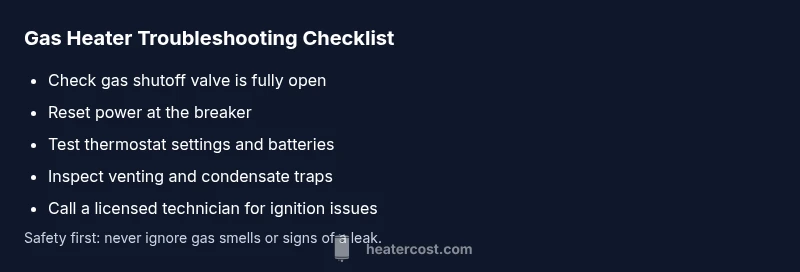
- Check gas supply and valve: ensure the valve is open and there’s no shutoff downstream. 2) Inspect electrical supply: flip the furnace switch off, then on; reset the circuit breaker if tripped. 3) Test thermostat: replace batteries, verify programming, and confirm the setpoint. 4) Attempt ignition: for pilot models, relight per manufacturer instructions; for electronic ignition, reset if applicable. 5) Examine vents and condensate: clear obstructions and ensure proper venting. 6) When to call a professional: if you smell gas, or ignition still fails after the basic checks.
Safety reminders and maintenance tips
Never bypass safety devices or operate a gas appliance that smells of gas. Keep a CO detector near the furnace and schedule yearly maintenance with a licensed technician. Regular inspections help prevent emergencies and extend the life of your heater. For homeowners, keeping logs of maintenance and noted issues helps track wear and plan replacements before failures occur.
Steps
Estimated time: 60-90 minutes
- 1
Check gas supply and valve
Locate the gas shutoff valve near the furnace and confirm it is fully open. Look for any signs of a gas odor or leaks around connections. If you’re unsure about gas safety, evacuate and call your gas utility immediately.
Tip: Never force a valve lever; a stiff valve can indicate a larger issue. - 2
Inspect electrical supply
Turn off the furnace power switch, then toggle the circuit breaker. Wait 60 seconds and restore power. Listen for the furnace’s ignition sequence when it restarts.
Tip: Use a non-contact voltage tester to confirm power before touching wires. - 3
Test thermostat and controls
Set the thermostat to heat and higher than room temperature. If you have batteries, replace them. Confirm there are no conflicting schedules or child locks that prevent heat call.
Tip: Calibrate or replace a malfunctioning thermostat as needed. - 4
Attempt ignition or relight
For pilots: follow the manufacturer’s relight steps, ensuring the area is safe. For electronic ignition: listen for a click and flame; if no flame appears after a few seconds, stop and move to professional help.
Tip: Keep a clear path to the heater and avoid leaning over the burners. - 5
Check venting and condensate
Inspect outdoor vent connections for obstructions like debris or snow. Ensure the condensate trap drains properly and there are no frost or ice blocks that could impede airflow.
Tip: Clear venting safely using a long brush or a gentle blast of compressed air if allowed by the manual. - 6
Assess need for professional service
If ignition still fails, if you smell gas, or if you notice water/oil leaks, contact a licensed technician for a comprehensive gas safety check and potential component replacement.
Tip: Document symptoms, dates, and any error codes to speed up diagnosis.
Diagnosis: Gas heater won't ignite or stay on
Possible Causes
- highGas supply shutoff or empty line
- highIgnition system failure (pilot light or electronic ignition)
- mediumThermostat or control board fault
- mediumElectrical supply issue (tripped breaker)
- lowVenting blockage or exhaust restriction
Fixes
- easyVerify gas valve is fully open and gas line delivering gas
- easyCheck ignition module and relight pilot if applicable
- easyReset furnace breaker or replace blown fuse, then retry ignition
- easyTest and calibrate thermostat; replace batteries if needed
- mediumInspect venting and condensate traps for blockages
- hardCall a licensed gas technician for a safety check and repairs
Got Questions?
What should I do first if my gas heater won’t ignite?
Start with safety: check for gas odor, evacuate if present, then verify gas supply, power, and thermostat settings. If ignition still fails, reset the breaker and prepare to call a professional.
First, prioritize safety and check gas odor and power. Then verify gas supply and thermostat settings, and reset the breaker if needed before calling a pro.
I smell gas near the furnace. Is it safe to troubleshoot?
No. Gas smells require immediate evacuation and calling your gas utility or emergency services. Do not operate electrical switches or create sparks.
If you smell gas, leave the area and contact emergency services right away. Do not troubleshoot on-site.
Can I relight a pilot light myself?
Only if your unit uses a pilot light and you have the manufacturer’s relighting instructions. If you’re unsure, skip relighting and call a professional.
Relighting can be safe if you follow the manual. If not, contact a pro to avoid a gas leak.
Why isn’t my thermostat controlling heat properly?
Check batteries, recalibrate, and verify the correct mode. A miscalibrated thermostat or old batteries can prevent heat from turning on.
Check the thermostat batteries and settings; recalibrate if needed before seeking further help.
How often should a gas heater be serviced?
Most homes benefit from annual or biannual professional service to maintain safety and efficiency.
Annual or biannual service keeps your gas heater safe and efficient.
What if my heater makes unusual noises after starting?
Unusual noises can indicate loose parts or airflow issues. Stop operation and contact a technician to inspect.
If you hear strange noises, stop using it and get a pro to check for loose parts or blockages.
Watch Video
The Essentials
- Prioritize safety before any troubleshooting action
- Verify gas supply, power, and thermostat settings first
- Use diagnostic flow to avoid unnecessary steps
- Call a licensed professional for ignition or gas safety checks