Heater Not Turning On: Troubleshooting Guide
Urgent, step-by-step troubleshooting for a heater that won’t turn on. Check power, thermostat, pilot light, and safety switches. When to call a pro. Based on Heater Cost Analysis, 2026.


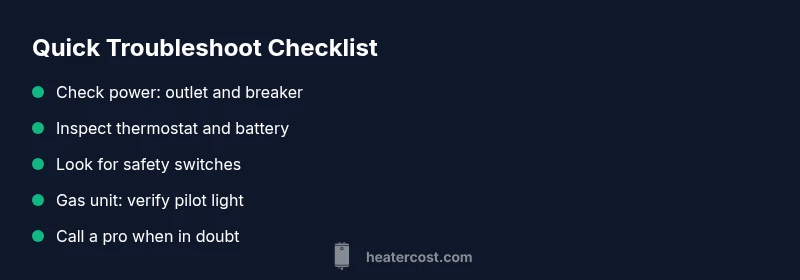
According to Heater Cost, the quickest fix for a heater not turning on is a quick power and control check. Start by verifying the outlet or circuit breaker is live, then confirm the thermostat is set correctly. If it’s a gas unit, check the pilot light. If the heater still won’t ignite, stop and call a licensed pro.
Common causes of a heater not turning on
According to Heater Cost, most failures originate in simple, correctable issues rather than worn components. In many homes, a heater that won’t turn on stems from one of five culprits: a dead power source (outlet, extension cord, or a tripped circuit breaker), a thermostat misread or dead batteries, a safety switch or limit switch that has tripped, a gas ignition problem (pilot light out or ignition module), or a fuel-supply issue (gas valve closed or insufficient propane). Based on Heater Cost Analysis, 2026, the most frequent culprits are power, thermostat, and ignition-related problems, often compounded by safety interlocks that halt operation. Start here: verify you have power, confirm the thermostat is set properly, and check the unit's on/off switch and reset button if present. If you can confirm these basics and the unit still won't start, move on to deeper checks or call a pro. This approach minimizes risk and buys you time before a service visit.
Safety checks before you touch anything
Safety is the top priority when your heater won't ignite. If you smell gas, hear hissing, or detect scorch marks, evacuate and call emergency services immediately. For electric heaters, ensure the area around the unit is clear of combustibles and never bypass safety devices. Before touching any internal components, switch off power at the main breaker and verify the supply is indeed off. The goal is to avoid CO exposure, electric shock, or fire. When in doubt, err on the side of caution and contact a professional. Heater Cost’s guidance emphasizes treating any gas-related issue as a potential emergency until proven safe by a licensed technician.
Home checks you can perform safely (electric heaters)
Electric heaters rely on a stable power supply and a functional thermostat. Start with the easy, non-invasive checks: confirm the outlet has power by plugging in a lamp or using a voltage tester; inspect the circuit breaker or fuse box for a tripped breaker or blown fuse; ensure the heater’s power switch is on and that any reset or thermal cutoff button has not been tripped. Next, test the thermostat: replace old batteries if applicable, re-set the temperature to a comfortable level, and verify that the unit is indeed receiving a signal to turn on (some models require a specific mode or timer). If your heater still does not respond, move to more advanced checks or call a pro. These steps are designed to be safe and straightforward for most homeowners.
Gas heater checks: pilot light, ignition, and venting
Gas furnaces and space heaters require proper fuel delivery and reliable ignition. Start by checking the pilot light status (if applicable); if the pilot is out, consult the manufacturer’s relight procedure and only attempt relighting if you are trained and aware of gas safety practices. Inspect the ignition module and burner for any obstruction or dirt that could prevent ignition. Ensure the gas valve is open and that there are no gas smells nearby. Do not attempt to diagnose or repair gas leaks yourself—this is a job for a licensed professional. If ignition attempts fail after following safety steps, schedule a service visit promptly. This keeps your home safe and ensures the unit is operating correctly.
When to replace vs repair and how to plan your next steps
If basic checks fail or the unit is old, you’ll need to decide between repair and replacement. Consider the cost of parts, labor, and energy efficiency. A professional evaluation can reveal if a component like the thermostat, igniter, or control board can be replaced affordably or if a safer, more efficient heater is a better long-term choice. Heater Cost recommends documenting symptoms, model numbers, and recent maintenance so a technician can provide an accurate quote. Remember: safety and reliability come first, and investing in a newer, efficient unit can reduce future repair bills and energy costs.
Final note on safety and maintenance
Regular maintenance—annual filter changes, annual professional inspections, and prompt attention to unusual noises or smells—extends heater life and reduces the risk of failure during cold snaps. Keep a yearly service schedule, test safety devices, and replace worn components before they fail. Following these practices can minimize the chances of a sudden breakdown and keep your home warm and safe throughout the season.
Steps
Estimated time: 45-60 minutes
- 1
Verify power at the unit and panel
Start with the simplest checks: ensure the heater's power switch is on, the outlet is live by testing with another device, and the wall switch (if present) is on. If you’re using a surge protector, bypass it to rule it out as the source of the issue. Confirm the circuit breaker hasn’t tripped and reset it if necessary.
Tip: Take a quick photo of the panel before flipping breakers back to help your records. - 2
Test the thermostat and controls
Set the thermostat 5–10 degrees higher than room temperature and verify there’s a proper status indication on the unit. If the thermostat uses batteries, replace them, and re-test. Make sure any app-based controls are synced and not overriding physical settings.
Tip: If your thermostat has a display, note any error codes for the technician. - 3
Check safety switches and limits
Many furnaces have safety switches that shut off heat if the cabinet is overheat or if airflow is blocked. Inspect for dust buildup around vents and clean as needed. If a reset is required, follow the manual precisely and avoid forcing a reset if you aren’t sure.
Tip: Ensure vents and intake/outlet paths are clear of debris. - 4
Inspect the electrical cord and connections
Look for frayed cords, loose plugs, or scorched outlets. If you find any damage, discontinue use and replace or repair the cord and outlet, ideally with a certified electrician. Do not attempt to splice damaged wiring.
Tip: Use a flashlight to inspect hard-to-see terminals safely. - 5
Gas unit checks (pilot light and ignition)
If you have a gas heater, confirm that the pilot light is lit or relight it following the manufacturer’s safety instructions. Check the ignition system and burner for dirt or soot buildup. If you smell gas or can't relight safely, evacuate and call the gas company or emergency services.
Tip: Never bypass gas safety features; a professional should handle ignition issues. - 6
Decision point: repair or replace
If basic checks don’t resolve the issue, assess the cost and age of the unit. A professional evaluation can determine if a repair is cost-effective or if replacement offers better efficiency and reliability. Schedule service if the problem recurs after any fix.
Tip: Document symptoms and any error codes to help the technician.
Diagnosis: Heater won't turn on
Possible Causes
- highPower issue (outlet, plug, or broken circuit)
- highThermostat misread or dead batteries
- mediumSafety switch or limit switch tripped
- lowGas ignition or fuel supply problem (gas unit)
Fixes
- easyCheck outlet, plug, and circuit breaker; reset if needed
- easyReplace thermostat batteries or recalibrate the thermostat
- easyReset safety interlocks; inspect for tripped limiter or flame sensor obstruction
- mediumFor gas units, verify gas supply and pilot light; if unsure, call a pro
Got Questions?
Why won't my heater turn on even when the thermostat is set correctly?
Common causes include power issues, a tripped breaker, dead thermostat batteries, or a tripped safety switch. Systematic checks usually resolve the problem without professional help.
If your thermostat is set but the heater won't start, start with power and breaker checks, then replace thermostat batteries if applicable.
Can a tripped circuit breaker cause a heater to stop working?
Yes. A tripped breaker cuts power to the heater. Reset the breaker after ensuring there’s no wiring hazard, and test the heater again.
Yes—check the breaker panel and reset any tripped breakers if it’s safe.
What should I do if the pilot light is out on a gas heater?
Relighting a gas heater should follow the manufacturer’s relight procedure. If you smell gas or can't relight safely, call a professional immediately.
If the pilot is out, follow safety steps and call a pro if you’re unsure.
Is it safe to bypass safety switches to get a heater to run?
No. Safety switches prevent fire and CO risks. Bypassing them can be dangerous and is not recommended.
No—do not bypass safety features; they protect you.
How long should troubleshooting take for a simple electric heater?
Basic checks should take about 10-15 minutes. If the issue persists, professional assistance is recommended.
Most basic checks take under 15 minutes; seek help if nothing works.
When should I call a professional for a heater not turning on?
Call a licensed technician if you smell gas, notice dangerous wiring, or cannot safely diagnose and fix the issue.
Call a professional if you smell gas or can’t safely diagnose the issue.
Watch Video
The Essentials
- Check power and thermostat first
- Never bypass safety switches
- Gas units require caution with pilot light
- Document symptoms for pros
- Call a professional if unsure or if issues persist