Why Your Heater Keeps Shutting Off: A Practical Troubleshooting Guide
Diagnose and fix a heater that keeps shutting off with actionable steps, safe checks, and professional guidance from Heater Cost.


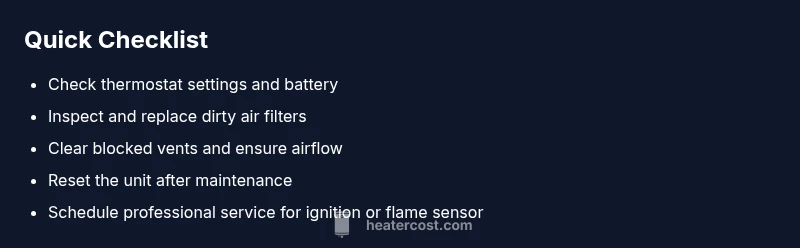
Most often, a heater keeps shutting off due to an overheating safety switch or a thermostat issue. First, check the thermostat setting and verify vents and filters are clean to ensure proper airflow. If it still shuts down, inspect the power supply and, for gas furnaces, the gas valve and flame sensor. If in doubt, contact a professional.
Common causes of a heater keeps shutting off
When a heater keeps shutting off, it's frequently a safety or control issue rather than a failing component. According to Heater Cost, the top culprits are overheating safety switches triggered by restricted airflow, thermostat problems, and sensor or ignition issues on gas systems. Additional factors include a blocked vent, dirty air filter, or an inconsistent fuel supply. Understanding these causes helps you narrow down the fix without unnecessary part replacements. Common scenarios, listed in order of frequency for many homes, include:
- Overheating safety shutoff triggered by limited airflow from dirty filters or blocked vents
- Faulty or miscalibrated thermostat (low battery, incorrect placement)
- Dirty flame sensor or faulty ignition on gas furnaces
- Clogged condensate line or exhaust restrictions in high-efficiency units
- Inadequate fuel supply or partially closed gas valve
If you notice frequent restarts, track when it happens (temperature, time of day) to help a technician diagnose quickly.
Safety-first checks you can perform today
Safety comes first when dealing with a heater that keeps shutting off. Always start by powering down and disconnecting the unit before inspecting any components. For gas systems, if you smell gas or hear a hissing sound, leave the area immediately and call your gas supplier or emergency services. Once powered down, check:
- Filter and airflow: replace dirty filters and clear blocked returns
- Vents and intake openings: ensure free flow of air
- Electrical connections: look for loose wires or tripped breakers
- Outlet and power source: test with a known-good device
After these checks, restore power and observe if the unit runs smoothly for a longer period. If issues persist, proceed with more detailed diagnostics.
Diagnosing thermostat and control signals
A failing or miscalibrated thermostat is a common reason for a heater that seems to shut off randomly. Start by verifying the thermostat's placement away from heat sources or drafts and changing any weak batteries. Test the setpoint by adjusting a few degrees up and down to see if the unit responds consistently. Listen for unusual cycling sounds that might indicate a faulty control board. If the thermostat appears responsive but the unit still shuts off, the issue may lie with the control circuit or flame sensor in gas models. Keeping a log of settings and times can help pinpoint patterns that a technician can use to diagnose quickly.
Airflow, filtration, and combustion basics
Limited airflow is a frequent hidden cause of shutdowns. Dirty or blocked air filters reduce airflow and trigger the safety switch. Clean or replace filters regularly and ensure registers and returns are open and unobstructed. For gas models, improper combustion due to poor venting or dirty burners can lead to shutdowns. Do not ignore condensation lines in high-efficiency units, which can trigger safety shutoffs if blocked. Regularly inspecting these elements helps maintain reliable operation and reduces unnecessary service calls.
Gas furnaces: flame sensor, ignition, and service needs
Gas furnaces rely on reliable ignition and a clean flame sensor. A dirty flame sensor or a faulty ignition can cause the furnace to shut down shortly after ignition. If you suspect this, do not attempt risky cleaning of gas components beyond basic care. A qualified technician should inspect the flame sensor, burner assembly, and ignition module, as improper handling can pose carbon monoxide risk. If you notice intermittent ignition or delayed startup, plan a professional inspection rather than guessing at fixes.
Maintenance and prevention to avoid future shutdowns
Preventing shutdowns starts with a simple maintenance routine. Schedule semi-annual professional inspections for furnaces and boilers, replace air filters every 1–3 months depending on usage and indoor air quality, and keep vents clear of dust and debris. Use a smart thermostat to track performance and receive alerts for unusual cycling. Document maintenance dates and any odd behavior to share with technicians, which speeds up diagnosis and fixes. By staying proactive, you reduce the odds of sudden shutdowns and extend equipment life.
Steps
Estimated time: 45-60 minutes
- 1
Power down and safety check
Turn off the heater and unplug it or switch off the circuit breaker. If you smell gas, leave the area immediately and call emergency services. Wait at least 5 minutes for the unit to cool before inspection.
Tip: Never bypass safety features; they exist to prevent dangerous conditions. - 2
Test thermostat function
Set the thermostat a few degrees higher and then lower it again to observe cycling. Replace the battery if battery-powered and confirm the wiring is secure. If the unit keeps shutting off after changing settings, move to airflow checks.
Tip: A responding thermostat indicates better odds of a non-thermostat issue. - 3
Check airflow and filters
Inspect and clean or replace furnace or space heater filters. Clear any debris from vents, registers, and intake paths. Ensure there are no obstructions near the unit.
Tip: Dirty filters are the most common, affordable fix. - 4
Reset and observe
Power the unit back on and let it run through a full cycle. Note how long it stays on before cycling off, and under what conditions it happens (temperature, duration, or time of day).
Tip: A clean restart helps confirm if the issue is intermittent or persistent. - 5
Inspect ignition/ flame sensor (gas models)
If you have a gas furnace, avoid touching burner components. Ask a qualified technician to inspect the flame sensor and ignition module for residue or misalignment.
Tip: Handling ignition parts without training can be dangerous. - 6
Call a professional if needed
If the heater continues to shut off after these steps, schedule a professional service. Provide them with notes on cycle times, symptoms, and any recent maintenance.
Tip: Professional diagnostics save time and reduce risk.
Diagnosis: Heater keeps shutting off
Possible Causes
- highOverheating safety switch triggered by restricted airflow
- highThermostat issues (calibration, batteries, placement)
- mediumDirty flame sensor or ignition problems (gas furnaces)
- mediumBlocked vents or dirty air filters affecting airflow
- lowGas valve or fuel supply irregularities (gas models)
Fixes
- easyCheck thermostat settings/batteries and confirm proper placement
- easyClean/replace air filters and clear vents to improve airflow
- easyReset the system and perform a controlled restart
- mediumClean or replace the flame sensor; inspect ignition components
- hardInspect gas valve and fuel supply; call a pro if you suspect fuel issues
Got Questions?
Why does my space heater keep turning off?
Common causes include overheating safety shutoff, thermostat issues, and dirty filters. Start with cleaning the filter, checking airflow, and resetting the unit.
Most space heater shutdowns come from overheating or thermostat problems. Start with cleaning the filter and resetting.
Could a dirty air filter cause a furnace to shut off?
Yes. A clogged filter reduces airflow and can trigger safety shutoffs. Replace filters and ensure ducts are clear to restore proper operation.
Yes, a dirty filter can trigger shutdowns due to restricted airflow.
When should I call a professional for a heater that keeps shutting off?
If basic checks don’t resolve the issue, or if you suspect ignition, flame sensor, or gas valve problems, a licensed technician should diagnose and repair it.
Call a professional if simple fixes don’t solve the problem or you suspect ignition or gas issues.
Is it safe to reset my heater myself?
Resetting is generally safe for basic electric units, but never reset components that might involve gas systems or dangerous malfunctions. Follow manufacturer instructions.
Resetting is usually fine for simple electric heaters, but don’t reset dangerous gas-related parts without a pro.
Can a faulty thermostat cause shutdowns?
Yes. A malfunctioning thermostat can misread room temperature and shut the heater off unexpectedly. Consider testing with a separate thermostat or replacing batteries if applicable.
A faulty thermostat can cause random shutdowns; test or replace batteries if needed.
Watch Video
The Essentials
- Check thermostat and airflow first.
- Inspect flame sensor/ignition for gas models.
- Reset and test after maintenance.
- Call a pro for complex ignition or gas issues.