Heater Leaking Water? Troubleshoot and Fix Fast
Urgent, practical steps to diagnose and fix a heater leaking water. Safety-first guidance, common causes, DIY fixes, and when to call a professional.


The most common cause of a heater leaking water is a faulty drain valve or a leaking tank connection. Start with turning off power and the cold-water supply, then place a bucket under the drain and tighten or replace the valve if necessary. If the leak persists, contact a licensed plumber.
Understanding the problem: heater is leaking water
When you notice water pooling around your heater or damp spots on the floor, you’re dealing with a potential leak. The phrase heater is leaking water covers a range of scenarios—from a slow drip at a valve to a dramatic torrent from a stressed tank. In many homes, the culprit isn’t the tank itself but a small component or fitting that has failed. Early signs include damp basements after rains, increased condensation around the unit, or a consistent drip forming a puddle near the base. By identifying the exact source, you can decide whether a quick DIY fix will work or if professional help is required. Throughout this guide, we’ll focus on practical steps homeowners can take to stop a leak and extend the life of their heating system, while keeping safety front and center.
For homeowners using heaters rented or owned, a leak is a red flag. If you notice the heater is leaking water, don’t ignore it—address it with a clear plan using this troubleshooting approach. This guidance is grounded in the Heater Cost Analysis, 2026 and is designed to empower you to act quickly and safely.
The key is to differentiate between a minor nuisance and a serious failure. A drip from a drain valve or a loose connection can often be resolved with basic tools, while a crack in the tank or corrosion may require replacement. Always consider your comfort level, your system type (electric vs gas), and local safety codes before proceeding.
Important note for safety: If your system is gas-fired, turn off the gas supply before inspecting anything and avoid creating sparks or flames near the unit. Electric heaters require you to switch off the circuit at the breaker panel. Always use a flashlight, wear gloves, and keep children and pets away from the work area. If you smell gas, evacuate and call the utility company immediately.
Safety first: shutdown procedure
Before you touch any components, take decisive safety steps. For any heater leaking water, the first move is to shut off power to the unit. Electric heaters: switch off the breaker labeled for the water heater at the main panel. Gas heaters: locate and close the gas shut-off valve on the line feeding the heater, then shut off the cold-water supply to the tank to minimize additional water backing up into the heater. After power and water are secured, place a bucket or towel beneath the suspected leak source to catch drips. If the area is wet or you notice scorch marks, stop and call a licensed professional—water heater work can involve electrical and combustible systems, and improper handling can cause injury or property damage.
Next, verify that the drain valve is fully closed. A partially open drain valve is a common cause of a slow leak. If you can access the drain valve safely, gently tighten it with the appropriate wrench, but don’t overtighten, which can strip threads. If you notice water around electrical components, move the power shutoff to ensure you’re not working in a live environment. Safety first saves lives and reduces repair costs.
Common leak sources in residential water heaters
Leaking water heaters usually originate from one of several predictable sources. Understanding these will help you prioritize fixes without tearing the system apart:
- Drain valve: A loose or worn drain valve is a frequent source of leaks. Tightening or replacing the valve is often a quick fix.
- Temperature and pressure relief (T&P) valve: The T&P valve can leak if it’s over-pressurized, the valve is faulty, or the discharge pipe is blocked. Do not cap or block the discharge pipe—the safety valve must vent properly.
- Inlet/outlet fittings and connections: Corrosion or loose fittings on water lines can allow drips to appear at the base of the unit.
- Tank shell or welds: A crack or severe corrosion in the tank itself is a more serious failure, typically requiring tank replacement.
- Expansion tank or piping failures: If your system has an expansion tank or long pipe runs, a split or loose connection can mimic another leak source.
Distinguishing between these sources takes careful inspection. Start with the easiest access points and move toward the tank itself. The sooner you identify the root cause, the sooner you can implement a proper fix and prevent further water damage.
Quick checks you can do without tools
If you want to assess the leak without disassembling the unit, perform these quick checks:
- Inspect the drain valve: Look for moisture around the valve and verify the handle is fully closed. If not, tighten gently and monitor.
- Test the T&P valve visually: If you can see water near the valve, this may indicate overpressure. Do not bypass the valve—this is a safety feature.
- Check all visible fittings and lines: Look for dampness at the connections and tighten as needed.
- Observe when the leak occurs: If it’s only when the tank heats, it could be expansion-related; if it leaks continuously, a more serious seal or tank issue is likely.
- Temperature setting check: If your thermostat is set too high, reduce it to see if the leak subsides; however, don’t change safety-related settings without understanding the system.
These checks are low-effort, low-risk steps that can reveal the most common causes without requiring special tools.
How to assess the severity and when to call a pro
Severity matters when deciding your next move. A small drip that only appears after heating can often be resolved by replacing a valve or resealing a connection, but a steady stream or water pooling around the base is usually a sign of a more serious problem. If the leak is accompanied by metallic odor, sizzling sounds, or a burning smell, shut everything off and call a professional immediately. For older heaters or systems with frequent leaks, an expert assessment can determine whether tank replacement is more cost-effective than continued repairs.
Always check warranties before performing any fixes. Some leaks may be covered, while others may require a licensed contractor. If you’re unsure about the integrity of electrical connections or gas lines, do not attempt a DIY repair without professional supervision.
Step-by-step visual inspection and temporary fixes
Here is a practical sequence to address leaks safely:
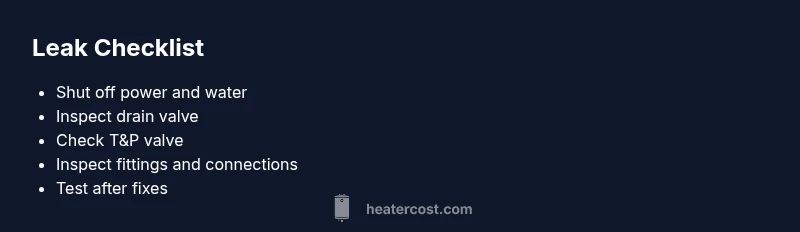
- Turn off power and water supply to the heater.
- Place a bucket under the suspected leak source and dry the surrounding area to observe drip rate.
- Tighten the drain valve or replace if needed.
- Inspect the T&P valve and discharge pipe for signs of leakage; replace the valve if you detect a fault.
- Check all hose and pipe connections; reseal with appropriate fittings or pipe dope as applicable.
- If the leak continues, consider bypassing nonessential components (only if advised by a professional) and arrange for a service call.
- After the fix, slowly restore water supply and power, watching for new leaks for at least 1–2 hours.
If you’re not comfortable performing these steps or the leak persists after these actions, schedule a professional inspection immediately. DIY fixes can mitigate small issues, but a persistent leak often signals a tank failure or a critical safety concern.
Tip: Always have a shop-vr potable water collection plan in place to protect floors and reduce mess while you work.
Estimated time for this step-by-step: 60-90 minutes depending on access and the leak source.
Maintenance to prevent future leaks
Prevention is cheaper than repair when it comes to water heaters. Incorporate a simple maintenance routine:
- Flush the tank annually to remove sediment buildup that can corrode internal components and lead to pinhole leaks.
- Inspect and test the T&P valve yearly. Ensure the discharge pipe is clear and venting correctly.
- Check fittings and connections every 6-12 months for looseness or corrosion.
- Replace aging valves and seals before they fail. If you notice rust or pitting on the tank, plan for a replacement rather than patching.
- Consider installing an expansion tank if your system experiences frequent pressure changes, which can reduce stress on valves.
- Maintain a clean, dry area around the heater to monitor for drips and simplify future maintenance.
Routine maintenance reduces the likelihood of leaks and extends the life of your heating system. A proactive approach helps protect your home from costly water damage and improves overall efficiency.
Common mistakes to avoid
- Ignoring minor drips or pressure fluctuations; small issues can escalate quickly.
- Using the wrong repair parts or applying sealants intended for other systems. Only use components rated for water heaters.
- Over-tightening connections, which can crack fittings and worsen leaks.
- Neglecting safety steps, especially on gas-powered units. Always ensure proper shutoff and ventilation before working near a heater.
- Delaying professional assessment when the tank shows signs of rust or scorching. A professional can determine if a tank replacement is needed.
By avoiding these common pitfalls, you’ll reduce the risk of escalating a simple fix into a costly replacement.
FAQ: quick references about heater leaks and repairs
- What causes a water heater to leak? Leaks are commonly caused by valve issues, pressure relief faults, loose connections, or tank corrosion.
- Can I fix a leak myself? Some leaks can be fixed by tightening valves or replacing components, but tank corrosion or structural leaks require a professional.
- Should I drain the tank to stop a leak? Draining may help identify the source but can also worsen a tank if misdone; consult a professional if you’re uncertain.
- When should I replace my water heater? If the tank shows rusting or if leaks recur after fixes, replacement is often the most cost-effective option.
- Is a leaking water heater dangerous? Gas heaters can pose fire and gas risks; always shut off power/gas and call a professional if leaks persist or if you smell gas.
- How can I prevent leaks in the future? Regular flushing, valve inspection, and proper maintenance reduce leak risk and extend heater life.
End of quick reference
If you’ve reached this point and the heater is still leaking, the safest course is to contact a licensed professional. The information above provides a structured approach to diagnosing leaks and performing basic fixes, but certain situations require specialized tools and safety protocols.
Steps
Estimated time: 60-90 minutes
- 1
Shut off power and water
Immediately cut electrical power to the heater at the breaker or switch, and close the cold-water supply. This prevents further water intrusion and reduces risk while you inspect. Use a flashlight and wear gloves for safety.
Tip: Never bypass safety switches; power must be off before touching any electrical components. - 2
Locate the leak source
Carefully inspect the drain valve, pressure relief valve, and visible pipe connections. Look for moisture, dampness, or active drips. Remove any accumulated water with a towel to better see the source.
Tip: Keep a notebook or photo log of the leak area to reference when talking to a pro. - 3
Tighten or replace drain valve
If the valve shows moisture but threads are intact, tighten gently with the correct wrench. If water persists, replace the valve with a compatible unit following manufacturer guidelines.
Tip: Do not over-tighten; overtightening can strip threads or crack the valve. - 4
Inspect the T&P valve and discharge pipe
Check for corrosion, mineral buildup, or bent discharge pipe. If the valve leaks during test, replace it. Ensure the drain path is clear and the pipe runs downward away from electrical components.
Tip: Never cap or bend the discharge pipe; proper venting is a safety feature. - 5
Check inlet/outlet fittings
Tighten any loose fittings and reseal where appropriate with plumbing tape or sealant rated for hot water systems. Run a careful test to see if the leak returns.
Tip: Only use fittings rated for hot water and your heater’s pressure range. - 6
Restore power and water slowly
Turn the cold-water supply back on and power the unit. Monitor for any new leaks for 1-2 hours and after a full cycle of heating. If leaks reappear, stop and call a professional.
Tip: Document the sequence and any changes you made for the technician. - 7
Plan next steps
If a leak persists, arrange a professional assessment. Consider tank replacement if corrosion or shell damage is evident. Review warranty status to determine coverage.
Tip: A professional evaluation can save time and prevent costly water damage.
Diagnosis: Visible leak from water heater area or pooling underneath
Possible Causes
- highLoose or faulty drain valve
- mediumLeaking T&P relief valve
- lowCracked tank or corroded fitting
Fixes
- easyTighten or replace the drain valve as needed
- mediumInspect and replace the T&P relief valve if faulty
- hardAssess tank integrity; replace tank or call a pro for major leaks
Got Questions?
What are the typical causes of a water heater leak?
Leaks usually come from the drain valve, T&P relief valve, or loose fittings. Tank corrosion is less common but more serious.
Leaks usually come from the drain valve, the relief valve, or loosened fittings. Tank corrosion is rarer but more serious.
Is a leaking water heater dangerous?
A leak can cause water damage and, in gas heaters, pose a gas risk. If you smell gas or see a hissing flame, leave the area and contact emergency services.
Leaks can cause water damage and gas hazards in some units. If you smell gas, leave and call for help immediately.
Can I fix a leak myself?
Some leaks from valves or fittings can be addressed DIY if you’re comfortable with basic plumbing. Tank leaks or corrosion should be handled by a professional.
Some valve leaks can be fixed at home, but tank issues are for professionals.
How do I stop a leaking drain valve?
Shut off power and water, then tighten the drain valve. If it continues, replace the valve with a compatible unit.
Turn off power and water, tighten the drain valve, and replace it if the leak continues.
When should I replace my water heater?
If the tank shows significant corrosion, repeated leaks, or is past its expected lifespan, replacement is often the best option.
If the tank is corroded or leaking repeatedly, replacement is usually best.
What maintenance helps prevent leaks?
Annual tank flushing, valve inspections, and checking the discharge path for the T&P valve can prevent most leaks.
Flush the tank yearly, inspect valves, and ensure the T&P discharge path is clear.
Watch Video
The Essentials
- Identify the leak source before fixes
- Shut off power and water for safety
- Drain valve and T&P valve are common culprits
- Replace damaged valves or call a pro for tank issues
- Regular maintenance prevents future leaks