Why Your Heater Is Blowing Cold Air in House (And How to Fix It)
Diagnose why your heater is blowing cold air in house and learn safe, practical fixes. This step-by-step guide helps homeowners and renters act quickly with confidence.


If your heater is blowing cold air in house, the most likely causes are a thermostat misread, a faulty flame sensor, or a failing blower. Start by confirming the thermostat is set to heat, the fan is on auto, and the filter isn’t clogged. If the issue persists, follow the diagnostic flow for next steps.
Quick assessment
If you notice the heater is blowing cold air in house, stay calm—most issues are solvable without expensive repairs. According to Heater Cost, many cold-air symptoms come from simple control or airflow problems rather than a total furnace failure. In the sections that follow, you’ll find a practical, step-by-step approach to verify settings, inspect components, and decide when to call a pro. Start with the easiest checks you can do safely.
- Confirm the thermostat is set to HEAT and the fan is on AUTO.
- Ensure warm air is enabled by checking that the mode matches your desired schedule.
- Look at the air filter; a clogged filter reduces airflow and cooling symptoms.
- Check that all supply vents are open and unblocked by furniture.
- Check the furnace switch and the circuit breaker feeding the unit; a tripped breaker will produce no heat.
- Listen for ignition or burner sounds when heat is called; silence may indicate a fuel/ignition issue.
If these quick checks don’t restore warm air, move to the next sections for deeper diagnostics.
Common causes of cold air
Several issues can make a heater blow cold air even when the thermostat shows heat. A misread thermostat or worn batteries can prevent a proper heat call. A dirty flame sensor can fail to ignite, while a dirty air filter or restricted ducts cut airflow and leave vents feeling cold. Other possibilities include a faulty blower motor, a misadjusted gas valve, or an ignition problem on gas furnaces. Each cause has a distinct sign, so you can narrow down quickly. Based on Heater Cost Analysis, 2026, addressing basic controls and airflow resolves many cold-air episodes without major repairs.
Basic safety and checks you can perform
Safety first: power down the furnace and thermostat before touching any components. Keep flammable materials away from the unit and wear eye protection if you inspect ducts. Start with these safe checks:
- Ensure the furnace switch is ON and the breaker hasn’t tripped.
- Check for a closed or blocked supply vent or return air grill.
- Replace a dirty air filter; a clean filter improves airflow and heat delivery.
- Verify thermostat batteries are good and that wiring is intact.
- If you hear no ignition when heat is called, do not attempt to force ignition—this may indicate a gas/safety issue.
If heat returns after these checks, you’ve likely resolved the issue. If not, continue through the diagnostic steps.
Diagnostic path and next steps
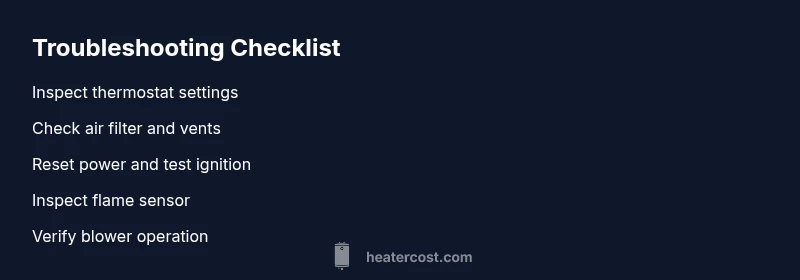
When heat calls fail to produce warm air, follow a logical diagnostic path: thermostat → airflow → ignition → blower. For each symptom, identify likely causes and test simple fixes first. If you encounter gas-related components or ignition problems, stop and call a licensed technician. This approach helps you isolate issues quickly without unnecessary risk. Remember, a staged approach reduces unnecessary costs and downtime.
Preventive maintenance to avoid cold-air issues
Preventing cold-air episodes is easier than fixing them after they occur. Schedule seasonal maintenance, replace filters every 1–3 months depending on usage, and keep the furnace area clean and unobstructed. Regular checks of thermostat calibration, vent cleanliness, and airflow balance can dramatically improve reliability and comfort. By staying proactive, you’ll reduce sudden cold-air events and extend system life.
Steps
Estimated time: 45-60 minutes
- 1
Verify thermostat is set to heat
Power off the thermostat briefly, then set it to HEAT with the fan set to AUTO. If the display shows error codes, record them for reference.
Tip: If the thermostat is hardwired, check for a tripped breaker labeled “Thermostat” or “Furnace.” - 2
Inspect air filter and vents
Remove and inspect the filter; replace if dirty or clogged. Ensure all supply vents are open and unblocked by furniture.
Tip: A dirty filter constricts airflow and makes the heater work harder. - 3
Reset furnace power
Switch the furnace off, wait 30 seconds, then turn it back on. Re-test the heat call and listen for ignition.
Tip: Power cycling often clears minor control glitches. - 4
Check flame sensor and igniter
If visible, clean a dirty flame sensor with a soft abrasive; avoid bending the sensor. Do not touch hot surfaces.
Tip: Only attempt cleaning if you can reach it safely and with power off. - 5
Inspect blower and ducts
Listen for blower activity when heat is called. Check for unusual noises or restricted ducts.
Tip: Blockages reduce airflow and cooling air may prevail. - 6
Evaluate gas supply/ignition (gas furnaces)
Check that the gas valve is open and ignition occurs; if you smell gas or ignition fails, exit and call a pro.
Tip: Gas-related issues require professional handling for safety. - 7
Run a controlled test
Set thermostat to a higher temperature and observe whether warm air eventually reaches vents. Document time to heat.
Tip: If heat never arrives, you’ve narrowed to control/ignition/airflow issues. - 8
Call a professional if unresolved
If warm air still doesn’t circulate after these steps, contact a licensed HVAC tech for a thorough inspection.
Tip: Provide your notes and any error codes to speed up diagnosis.
Diagnosis: Heater blowing cold air in house
Possible Causes
- highPower issue (breaker tripped or switch off)
- mediumThermostat misread or dead batteries
- mediumDirty flame sensor or ignition fault
- highClogged air filter or restricted ducts
- mediumBlower motor or capacitor failure
- highGas supply/ignition issue (gas furnaces)
Fixes
- easyCheck and reset the furnace circuit breaker and the power switch; restore power and re-test heat call.
- easyReplace batteries in the thermostat and ensure it is properly communicating with the system.
- easyClean or replace the air filter and ensure vents are open for proper airflow.
- easyClean the flame sensor or ignition assembly if accessible and safe to do so.
- easyInspect the blower area for obstructions or signs of failure; listen for blower operation during heat call.
- mediumIf gas supply or ignition seems involved, shut down and call a licensed technician immediately.
Got Questions?
Why is my heater blowing cold air even though the thermostat is set to heat?
Common causes include a thermostat misread, dead batteries, or a failed ignition sensor. Verify the thermostat settings, replace batteries if needed, and check the ignition and flame sensor.
Usually the thermostat or ignition is the culprit; check settings and ignition to restore heat.
Can a dirty air filter cause cold air from vents?
Yes. A clogged filter restricts airflow, making it feel like cold air is coming from the ducts. Replace the filter and see if heat improves.
A dirty filter can block airflow and prevent warm air from circulating.
What should I check first if cold air comes from vents?
Start with thermostat settings, filter, and vent openings. Then inspect the furnace switch and power supply before deeper diagnostics.
Check basics first before calling a pro.
Is a dirty flame sensor common and easy to fix?
A dirty flame sensor is a frequent cause of failed ignition. Cleaning it safely can restore heat in many cases.
Flame sensor issues are common but usually fixable with a safe cleaning.
Should I reset the furnace to fix this issue?
Resetting power can clear minor control glitches. If the problem persists, move through the diagnostic steps rather than repeatedly resetting.
A reset can help, but don’t rely on it as a fix for upstream issues.
When should I call a professional?
If you smell gas, hear unusual noises, or ignition seems unsafe, stop and call a licensed HVAC technician.
Call a pro if there’s gas involvement or unclear ignition problems.
Watch Video
The Essentials
- Check thermostat and power first
- Filter and vent cleanliness matter for airflow
- Follow a safe, staged diagnostic path
- Call a pro if gas or ignition problems appear