Heater Common Problems: Troubleshooting Guide for Homeowners
Learn to diagnose and fix common heater problems fast. This Heater Cost guide covers typical failures, safe checks, step-by-step troubleshooting, and when to call a pro. Stay warm with confidence.


If your heater won't heat or cycles oddly, start with three safe checks: reset the thermostat, verify power at the breaker, and inspect the air filter and vents. These common heater problems are usually simple fixes, and many homeowners can solve them without tools. If issues persist, a professional evaluation is wise.
What are the most common heater problems?
When homeowners talk about the phrase heater common problems, several issues rise to the top. The most frequent culprits include a thermostat that isn't calibrated correctly or has a dead battery, a circuit that has tripped, a clogged air filter, and restricted airflow from blocked vents. Gas heaters may suffer ignition failures or burner clogs, while electric units can trip breakers or show faulty heating elements. In many homes, these problems stem from routine wear and lack of maintenance rather than an imminent failure. According to Heater Cost, recognizing these patterns early allows you to act fast and avoid costly repairs. Regular inspections and a simple maintenance routine can keep most systems running smoothly through peak season. By understanding the core ideas behind heater common problems, you gain a practical roadmap for decision-making and energy savings over time.
If you’re dealing with a persistent issue, start with the simplest check first—power, thermostat, and airflow—and work your way toward more complex diagnostics. Proactive maintenance, like replacing filters and testing safety devices, can minimize unexpected outages and keep your home comfortable while you plan your next service visit.
Safe, quick checks you can perform today
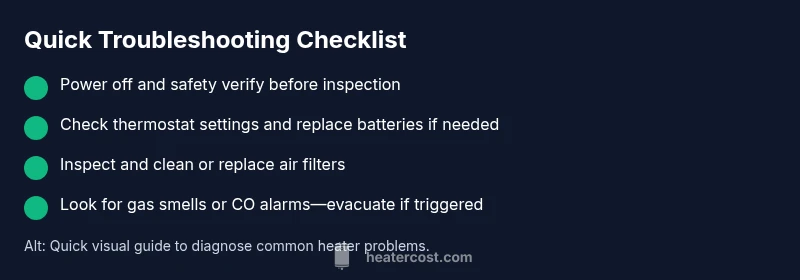
Some heater problems are quick fixes that don’t require a service call. Begin with the safe checks outlined below, then decide if you need professional help. First, confirm the thermostat is set to heat and not to a lower temperature or the off position; swap fresh batteries if needed. Second, inspect the electrical panel for a tripped breaker or a blown fuse and reset as appropriate. Third, check air filters and clean or replace if clogged; ensure supply vents are open and unobstructed. Finally, listen for unusual noises and smell indicators; a buzzing sound or a burning odor may signify electrical issues or dirty burners. If any sign of gas odor or CO is present, leave the area immediately and call emergency services. These steps cover many of the most common heater problems and reduce risk during troubleshooting.
Remember, if there is any risk of flame, gas leakage, or carbon monoxide exposure, do not proceed beyond basic safety checks. When in doubt, contact a licensed professional for a thorough inspection.
How different heating systems influence common problems
The performance and failure patterns vary by system type. A gas furnace may exhibit ignition or burner issues, which require safe handling and often professional adjustment. An electric resistance heater tends to show inconsistent output due to faulty wiring or a damaged heating element. Heat pumps, which rely on refrigerant cycles, can experience inefficient heating in cold weather or frozen exterior coils. Understanding your system helps tailor troubleshooting: for instance, dirty filters impact heat pumps more noticeably in winter, while ignition problems plague gas units most. In all cases, keep up with routine maintenance—filter changes, coil cleaning, duct sealing—and address airflow restrictions promptly. This helps you diagnose problems faster and prevents minor issues from evolving into major failures.
Troubleshooting flow: symptoms to diagnosis to fixes
Begin with symptom-based questions: Is there no heat, intermittent heat, strange noises, or unusual smells? If there’s no heat, check power, thermostat, and gas supply as the first layer of checks. If heat is uneven, inspect ducts, filters, and zone controls. For noises, identify whether sounds come from the blower, burner, or ducts. If there’s a smell of burnt or rotten odors, evacuate if necessary and inspect for dirty components or gas leaks. Each symptom guides you toward common causes such as electrical issues, airflow restrictions, igniter problems, or refrigerant/water-side concerns. With each diagnosis, apply the simplest fix first, then escalate to professional service if the symptom persists or safety risks arise. A deliberate flow reduces time spent diagnosing and lowers the chance of causing further damage.
When to call a professional and what to expect
Certain situations demand professional expertise. If you detect gas smells, CO alarms trigger, or you cannot safely access electrical components, stop troubleshooting and call a licensed technician. If you notice persistent ignition failures, frequent cycling, or water leaks around a heater, book a vetted service call. A pro will perform comprehensive checks, calibrate safety devices, test for CO, verify air quality, and confirm refrigerant or burner integrity. In most cases, they’ll provide an inspection report, estimated repair costs, and a maintenance plan to prevent recurrences. Regular maintenance agreements can also help detect issues early and extend the life of your system.
Steps
Estimated time: 60-75 minutes
- 1
Power down and safety verify
Turn off the heater and cut power at the breaker to prevent shocks. If you have a gas unit, do not operate the machine without proper ventilation during inspection. This initial safety step protects you from electrical and gas-related hazards.
Tip: Use a non-contact voltage tester to confirm no power before touching wiring. - 2
Check thermostat settings
Ensure the thermostat is set to heat and the setpoint is above room temperature. If it uses batteries, replace them. A misread thermostat is a common, easily fixed source of poor heating.
Tip: Calibrate thermostat by testing at several setpoints to identify drift. - 3
Inspect power and fuses
Look at the main panel for a tripped breaker or blown fuse. Reset or replace as needed and re-test the system.
Tip: If the breaker trips again, there could be an electrical fault that requires a licensed electrician. - 4
Evaluate airflow
Check and replace dirty air filters; ensure vents and registers are open and unobstructed. Poor airflow reduces heat delivery and can cause the system to work harder.
Tip: Replace filters with a high-efficiency type only if compatible with your system. - 5
Inspect igniter/burner (gas)
If you have a gas heater, inspect the igniter and burner for soot buildup. Clean gently if accessible, but avoid touching hot components. Ignition problems are a frequent cause of no-heat conditions.
Tip: Do not attempt advanced ignition work; gas systems require a licensed tech. - 6
Check for leaks and CO risk
Look for signs of gas leaks or carbon monoxide indicators. If you smell gas or CO, leave immediately and call emergency services.
Tip: Install and test CO detectors on every level of the home. - 7
Test restart and performance
Restore power, run the system, and observe heat output and cycle pattern. If heat is inconsistent, note the symptom and recheck filters and vents before scheduling service.
Tip: Document symptoms with dates to help the technician diagnose faster. - 8
Know when to escalate
If problems persist after basic checks, schedule a professional inspection. A licensed technician can assess heat exchangers, refrigerant levels (for heat pumps), and burners safely.
Tip: Have your model, maintenance history, and symptom notes ready for the tech.
Diagnosis: Heater runs but fails to produce heat or cycles irregularly
Possible Causes
- highThermostat miscalibration or dead thermostat battery
- highPower supply or breaker tripped
- mediumClogged air filter or blocked vents
- lowDirty or blocked burner/heat exchanger or ignition problems
Fixes
- easyReset or replace thermostat; verify temperature setting and mode
- easyCheck the circuit breaker and outlet; reset if needed
- easyReplace or clean the air filter; ensure all supply vents are open
- mediumInspect burner/ignition; clean if accessible; call a pro if unsure
Got Questions?
What are the most common heater problems homeowners face?
Typical issues include thermostat miscalibration, tripped breakers, clogged filters, and ignition or burner problems in gas units. Many are preventable with regular maintenance and safe DIY checks.
Common heater problems usually involve thermostat settings, power issues, airflow, or ignition. Regular maintenance prevents many of these.
Why won't my heater start?
No-start conditions often come from power loss, thermostat faults, or safety switches being triggered. Check breakers, replace batteries if needed, and verify the thermostat is in heating mode.
If your heater won't start, first check the power and thermostat, then inspect safety switches.
What does a banging noise indicate?
A banging or popping sound can indicate duct expansion, dirty burners, or delayed ignition. If it persists, have a pro inspect for burner soiling or gas-ignition issues.
A banging sound often means ignition or burner issues or duct heat expansion; get it checked if it continues.
Is it safe to use a space heater for extra warmth?
Space heaters can be a temporary aid but carry fire and CO risks if used improperly. Keep them away from flammables, never leave unattended, and plug directly into a wall outlet.
Space heaters can help, but use them with caution and never leave them unattended.
When should I replace my heater instead of repairing it?
If the unit is old, inefficient, or requires frequent, costly repairs, replacement may be more economical. Consider efficiency gains and future maintenance costs in your decision.
If repairs are common or the system is old, replacement may be the smarter choice.
How much does professional diagnostic cost?
Costs vary by region and service scope. Ask for a written diagnostic and a repair quote before approving work. A preventive inspection can save money long-term.
Costs depend on your area and the work; request a written estimate first.
Watch Video
The Essentials
- Identify the main heat problems early to save money.
- Start with power, thermostat, and airflow checks—the simplest fixes first.
- Different systems have different failure modes; know yours.
- Call a pro for gas, CO, or ignition concerns; safety first.