Why Your Heater Blows Cool Air and How to Fix It
Urgent, practical troubleshooting for homeowners when a heater blows cool air. Learn quick checks, a structured diagnostic flow, safety steps, and when to call a pro. Updated for 2026 by Heater Cost.


The most likely reason your heater blows cool air is a thermostat mis-set or a system fault preventing heat production. Quick fixes: set the thermostat to Heat, raise the target temperature, and ensure the fan is on Auto. Check and replace a dirty filter, then reset the furnace. If heat still won’t come, contact a professional.
What "heater blowing cool air" means in real homes
When a heater blows cool air, it isn’t just a nuisance—it signals that heat isn’t being generated or distributed as intended. In most houses, the culprit starts simple: a thermostat mis-set, a blocked airflow path, or a clogged filter. More complex failures involve ignition, blower components, or heat source controls. The distinction matters: some fixes you can do safely, others require licensed expertise. Understanding the core symptoms and their practical fixes helps you restore warmth faster and avoid wasted energy. This guide, written with the 2026 Home Heating Handbook standards from Heater Cost, aims to equip homeowners, renters, and property managers with clear steps to diagnose and act decisively.
Quick causes at a glance
- Thermostat mis-set or mode set to Cool or Fan-only
- Dirty air filter restricting airflow
- Ignition or flame sensor problems in gas furnaces
- Heat pump in cooling mode or defrost cycle causing temporary cool air
- Electrical or blower motor faults
Note: Some issues require professional diagnosis, especially gas or refrigerant concerns. The Heater Cost analysis, 2026, emphasizes starting with the simplest checks before escalating.
Safe, quick checks you can perform
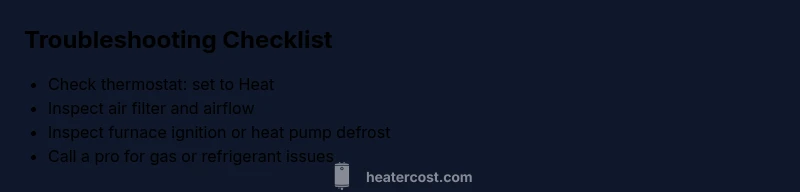
- Set thermostat to Heat and confirm the target temperature is higher than current room temp; allow a few minutes for the system to respond.
- Inspect the air filter; if dirty, replace it and reset the system.
- Verify that vents are open and unobstructed.
- Listen for the furnace: ignition clicks, flame presence, or blower activity. If you do not hear ignition within a few seconds, stop and seek help.
- For heat pumps, ensure it’s in heating mode and not stuck in cooling or defrost cycling.
Always prioritize safety. If you smell gas, leave the home and call emergency services immediately.
In-depth diagnostics by system type
- Gas furnace: A lack of ignition or a flame that extinguishes quickly is a common cause of cool air. Check the flame sensor and ignition module; these parts may need cleaning or replacement by a pro. Do not attempt gas repairs if you smell gas.
- Electric space heater: If the coils are damaged or the thermostat is miswired, warm air may not reach the room. Inspect the heating element, wiring, and safety switches.
- Heat pump: In very cold weather or during defrost cycles, a heat pump can deliver cooler air temporarily. If warm air remains absent for extended periods, a pro should inspect refrigerant levels and the reversing valve.
- Ducts and blower: Leaky or blocked ducts reduce effective heat delivery. Consider duct sealing and cleaning as part of a broader service.
Step-by-step: most common fix ready to try
- Verify thermostat settings and mode; set to Heat and Auto fan. 2. Replace a clogged air filter and run the system for 15 minutes on Heat. 3. Check vents for blockages and clear obstructions; test airflow. 4. Reset the furnace power if ignition is sluggish. 5. If the problem persists, check for ignition or flame sensor faults and consult a professional. 6. For heat pumps, inspect the reversing valve and defrost cycle. 7. Do not ignore gas smells—evacuate and call a pro. 8. Document findings for future maintenance.
This sequence helps many homes regain warmth with minimal downtime. If you encounter unfamiliar components, stop and seek professional guidance.
Safety, warnings, and best practices
- Always cut power before opening furnace panels; avoid touching electrical components with wet hands.
- If you smell gas, evacuate immediately and call emergency services.
- Do not attempt refrigerant handling; refrigerant work requires licensed technicians.
- Keep children and pets away during testing; use a safe, well-ventilated area.
- If you are unsure about any step, stop and contact a professional.
Prevention: keeping warm air consistent year-round
- Schedule annual furnace or heat-pump maintenance to catch issues early.
- Change air filters on a regular cycle (every 1-3 months depending on usage and pets).
- Calibrate the thermostat and consider a smart thermostat to optimize heat cycles and energy use.
- Inspect ducts for leaks and seal gaps to improve efficiency and warmth.
- Keep outdoor units clear of debris to ensure proper airflow.
Understanding costs and timing for fixes (2026 guidance)
While this guide focuses on troubleshooting, it’s useful to understand potential costs to decide when to DIY or hire a pro. A licensed HVAC technician can be pricier upfront, but neglecting a problem often leads to higher energy bills and more extensive repairs. Heater Cost analysis suggests budgeting for filter replacements, ignition components, and occasional service visits; use these estimates to plan maintenance and repairs. Remember, preventing problems saves money in the long run.
Quick-start checklist (downloadable)
This extended section provides a practical, repeatable set of checks you can perform to restore warmth quickly. Start with thermostat and filter checks, then verify airflow, and finally consider a safe system reset. If warmth remains elusive after these steps, a professional assessment is recommended to prevent further damage and ensure safe operation across heating modes.
Steps
Estimated time: 45-90 minutes
- 1
Verify thermostat settings
Confirm the thermostat is set to Heat, not Cool, and that the fan is on Auto. If the target is too low, increase it by several degrees and wait 5–10 minutes to observe a response.
Tip: If the display shows Heat but there’s no warmth, proceed to the next step. - 2
Inspect and replace air filter
Power down the system before removing the filter. If the filter is visibly dirty or clogged, replace it with the correct size and rating. After replacement, reset the thermostat and run in Heat for 10–15 minutes.
Tip: Use the correct filter type recommended by your system to maximize airflow. - 3
Check vents and ducts
Ensure all supply vents are open and unblocked. Look for hidden obstructions in furniture or rugs. If airflow remains weak, note locations of weak airflow for a professional assessment.
Tip: Avoid sealing or blocking vents; proper airflow is essential for heat delivery. - 4
Listen for ignition or blower activity
On gas furnaces, you should hear an ignition sequence followed by a steady flame. If you don’t hear ignition or the flame goes out, power down and seek professional help.
Tip: Do not attempt to relight a furnace if you smell gas. - 5
Reset the system safely
Turn off the furnace breaker or switch, wait 60 seconds, then restore power. This can reset sensors and restore normal operation.
Tip: Always handle electrical components with dry hands and avoid touching wiring. - 6
Check heat pump mode (if applicable)
If you have a heat pump, ensure it’s in Heating mode and inspect the reversing valve. In extreme cold or during defrost cycles, temporary cool air can occur.
Tip: If you suspect a defrost issue, schedule diagnostics rather than DIY repairs. - 7
Evaluate for ignition or gas issues
If ignition remains inconsistent or you smell gas, stop and call a licensed technician immediately. Gas systems require specialized safety handling.
Tip: Evacuate if gas odor is detected; do not operate electrical switches inside the home. - 8
Document and test after fixes
Run the system in Heat mode for 15–20 minutes, monitoring temperature rise and airflow. Record any noises or patterns to inform future maintenance.
Tip: Keep a simple maintenance log for quick future reference.
Diagnosis: Heater blowing cool air
Possible Causes
- highThermostat mis-set or mode set to Cool or Fan-only
- mediumClogged air filter or blower motor issue
- mediumIgnition or flame sensor problem (gas furnace)
- lowHeat pump reversing valve or refrigerant issue
Fixes
- easySet thermostat to Heat and raise the target temperature; set fan to Auto
- easyReplace dirty air filter and ensure proper blower operation
- mediumReset furnace power and attempt to reignite; if ignition fails, call a pro
- hardInspect ignition/flame sensor or check refrigerant systems with a technician
Got Questions?
What are the most common causes of a heater blowing cool air?
Thermostat mis-set or cooling mode, clogged air filters, blower issues, ignition/flame sensor faults, or heat pump misconfiguration can all cause cool air. Start with thermostat and filter checks.
Common causes include thermostat settings and airflow problems; begin there and proceed to ignition checks if needed.
Can a dirty air filter cause cool air even when the system is on?
Yes. A dirty filter reduces airflow, which prevents the system from delivering warm air. Replacing the filter often resolves the issue.
A dirty filter can block airflow and stop warm air from circulating.
When should I call a professional for heater issues?
If basic checks don’t restore warmth, if you hear unusual noises, smell gas, or suspect electrical or refrigerant problems, contact a licensed technician.
If simple checks don’t fix it or you suspect gas or electrical issues, call a pro.
Is it safe to work on a gas furnace by myself?
Gas furnaces involve flame and gas lines; avoid DIY repairs. If you’re not trained, contact a licensed HVAC technician.
Gas furnaces shouldn’t be DIY-ed; call a pro if you’re unsure.
Could a heat pump deliver cool air in heating mode?
Yes, in very cold weather or during defrost cycles, a heat pump might emit cooler air temporarily. If it persists, have it inspected.
A heat pump can blow cooler air during defrost or extreme cold—watch for persistent symptoms.
What maintenance helps prevent this problem?
Regular filter changes, annual furnace inspection, and thermostat checks reduce the odds of cool-air issues.
Regular upkeep lowers the chance of this problem recurring.
Watch Video
The Essentials
- Verify thermostat is set to Heat first
- Regular filter maintenance improves warmth
- Call a pro for ignition or refrigerant issues
- Document fixes for future maintenance
- Safety first: shut off power if gas is suspected