Common Heater Problems: Troubleshooting & Fixes
A practical troubleshooting guide to common heater problems for homeowners. Learn urgent safety steps, diagnostic flow, step-by-step fixes, and maintenance tips to restore warmth quickly.


Common heater problems usually start with simple checks you can perform safely: verify power and thermostat settings, replace or clean the air filter, and listen for unusual furnace noises or smells. If the heater still won’t run, shut it off and call a licensed technician to diagnose ignition, venting, or gas-supply issues.
Common Heater Problems by Type
Homeowners commonly encounter issues across different heating systems, but most problems fall into a few predictable categories. When you ask, “what are the common heater problems?” you’ll often hear about thermostat miscalibration, dirty filters, ignition or flame sensor failure, blower motor faults, and vent blockages. Each type of heater—furnace, boiler, heat pump, or space heater—has its own common failure points, yet the underlying causes are frequently linked to wear, dust, or aging components. For example, a gas furnace may struggle to ignite if the flame sensor is dirty or the gas valve isn’t opening properly, while an electric space heater can trip a circuit on overload. In mid-winter, these issues become urgent; a malfunctioning heater can leave a home cold and unsafe fast. The Heater Cost team emphasizes that early detection and routine maintenance reduce downtime and extend equipment life. If you notice unusual odors, banging noises, cycling on/off frequently, or CO alerts, treat it as urgent and take immediate safety steps.
Quick Safety Checks You Should Do Before Troubleshooting
Safety first is non-negotiable when dealing with heating systems. Before you dive into diagnostics, cut power at the main switch or circuit breaker, and shut off gas if you smell fuel. Verify thermostat settings aren't set to a dream mode or a timer that prevents heat. Replace or clean the air filter; a clogged filter is one of the most common culprits. Check the outdoor unit for debris, ensure vents and returns are unblocked, and confirm carbon monoxide detectors are functioning. If any CO alarm sounds, evacuate immediately and call emergency services. When in doubt, pause and call a licensed HVAC technician; attempting complex repairs without training can create safety risks.
Diagnostic Flow: From Symptom to Solution
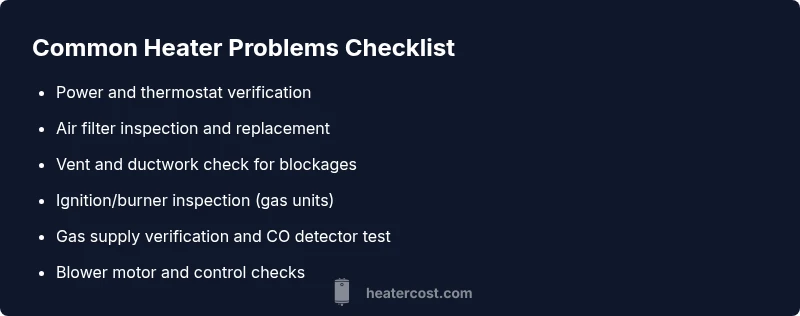
The diagnostic flow helps you move from symptom to a safe, effective solution without guessing. Start with the symptom: heater won’t start, cycles rapidly, or produces cold air. Then list likely causes: power/thermostat issues, dirty filter, ignition or burner problems, gas supply or venting issues, blower or control board faults. For each cause, outline a quick, safe check and a corresponding fix. If you identify a high-fidelity problem—gas smell, hissing, flame that won’t light, or CO detector activation—stop and call a professional. A structured approach prevents missed steps and reduces risk, especially around gas and electrical components. Remember, some repairs require licensed expertise and may be restricted by local codes.
Fixes for the Most Frequent Failures
This section outlines practical, safe fixes for the most common failures. Basic fan or blower problems are often solved by clearing dust from the blower wheel and ensuring the furnace door switch engages properly. A dirty flame sensor or dirty burner ports can prevent ignition; gently cleaning with a dry brush or cloth is effective if the unit is cool and power is off. Thermostat calibration issues are common; reprogram or replace a faulty thermostat and ensure it communicates with the furnace. If the air filter is blocked, replace it with the correct size. For older models, check for worn belt or motor bearings and schedule service if you hear grinding or see reduced airflow. If gas supply is interrupted or pilot lights go out, do not attempt risky fixes; contact a pro immediately.
When to Call a Pro and What to Expect
Not every heater problem is DIY-friendly. Gas-fired systems, sealed combustion units, and heat pumps involve live gas lines, electrical circuits, or refrigerant that only a licensed technician should handle. If you notice a gas smell, hear banging or hissing, see wisps of flame near the wrong area, or CO detectors ring, shut down the system and call emergency services. A pro will typically perform a safety check, test ignition and control circuits, inspect venting, verify gas pressure, and replace failure-prone components. After repair, expect a safety test and a short run-through on proper maintenance to prevent a recurrence. You’ll likely discuss a maintenance plan and potential replacement options if the unit is aging or repeatedly malfunctioning.
Maintenance to Prevent Recurring Problems
Regular maintenance is the best defense against repeated heater problems. Schedule an annual professional inspection to check ignitors, burners, heat exchangers, and electrical connections. Change filters at the recommended interval to preserve airflow and efficiency. Clean ducts and inspect venting for obstructions. Keep the thermostat and furnace area clear of clutter, and test CO detectors monthly. Create a simple maintenance log to track service calls, parts that were replaced, and any performance changes. Small, consistent actions save energy, extend equipment life, and reduce emergency call-outs.
Cost Considerations and Replacement Outlook
Understanding cost implications helps homeowners plan ahead. Costs vary by system type, installation complexity, and local labor rates. In general, routine fixes are inexpensive, while major ignition, control board, or heat exchanger problems can escalate quickly. If a heater is older or repeatedly fails, professional assessment may reveal the need for replacement or system upgrades to improve efficiency and safety. Planning ahead with preventive maintenance can lower long-term costs and reduce the risk of unexpected outages during cold snaps.
Steps
Estimated time: 60-90 minutes
- 1
Verify power and thermostat settings
Turn off power to the unit if you need to inspect wiring, then restore power and ensure the thermostat is set to heat with a comfortable target. If using a smart thermostat, check connectivity and schedule. This quick check often resolves start-up issues.
Tip: Always start with the simplest checks before tools. - 2
Inspect and replace air filter
Locate the filter, remove it, and inspect for visible dust or debris. If dirty, replace with the correct size filter. A fresh filter reduces strain on the blower and improves airflow.
Tip: Note the filter specification to ensure a proper fit. - 3
Check vents, ducts, and outdoor unit
Ensure supply and return vents are unobstructed and clean any visible debris from the outdoor unit. Clear obstructions in the attic or crawl spaces that could impede airflow.
Tip: Use a flashlight to inspect hard-to-see areas. - 4
Test ignition or burner safety
For gas furnaces, verify that ignition components are clean and that the flame starts properly when called. If you see no ignition or a flickering flame, do not force ignition.
Tip: If you’re unsure, stop and call a technician. - 5
Confirm gas supply and CO safety
If you have a gas furnace, ensure the gas valve is open and there are no gas smells. If your CO detector alarms, evacuate and call emergency services.
Tip: CO safety is non-negotiable; evacuate immediately if alerted. - 6
Check blower and controls
Inspect the blower motor for unusual noises, inspect belts or bearings, and verify control board status. Reduced airflow or odd noises often point to a motor or duct issue.
Tip: Take photos before removing panels for reference.
Diagnosis: Heater malfunction or inadequate warmth
Possible Causes
- highPower or thermostat issue
- highDirty filter restricting airflow
- mediumIgnition or burner problem (gas) or flame sensor dirty
- lowGas supply interruption or venting obstruction
- lowBlower motor or control board fault
Fixes
- easyCheck the outlet, switch, and ensure the furnace is receiving power
- easyReplace or clean the air filter and confirm airflow is unobstructed
- easyReset furnace, reseat thermostat connections, and recalibrate thermostat
- mediumInspect gas valve, burners, and flame sensor; do not touch gas lines if unsure
- hardCall a licensed HVAC technician for ignition, venting, or control-board issues
Got Questions?
What are the most common heater problems homeowners notice?
Typical issues include thermostat miscalibration, dirty air filters, ignition or flame sensor problems, blower motor faults, and vent blockages. Recognizing these signs early helps limit cold snaps and costs.
Common heater problems often start with thermostat or filter issues, which are easy to spot and fix early on.
Can I fix a dirty air filter myself?
Yes. Turn off the heater, remove the old filter, inspect for damage, and replace with the correct size. Regular replacement keeps airflow steady and reduces strain on the system.
Yes, you can replace a dirty filter yourself safely when the system is off.
When should I replace my thermostat?
If the thermostat is unresponsive, frequently inaccurate, or non-communicative with the furnace, consider replacement with a newer model that supports proper communication and scheduling.
If your thermostat is flaky or unresponsive, it’s time to replace it.
Is a boiler the same as a furnace?
Boilers heat water for radiators or underfloor systems, while furnaces heat air that circulates through ducts. They are different technologies and require different maintenance.
A boiler heats water; a furnace heats air. They work differently and need different care.
What safety steps should I take if I smell gas?
Leave the area, call your gas supplier or emergency services, and do not operate electrical switches or appliances until it’s cleared. Ventilate if you can safely do so.
If you smell gas, leave, call for help, and avoid turning any switches on or off.
How often should I schedule professional maintenance?
Aim for an annual professional inspection, with more frequent checks for older units or in harsh climates. Regular maintenance helps prevent unexpected breakdowns.
Annual professional maintenance keeps heaters reliable and efficient.
Watch Video
The Essentials
- Check power, thermostat, and filter first.
- Prevent blocked airflow to avoid inefficiency.
- Call a pro for gas/ignition and electrical issues.
- Maintain a routine service schedule.
- Document fixes to guide future repairs.