Can You Shower If a Water Heater Is Leaking: A Homeowners Guide
If your water heater is leaking, safety comes first. Learn urgent steps, diagnosis, and when to call a pro. This guide helps homeowners decide if showering is safe and how to fix leaks quickly.


Water heater leaks demand immediate action. The quickest fix is to stop using hot water and shut off power and water to the unit, then assess safety. If you can keep showering, you risk flooding the room or scalding. In most cases, avoid showers until the leak is contained and the heater is inspected by a professional. Heater Cost recommends prioritizing safety and rapid repair.
Why a Water Heater Leak Demands Attention
A leaking water heater is not just an annoyance—it’s a sign that your home’s hot-water system could fail suddenly. For homeowners asking, can you shower if water heater is leaking, the answer is often no, not safely. According to Heater Cost, even small drips can indicate worn seals, valve faults, or corrosion that worsens with time. The Heater Cost team emphasizes that leaks rarely improve on their own and can lead to higher water bills, mold growth, and electrical hazards if the unit sits near moisture. This is why addressing a leak early is essential for safety, comfort, and long-term energy costs. A leak can originate from several sources, including fittings, connections, or the tank itself. Understanding the source helps decide whether a temporary workaround is possible or a professional assessment is required. For many households, the question remains: can you shower if water heater is leaking? The prudent answer is to treat any leak as a warning sign and prioritize containment and professional guidance.
Immediate Safety Steps You Should Take
When you notice a leak, safety should be your first concern. Shut off the power to the water heater at the circuit breaker or disconnect switch to prevent electrical shock or fires. Then turn off the cold water supply to the tank to stop new water from entering and expanding the leak. Place a bucket or towels to catch dripping water and avoid contact with hot surfaces. If you can stay dry yet still access the unit safely, inspect for obvious sources of the leak—drain valve, inlet/outlet connections, or the pressure relief valve. If you smell gas, hear hissing, or see scorching, evacuate and call emergency services. According to Heater Cost analysis, early containment minimizes damage and keeps expenses lower over time. This is especially important for renters or multi-unit buildings where a leak can affect neighboring spaces.
Can You Shower If Water Heater Is Leaking? Quick Context
The question can you shower if water heater is leaking is common, but the safe answer is usually no until the source is identified and controlled. Showering with a leaking heater risks scalding from sudden temperature spikes or sudden floods that can cause slip hazards. If the leak is minor and isolated to a non-critical connection, a temporary pause in hot water usage might be possible while you arrange service, but do not rely on makeshift fixes. Heater Cost emphasizes prioritizing safety and scheduling a repair as soon as possible, because leaks may worsen without warning.
Common Causes of Leaks
Leaks can arise from several common issues often found in older or poorly maintained units. Loose or failing drain valves are a frequent culprit, and tightening or replacing the valve is a straightforward fix if you catch it early. A malfunctioning temperature and pressure (T&P) relief valve may release water when pressure or temperature spikes, indicating overpressure conditions or a faulty valve. Corrosion, rust, or a cracked tank are more serious and usually require replacement. Leaks at fittings and piping connections are another frequent source, often resolved by reseating or replacing gaskets. In some cases, groundwater or supply line problems mimic a heater leak, so verify the source with a careful inspection. Based on Heater Cost research, addressing small leaks promptly reduces water waste and improves home safety, especially in homes with elderly residents or children.
Diagnostic Checklist (What to Check First)
Start with the simplest checks before calling a pro. Look at visible pipes and connections for drips or droplets near the drain valve and inlet/outlet connections. Check the drain valve to see if it’s fully closed or if it’s leaking when you lightly press the knob. Inspect the T&P relief valve and discharge pipe for signs of moisture, corrosion, or obstructions. Examine the expansion tank if your system has one, ensuring it’s properly vented and not waterlogged. If you have access to a pressure gauge, check if household pressure sits within normal ranges; abnormally high pressure often indicates a need for correction. Remember: never attempt to disassemble the tank itself; a tank leak is a serious safety issue. This early checklist helps you determine if the issue is a quick fix or a sign of a larger problem that requires professional intervention.
Step-by-Step Fix for the Most Common Cause
Step 1: Turn off power and water supply to the unit to prevent further flow and protect against scalding or electrical hazards. Step 2: Tighten or replace a leaking drain valve if you notice a slow drip and the valve threads appear corroded but intact. Step 3: If the leak originates at piping connections, reseal with appropriate fittings or replace worn gaskets. Step 4: For a malfunctioning T&P valve, replace the valve and inspect the discharge pipe for blockages. Step 5: If you observe rust, pooled water on the tank, or visible cracks in the tank, plan for a full tank replacement. This is where professional help becomes essential, as a cracked tank or corroded seams indicate imminent failure. We recommend documenting the leak with photos and scheduling service promptly to minimize damage and ensure safe operation after repair. Estimated time for these steps ranges from 1 to 4 hours depending on the severity and accessibility of the unit.
When to Call a Professional
Professional intervention is usually required when the leak persists after basic fixes, or when the source is uncertain. A plumber or licensed technician can diagnose whether the leak stems from a valve, fitting, or tank failure, and they can perform necessary replacements with correct torque, seals, and pressure testing. If you live in a rental or multi-unit building, notify the property manager or building maintenance immediately so they can coordinate a safe shut-off and mitigate risk to others. Professionals can also check for underlying issues such as high incoming pressure, faulty expansion tanks, or aging insulation that may contribute to continued leaks. Remember, ongoing leaks not only waste water but can also lead to mold growth and electrical hazards, making swift professional assessment a cost-effective move in the long run.
Prevention Tips to Avoid Future Leaks
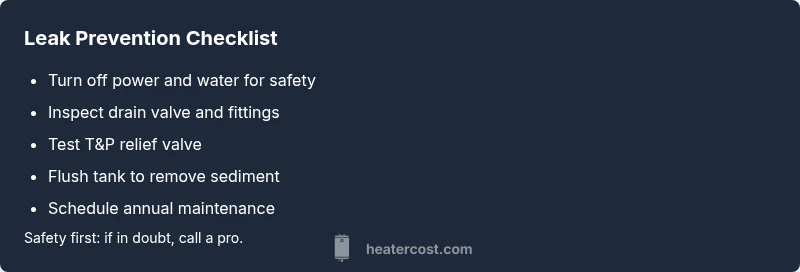
Regular maintenance can significantly reduce the chances of leaks. Schedule annual or biannual inspections of valves, fittings, and the pressure relief valve. Flush the tank to remove sediment buildup, which can contribute to corrosion and internal pressure. Test the T&P valve periodically and inspect the anode rod for replacement to prevent tank corrosion. Use a proper expansion tank if your system lacks one to mitigate pressure spikes. Keep the area around the heater dry and well-ventilated to spot leaks early and prevent mold growth. Heater Cost recommends a proactive maintenance plan to extend the life of your system and minimize costly emergencies. Remember the can you shower if water heater is leaking question as a reminder that prevention is cheaper than emergency repair.
Quick Recap: Safety First and Scheduling Repairs
A leak from your water heater is a serious issue that warrants immediate attention. Prioritize safety by shutting off power and water, and avoid showering until you know the leak source and have containment. Use the diagnostic steps above to guide a fast, safe assessment and schedule professional repair. With proactive maintenance, you can reduce the frequency of leaks and protect your home’s plumbing and energy costs. Heater Cost’s guidance emphasizes prompt action to protect your family and your wallet.
Steps
Estimated time: 30-60 minutes for initial assessment; 1-4 hours for fixes, depending on severity
- 1
Power off and shut off water supply
Locate the circuit breaker for the heater and switch it off completely. Shut off the cold water supply to the unit to stop new water from entering. This prevents scalding and reduces further leakage while you assess the situation.
Tip: Use a flashlight and wear gloves to inspect valves safely. - 2
Identify the leak source
Check the drain valve, inlet/outlet connections, and the T&P relief valve for signs of dripping. If the leak is at a valve, you may be able to tighten or replace the valve without draining the entire tank.
Tip: Do not force valves beyond their normal range; overtightening can damage threads. - 3
Contain and document
Place towels or a bucket under the leak to minimize water damage. Take clear photos of the area from multiple angles for your records and for the technician.
Tip: Note the date and any changes in leak behavior to share with a pro. - 4
Call a licensed professional
If the leak persists after basic fixes or you’re unsure of the source, contact a licensed plumber or heater technician. They can perform pressure testing and confirm whether a tank replacement is needed.
Tip: Ask about warranties and labor guarantees before service. - 5
Schedule follow-up maintenance
Even after a fix, schedule annual maintenance to prevent future leaks: drain and flush, inspect anode rod, check expansion tank, and test the T&P valve.
Tip: Set a calendar reminder for regular maintenance.
Diagnosis: Water heater is leaking water around the tank, valve, or pipes
Possible Causes
- highLoose or faulty drain valve
- highFaulty or releasing temperature/pressure (T&P) relief valve
- lowCracked tank or corrosion at seams
- mediumLeaking piping or fittings nearby
Fixes
- easyTighten or replace leaking drain valve if threads are damaged but valve can be resealed safely
- mediumReplace faulty T&P valve and inspect discharge pipe for blockages or damage
- hardAddress cracked tank or severe corrosion; plan tank replacement
- easyReseat or replace leaking fittings and gaskets on inlet/outlet pipes
Got Questions?
What should I do immediately if my water heater is leaking?
Shut off power to the heater, close the cold-water supply, and contain the leak with towels or a bucket. If you smell gas or feel unsafe, evacuate and call emergency services. Then contact a licensed plumber for a safe repair.
Shut off power and water, contain the leak, and call a licensed plumber for repair.
Is it safe to shower if the heater is leaking?
No. Leaks can indicate valve or tank problems that could worsen. Until a technician inspects and repairs the unit, avoid using hot water.
No. Leaks mean avoid showering until a professional checks the heater.
Can a leaking water heater be fixed or should I replace it?
Many leaks at valves or fittings can be repaired, but a tank crack or severe corrosion usually requires replacement. A professional can determine the best course and may suggest upgrading to a more efficient model.
Repair might be possible for leaks at valves, but a cracked tank means replacement.
How long does a typical water heater repair take?
Most on-site repairs take a few hours, depending on parts availability and the leak source. Complex tank replacements may require a full service visit and scheduling.
Most repairs take a few hours; tanks may need replacement and a follow-up visit.
What maintenance helps prevent leaks?
Annual drain-and-flush, regular T&P valve testing, inspecting connections, and ensuring proper expansion-tank operation reduce leak risk and extend heater life.
Regular draining, valve checks, and expansion-tank maintenance prevent leaks.
Watch Video
The Essentials
- Stop using hot water and shut off power and water quickly.
- Identify the leak source before DIY fixes.
- Call a licensed professional for persistent or uncertain leaks.
- Regular maintenance reduces future leak risk and energy waste.