Can a Water Heater Be Repaired? A Homeowner's Guide
Learn whether your water heater can be repaired, common repair scenarios, safety tips, and how to decide between repair and replacement. A practical guide from Heater Cost.


Yes, many water heater issues are repairable, especially when the problem is a faulty thermostat, heating element, or valve. In some cases, repairs are cost-effective and extend the unit’s life, but certain failures—like extensive tank corrosion or dangerous gas problems—require replacement or professional intervention. This guide helps you decide when to repair vs replace.
Can a water heater be repaired? A practical reality
Yes, can a water heater be repaired? In many situations, yes. The majority of residential heaters fail due to parts that wear out rather than the whole appliance. According to Heater Cost, most common malfunctions stem from thermostats, heating elements, or minor electrical issues that can be repaired without replacing the entire unit. When you weigh repair vs replacement, consider the heater’s age, the availability and cost of replacement parts, and the expected energy savings of a newer model. A repair-first mindset can buy you valuable time, especially if your unit is still in good condition overall. This approach aligns with many homeowner budgets seeking efficiency and reliability, while keeping safety at the forefront.
Steps
Estimated time: 30-90 minutes
- 1
Power down and safety check
Begin by turning off power to the heater at the breaker or disconnect switch. For gas models, set the gas valve to the off position. Confirm that water around the base is dry and there are no active leaks. This first step keeps you safe and prevents electrical or gas hazards during inspection.
Tip: Always start with safety—if you smell gas or hear hissing, evacuate and call emergency services. - 2
Inspect thermostat and temperature settings
Check the thermostat for proper settings (typically 120-140°F for homes). If the water is only lukewarm, the thermostat may be faulty or miscalibrated. Adjust the setting gradually and test the water temperature after allowing the system to reheat.
Tip: Take a note of the current setting before adjusting so you can revert if needed. - 3
Check electrical components and fuses
For electric models, verify that the circuit breaker is on and that there are no tripped breakers. Inspect accessible wiring for signs of wear or corrosion. If the breaker trips again after resetting, this indicates a deeper electrical issue that should be evaluated by a pro.
Tip: Do not bypass safety devices or continue testing if you notice burning smells or melting insulation. - 4
Assess sediment and perform a controlled flush
Sediment buildup can insulate the water and reduce heat transfer. Attach a hose to the drain valve, release a steady stream, and follow with a working flush to clear mineral debris. Refill the tank and allow it to reheat before re-testing water temperature.
Tip: Shut off cold water supply before draining to avoid air gaps in the tank. - 5
Test heating elements or burner operation
For electric heaters, test the heating elements for continuity and replace a faulty element if needed. For gas heaters, inspect the burner and pilot assembly. If ignition or flame problems persist, professional service is recommended to avoid a hazardous situation.
Tip: Only attempt element replacement if you are comfortable with electrical work and shut off power first. - 6
Decide: repair or replace
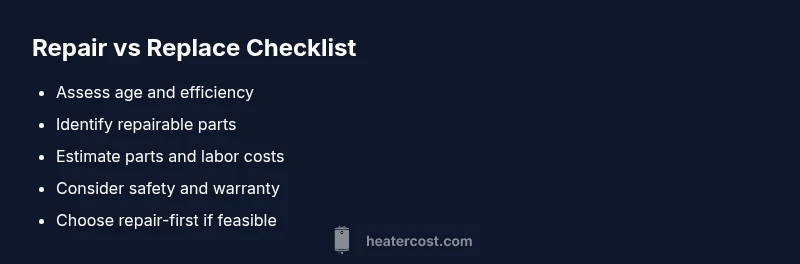
If multiple major components fail or the tank shows rusting, replacement often becomes the more cost-effective choice. If the unit is older than 10-15 years, compare repair costs with the price of a new unit and consider energy efficiency gains.
Tip: Keep a written cost comparison and life expectancy estimate to guide the decision.
Diagnosis: Water heater not delivering hot water or producing inconsistent temperatures
Possible Causes
- highThermostat miscalibration or failure
- highElectrical issues or a tripped breaker (electric models)
- mediumSediment buildup reducing heat transfer (tank-age dependent)
- lowGas supply issues or faulty burner/pilot control (gas models)
Fixes
- easyReset thermostat and recalibrate setpoint; replace if faulty
- easyReset circuit breaker, inspect wiring connections; call an electrician if issue persists
- easyFlush tank to remove sediment and restore heat transfer
- mediumReplace burner assembly, thermocouple, or gas valve; requires professional service
Got Questions?
Can most water heater problems be repaired?
In many cases, yes. Common issues involve thermostats, elements, or electrical connections. However, if the tank is severely corroded or if gas controls show a safety risk, replacement may be necessary.
Most problems can be repaired, especially thermostat or element failures. If the tank is corroded or gas safety is at risk, replacement may be best.
Is it safe to repair a gas water heater myself?
Gas heaters involve combustion and carbon monoxide risks. Unless you are a trained professional, avoid disassembly of the burner or gas valves. Call a licensed technician if you notice gas smells, ignition issues, or CO alarms.
No—gas repairs should be done by a licensed professional due to CO and fire hazards.
How long does repairing a water heater typically take?
Most repairs take a few hours, depending on parts availability and whether the issue requires element, thermostat, or valve replacement. If a full replacement is needed, installation can take longer.
Most repairs take a few hours, but replacement can take longer depending on setup.
Will repairing void my warranty?
Repair work may affect warranty terms. Check your appliance manual and the manufacturer’s policy. Unauthorized repairs could void coverage, while factory-approved service typically preserves warranty.
Warranties vary—check your manual and warranty terms before any work.
When should I replace rather than repair?
If the heater is over 10-15 years old, or if multiple major components have failed, replacement is often more cost-effective and energy-efficient in the long run.
If it’s old or failing in multiple ways, replacement may be the smarter choice.
What maintenance helps prevent future repairs?
Regularly flush the tank to remove sediment, test the pressure relief valve, and schedule annual professional inspections to catch issues early.
Regular flushing, valve testing, and annual checkups prevent many problems.
Watch Video
The Essentials
- Most minor issues are repairable when parts are available.
- Gas water heaters require professional service for safety and code compliance.
- Consider replacement if the unit is old or inefficient compared to newer models.
- Regular maintenance can prevent costly future repairs.