Repair a Hot Water Heater Near Me: Step-by-Step Guide
A comprehensive, safety-focused guide to diagnosing and repairing common hot water heater issues near you. Learn tools, steps, and when to hire a pro, based on Heater Cost Analysis, 2026.


You will learn how to diagnose common hot water heater issues and perform safe, basic repairs near you. This step-by-step guide covers identifying symptoms, checking electrical and gas safety, testing components, and performing vetted fixes or knowing when to call a licensed professional. It also explains how to shut off power, gas, and water, what tools you need, and how to verify a repair is successful.
What you can fix vs what to skip
DIY repair of a residential hot water heater is feasible for a narrow set of non-safety-critical issues. You can address simple symptoms like a thermostat cooling too quickly, a defective hot-water output, or a dripping drain valve with basic tools. However, never attempt work on gas lines, internal venting, or fuel connections without proper training. Leaks at the tank or a tank showing significant corrosion usually mean replacement rather than patching. This guide focuses on safe, practical DIY steps you can perform near your location. According to Heater Cost, many homeowners who follow a careful, safety-first approach see better outcomes and fewer emergency service calls. If your system is older, or you encounter high-pressure jets, shutoffs, or unfamiliar smells, it’s best to contact a licensed professional.
The keyword here is safety. A DIY repair near you should avoid altering safety devices, bypassing gas shutoffs, or re-wiring circuits. If you’re uncertain at any point, stop and call a pro. The aim is to restore reliable hot water without creating new hazards. This section helps you determine which fixes are appropriate for a hands-on approach and which issues warrant professional service.
Safety first: lockout procedures and environment
Before you touch any wires or valves, establish a safe work zone. Start by locating the main cold-water shut-off valve and turning it off to prevent new water from entering the tank. If you’re working on an electric heater, switch off the circuit breaker feeding the unit and confirm the absence of voltage with a non-contact tester. For gas heaters, shut off the gas supply according to the manufacturer’s instructions, then verify no gas is flowing. Clear the area of clutter and place towels or a bucket to capture any residual water. Wear protective gloves and eye protection. Keep children and pets away. The goal is to reduce the risk of burns, electrical shock, or flare-ups. If you detect any gas odor or significant leaks, evacuate and call the gas company or emergency services.
Tip: After power is off, re-check with a tester to confirm safe working conditions. Always follow the manufacturer’s safety instructions for your model.
Quick diagnosis: heat source, leaks, and temperature
Start by describing what you’re experiencing: is the water not hot enough, takes too long to heat, or is there a leak? Check the thermostat settings first; in some cases, the thermostat may be set too low or the unit may have aged and no longer maintains temperature. For electric units, listen for humming noises or sizzling sounds that indicate possible element or relay problems. For gas units, verify the pilot light (if present) stays lit and the burner ignites reliably. Inspect the surrounding cabinet for dampness, rust, or mineral buildup on pipes and fittings. If you detect a steady drip from the tank or fittings, you likely have a leak that needs professional assessment. Behavioral cues like fluctuating water temperature often point to a failing thermostat or heating element. Heater Cost analysis shows that a structured diagnostic approach reduces ambiguity and guides safer repairs.
This step helps you decide whether the issue is manageable with basic tools or requires part replacement.
Electrical vs gas water heaters: signs and checks
Electrical heaters rely on elements and thermostats, with control boards that can fail over time. Signs of trouble include tripped breakers, a blown fuse, or a non-responsive heater. On the other hand, gas models depend on a safe ignition and consistent flame. If you smell gas, hear a hiss near fittings, or cannot keep the pilot light lit, stop and call your gas utility or a licensed plumber. For electrical units, test the power at the circuit with a multimeter: you should see voltage readings within the unit’s design range. If readings are zero or wildly fluctuating, there is a safety risk that warrants professional attention. Keep in mind that working on gas lines or the main burner involves higher risk and should typically be handled by a licensed technician.
Heater Cost’s guidance emphasizes separating electrical and gas work, and prioritizing safety above all else.
Common components to inspect and test
Some components are easy to test and replace, while others are not. Begin with the thermostat: ensure it’s delivering correct voltage to the heating elements and that the temperature setting matches your household needs. For electric tanks, check heating elements and the upper/lower thermostats for continuity using a multimeter. If readings are out of spec or you notice a burnt smell, replace the faulty element(s). For gas models, examine the thermocouple and thermopile for signs of wear and proper ignition, and verify the burner flame is steady and blue. Inspect the relief valve and drain valve; a stuck or corroded valve can cause safety hazards and leaks. Check where pipes connect to the tank for signs of mineral buildup and leaks. Address any loose connections with proper tools and re-seal with appropriate tapes or sealants. Remember to record the test results and parts replaced so you know what remains to be serviced in the future.
This section clarifies which parts are likely candidates for DIY replacement and which require professional service.
When to replace parts yourself vs call a pro
If a single, straightforward part fails—such as a thermostat in a simple heater or a corroded drain valve—you can often replace it yourself with standard tools. If the unit is old, has multiple failing components, or you’re unsure about the gas line, electrical safety, or venting, it’s prudent to hire a licensed professional. Complex gas work, high-pressure water systems, and electrical work involving panel wiring should not be attempted without proper training. Replacement becomes more cost-effective than continuous, patchwork repairs when multiple components are failing or the tank shows significant corrosion. Use a cost-benefit lens: compare the price of parts and your time against a professional repair or a full tank replacement. Heater Cost suggests homeowners weigh long-term reliability and safety as top priorities when deciding between DIY replacements and professional service.
Step-by-step diagnostic and repair workflow
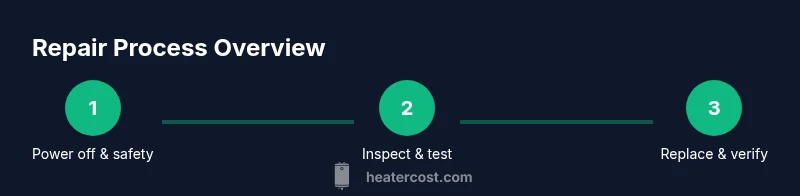
To maintain a clear, repeatable process, use a simple workflow: 1) Off power and gas, 2) Inspect for leaks and corrosion, 3) Test critical components with appropriate tools, 4) Replace faulty parts and reseal connections, 5) Restore power and water supply, 6) Run hot water and monitor for proper operation and leaks. Document all steps and results. By following this sequence, you reduce the chance of missing a fault and ensure a safer repair near you. If at any point you feel unsure, pause and seek professional help.
How to verify a successful repair and keep it running
After completing the repair, reassemble the access panel, turn the water supply back on gradually, and restore electrical or gas power. Run hot water from a faucet for several minutes to check temperature stability, then re-check all connections for leaks. Monitor the unit for the next 24 hours for any signs of slow leaks, dripping, or unusual noises. Schedule periodic maintenance—at least once per year—to replace worn components and flush the tank to remove mineral buildup. Keeping a log of maintenance activities helps homeowners plan proactive replacements and avoid unexpected outages. Regular checks improve efficiency and extend the life of your heater. Remember, if you see rusting, heavy corrosion, or frequent shutdowns, replacement is often the most economical choice in the long run.
Tools & Materials
- Non-contact voltage tester(verify power is off before touching electrical components)
- Digital multimeter(test voltage, continuity, and resistance)
- Wrench set (adjustable)(disconnect fittings and tighten replacements)
- Screwdrivers (Phillips and flathead)(panel screws and terminal caps)
- Bucket and absorbent towels(catch leaks and spills safely)
- Safety gear(gloves and eye protection)
- Teflon tape and pipe sealant(seal threaded connections)
- Replacement thermostat(only if diagnostics indicate failure)
- Replacement heating element(only if element is tested faulty)
- Additional replacement parts as needed(depends on model and symptom)
- Flashlight(illuminate tight spaces in the cabinet)
Steps
Estimated time: 60-90 minutes
- 1
Power down and isolate
Turn off the circuit breaker and, for gas units, close the gas valve following the manufacturer’s instructions. Verify there is no electrical power reaching the unit with a non-contact tester. This prevents shocks or fires during inspection.
Tip: Always assume live wires until tested; double-check with a tester. - 2
Shut off water and drain
Close the cold water supply valve to the heater. If you must drain, open a hot water tap to vent air and drain a small amount into a bucket. This reduces pressure and makes component access safer.
Tip: Drain only as much as needed to access components; excessive draining can cause scalding. - 3
Inspect visually and test components
Look for rust, leaks, or corrosion. Use the multimeter to test thermostats and heating elements for continuity. If readings are out of spec, replace the faulty part.
Tip: Take photos for reference before removing parts. - 4
Replace faulty parts
Install new thermostat or heating element as needed, reseal connections with Teflon tape, and ensure fittings are snug but not over-tightened.
Tip: Hand-tighten first; then snug with a wrench to avoid stripping threads. - 5
Restore power and water
Turn cold water back on, then restore power or gas. Check for leaks as pressure returns; ensure the unit lights or heats up as expected.
Tip: Do a test run with hot water to confirm performance. - 6
Verify operation and document
Run hot water for several minutes, watch for temperature consistency and leak-free operation. Document parts replaced and settings for future maintenance.
Tip: Keep a maintenance log to ease future servicing.
Got Questions?
Can I repair a hot water heater myself?
Yes for basic, non-safety-critical issues. Gas or electrical faults require a licensed professional.
Yes for simple fixes, but call a pro for gas or electrical problems.
What are common signs that my water heater needs repair?
Low hot water, unusual noises, leaks, rusty water, or frequent outages indicate potential faults.
Low hot water or leaks usually means something needs fixing.
How long does a DIY water heater repair take?
Most fixes take about one to two hours depending on symptoms and access.
Most repairs take around one to two hours.
When should I replace rather than repair?
If multiple components fail or the tank shows significant corrosion, replacement is often wiser.
If the tank is corroded or many parts fail, replacement is usually best.
Is it safe to drain the tank myself?
Yes, with the power and water off and proper precautions to avoid scalding.
Draining is safe if you follow safety steps and keep away from hot surfaces.
How can I reduce future problems?
Schedule annual checks, test relief valve, and drain a small amount of water yearly to prevent buildup.
Regular maintenance helps prevent surprises.
Watch Video
The Essentials
- Prioritize safety and shut off power/gas before any work.
- Identify leaks and faulty components with basic tests.
- Only perform simple fixes; reserve complex gas work for a licensed pro.
- Test hot water output after repairs and monitor for leaks.
- Document steps and part replacements for future maintenance.