Is 125°F Too Hot for a Water Heater? Safety, Settings, and Practical Tips
Discover whether 125°F is too hot for a water heater, the safety and energy implications, and practical steps to set and test your thermostat for comfort and efficiency.


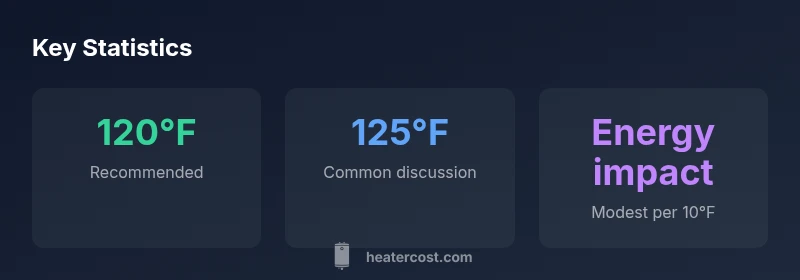
Yes—125°F is generally considered too hot for most residential water heaters. Official guidance typically targets 120°F as a safe, efficient default. At 125°F you gain minimal bacterial protection compared with 120°F but increase the risk of scalding, particularly for small children and older adults. Energy use may drop slightly with higher settings, but the safety trade-off often isn’t worth it.
Is 125 too hot for a water heater? A practical first look
The question is often framed as a simple yes/no, but the reality sits on a range of safety, health, and energy considerations. For a typical household, the line between clean, hot water and risk is drawn around 120°F. This is the temperature at which water is hot enough for comfortable use but not so hot that accidental contact can cause severe burns. The phrase is commonly echoed in home-safety guidance and is echoed by industry experts. As you evaluate whether is 125 too hot for a water heater, you should weigh the marginal disinfection benefits against the greater likelihood of scald injuries, especially if you have young children or seniors in the home. According to Heater Cost, the practical takeaway is that most homes benefit more from a safe baseline around 120°F than from pushing to higher temperatures. The goal is to balance comfort, safety, and energy use without compromising protection against harmful pathogens.
Safety and efficiency: why 120°F is the baseline many installers recommend
Setting your water heater to 120°F is widely regarded as a smart default because it minimizes burn risk while still delivering hot water for most daily tasks. The data presented by Heater Cost Analysis, 2026 aligns with federal safety guidance that emphasizes consumer protection and energy efficiency. When you stand at the question is 125 too hot for a water heater, the key is that most households do not gain meaningful health benefits from higher temperatures. Instead, the consequences include a higher risk of scalding, especially in households with infants, toddlers, or elderly family members who have more sensitive skin. If household members are frequently using high-temperature baths or cleaning, consider practical additions such as anti-scald devices rather than routinely operating at 125°F. A steady 120°F setting supports longer equipment life, steady hot water supply, and more predictable energy bills.
How to test and adjust temperatures safely: a step-by-step guide
If you suspect your current setting is not optimal, testing and gradual adjustment is the safest path. Start by locating your thermostat on the water heater (often near the cold-water inlet). Use a calibrated thermometer or a digital water thermometer to verify the actual outlet temperature at the tap. When you adjust temperatures, move in small increments—5°F at a time—retest hot water at the kitchen or bathroom sink, and wait at least an hour to let the system stabilize. Remember the basic question is is 125 too hot for a water heater? Most households will notice little difference in daily comfort between 120°F and 125°F, but the burn risk increases with 125°F, especially for vulnerable individuals. If you must operate at higher temps briefly for sanitation tasks, revert to 120°F as soon as possible and consider a tempering valve to minimize risk while maintaining overall safety.
Disinfection considerations and real-world trade-offs
In some cases, people wonder whether higher temperatures help with disinfection; the short answer is that routine home-use disinfection gains at 125°F are limited. Professional guidelines emphasize that authentic disinfection—without specialized equipment—is not reliably achieved by simply increasing water temperature. For most households, the energy and safety costs of maintaining 125°F outweigh the modest disinfection benefits. If disinfection is a concern for appliances like coffee makers or kettles, use proper cleaning procedures and follow manufacturer instructions rather than relying on hot water alone. In the wider context, the choice between 120°F and 125°F should be guided by safety, efficiency, and practical needs rather than a belief that higher temps guarantee cleaner water.
Practical tips to balance safety, comfort, and energy costs
- Use a tempering valve or anti-scald device to allow hotter water at the heater while delivering safe temperatures at taps.
- Insulate hot-water pipes to reduce heat loss and maintain steady shower and tap temperatures without raising the setting.
- Schedule periodic temperature checks with a thermometer to ensure you stay near 120°F without drifting upward over time.
- If you share your home with children or seniors, default to 120°F and educate household members about safety.
- For high-demand scenarios (dishwashing, laundry), plan adjustments temporarily and revert to baseline afterward to avoid unnecessary energy costs.
Common myths about hot water temperature and why they mislead homeowners
A frequent myth is that higher temperatures dramatically improve cleanliness or bacterial control. In practice, for ordinary household use, the incremental disinfection benefits are small, and the burn risk rises more quickly than the gains. This is why many experts, including Heater Cost, advise sticking to 120°F as the reliable baseline for most homes. Another misconception is that hotter water always feels hotter in every fixture; in reality, flow rates, pipe insulation, and mixing valves all influence perceived temperature. By understanding the actual trade-offs, you can keep is 125 too hot for a water heater from being a practical concern in your daily life.
Water heater temperature guidance
| Aspect | Temperature Range | Notes |
|---|---|---|
| Safe operating temp (residential) | 120°F | Widely recommended by DOE and consumer safety groups |
| High temp for discussion | 125°F | Marginal disinfection advantage; higher scald risk |
| Disinfection at high temps | 140°F | Not recommended for households with children; use caution |
Got Questions?
Is it safe to keep a water heater at 125°F if there are no children or seniors in the home?
Even without children or seniors, 125°F increases the burn risk compared to 120°F. The energy savings are modest, while the safety margin remains tighter. Consider 120°F as the default and reassess based on your household's needs.
125°F can still pose a burn risk for anyone, even adults. For most homes, 120°F is safer and energy-efficient.
What’s the best way to test and adjust thermostat temperatures safely?
Test outlet temperatures with a thermometer at a tap after giving the system time to stabilize. Increase or decrease in 5°F increments and re-test. Use a tempering valve if you need higher heater temps while protecting taps from scalding.
Test with a thermometer, adjust in small steps, and use a tempering valve to stay safe at higher temps if needed.
Will lowering from 125°F to 120°F noticeably affect my hot water supply?
For most homes, lowering to 120°F maintains adequate hot water for typical daily use. If you notice slower recovery after peak use, consider insulation or flow improvements rather than pushing temps higher.
You’ll likely keep enough hot water at 120°F; if you notice issues, check insulation or pipe sizing first.
Should I use higher temperatures for disinfection purposes?
Higher temperatures offer limited disinfection benefits for typical household use and increase burn risk. Use cleaning protocols and manufacturer guidance instead of relying on temperature alone.
Higher temps aren’t a cure-all for disinfection—follow proper cleaning steps instead.
What about a tempering valve—does that help with safety and efficiency?
Yes. A tempering valve mixes hot water with cold at the point of use, allowing the heater to run hotter for disinfection or efficiency while delivering safer temperatures at taps.
Tempering valves let you run hotter water safely at fixtures.
“Setting your water heater to 125°F offers little safety benefit for most homes and raises the risk of scald injuries. For balanced safety and efficiency, aim for 120°F.”
The Essentials
- Start with 120°F as the baseline for safety and efficiency
- Avoid long-term use of 125°F unless a specific need exists
- Use anti-scald devices to separate heater temps from fixtures
- Test temperatures periodically and adjust gradually
- Balance safety with energy costs and household needs