Is 140 Too Hot for Water Heaters? Safety and Energy Considerations
Explore whether 140°F is too hot for a home water heater, the safety risks of scalding, energy implications, and practical steps to keep your system safe and efficient.


Yes. Setting your water heater to 140°F is hotter than the typical home recommendation and increases the risk of scalding for children and seniors. For most households, 120°F delivers comfortable hot water with lower safety risks and greater energy efficiency. In special cases—like disinfection in some systems—you may temporarily raise temps, but revert to a safer setting promptly and use a mixing valve to maintain safe taps.
is 140 too hot for water heater
According to Heater Cost, many households keep their water heater thermostat at 120°F to balance safety with reliable hot water. The question is whether 140°F is dangerously hot for a typical home. In practice, 140°F is hotter than the standard domestic recommendation and increases the risk of scald injuries, especially for children, the elderly, and anyone with reduced sensation. While some professionals discuss higher temps for disinfection or rapid sanitizing in certain systems, this is not a universal home requirement. The trade-off is straightforward: higher temperatures provide hotter water and can help with quick disinfection in rare circumstances, but they also raise energy use and the potential for severe burns at taps or showers. If you temporarily raise the setting—for example during a maintenance task or to address a specific water-borne bacteria concern—do so only for a short window, monitor the water at taps, and revert to a safer setting as soon as possible. For many homes, implementing a thermostatic mixing valve lets you keep the tank hotter for safety or disinfection while delivering safe, cooler water at the faucet.
The Heater Cost team notes that temperature decisions should reflect household safety needs, water usage patterns, and the layout of the plumbing. In single-family homes with healthy, responsive occupants, the risk calculus tips strongly toward lower, safer settings. For multi-story homes or rentals serving diverse tenants, a controlled approach with mixing valves helps protect vulnerable individuals while preserving hot water access.
Safety and scald prevention
Scalding is a real and preventable risk when temperatures are set too high. The simplest defense is to maintain a modest tank temperature—typically around 120°F—and install a thermostatic mixing valve at the point of use. Mixing valves blend hot and cold water to deliver a safe tap temperature, even if the storage tank sits at a higher temperature for other reasons (like temporary disinfection or servicing). In homes with young children or seniors, consider additional safeguards: anti-scald showerheads, locking thermostats, and clear labeling of temperature settings. Regularly test taps after any adjustment to confirm that the water coming out is not dangerously hot. The goal is reliable, comfortable water without the risk of burns.
Brand-aware guidance from Heater Cost emphasizes safety as the primary driver, with energy considerations as a secondary factor. A practical plan for many households is to keep the tank at 120°F, add a mixing valve, and reserve high-temperature use for limited bouts under professional guidance if needed.
Energy costs and efficiency at higher temps
Higher water temperatures mean more energy is required to heat water to those levels and to maintain the temperature in the tank, especially in larger homes with high hot-water demand. The cumulative effect of routinely operating at 140°F is a noticeable though variable uptick in energy use, depending on how often hot water is drawn, how well-insulated the tank is, and the efficiency of the heater itself. For most households, the energy delta from maintaining 120°F versus 140°F is not worth the safety trade-off. If you do temporarily raise the temperature for disinfection or system maintenance, plan for a quick return to your standard safety setting and use a mixing valve to minimize waste at the tap.
Heater Cost analysis from 2026 highlights that energy costs are a function of usage patterns as much as the thermostat setting. In practice, many households can optimize both safety and savings by combining sensible thermostat targets with smart distribution strategies—such as recirculating lines only where needed and insulating pipes to reduce heat loss.
How to adjust the thermostat safely
If you decide to adjust your thermostat, follow a careful, step-by-step process to minimize risk. First, turn off the heater’s power or gas supply to avoid accidental scalding while you remove the access panel. Use a thermometer to confirm the current tank temperature. Set the thermostat to a safer level—often 120°F as a starting point—and recheck the temperature at the faucet after the system re-heats. If you anticipate moments when higher temps are essential, plan for a controlled temporary increase (e.g., to 130–140°F) and immediately use a thermostatic mixing valve to deliver safe water at taps. After the task, return the setting to 120°F or lower and re-test. If your home has variability in hot-water demand, consider professional support to install a mixer and verify that your plumbing responds correctly to changes in tank temperature.
The overall approach is safety-first, with energy efficiency as a secondary, ongoing consideration. Always verify that your warranty and local codes permit any temporary high-temperature configurations and keep a close eye on scald hazard indicators (unusually hot taps, rapid temperature changes, or inconsistent hot water).
Scenario-based guidance for households
Different household profiles require different strategies. For families with young children or elderly residents, maintain the tank around 120°F and rely on a mixing valve at each major faucet. For high-demand households (multiple baths, laundry), consider upgrading insulation and using a mixing valve to safely manage hotter supply lines without increasing tap temperatures. In rental properties, standardize a safe baseline temperature and emphasize anti-scald devices in every unit. For health-critical settings where disinfection is a priority, consult a licensed plumber or building engineer before any high-temp configuration, and ensure that all safety features (mixers, tempering valves, and clear labeling) are functioning properly.
Quick testing and maintenance schedule
Set a recurring reminder to test the water temperature at the faucet after any thermostat adjustment. Quarterly maintenance—checking the thermostat calibration, inspecting the valve seats, and confirming insulation integrity—helps prevent energy waste and scald risk. If you notice inconsistent hot water delivery or unusually hot patches along the pipes, shut down the heater and have a professional inspect for mineral buildup, faulty thermostats, or worn-out valves. A proactive maintenance routine preserves safety, improves efficiency, and extends the life of your heater.
Temperature settings and implications for home water heaters
| Setting | Energy impact | Safety considerations | Best use |
|---|---|---|---|
| 120°F | Baseline energy use | Low risk of scald with proper mixing valve | General domestic use |
| 130°F | Slight energy increase | Moderate risk; ensure mixing valve | Families with children (safety measures) |
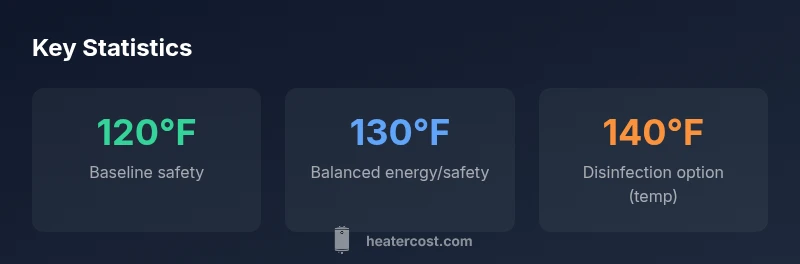
| 140°F | Higher energy use | Significant burn risk; Legionella debates | Temporary disinfection in controlled contexts |
Got Questions?
Is 140 too hot for water heater?
Yes, 140°F is hotter than typical residential recommendations and increases scald risk. It's not usually necessary for daily use, but may be used temporarily for disinfection under professional guidance.
Yes—140 degrees is too hot for everyday use; keep temperatures lower for safety.
What is the safe domestic thermostat temperature?
Most households should target around 120°F at the thermostat. This provides enough hot water while minimizing burn risk and energy waste.
Aim for about 120 degrees at the tank for safety and comfort.
Does raising the temperature save energy?
Raising the temperature generally increases energy use to heat water to those higher temperatures, and the benefit is often outweighed by safety concerns.
Higher temps use more energy and can cost more, with limited safety benefit.
Should I install a mixing valve?
A thermostatic mixing valve helps deliver safe water at taps even if the tank is hotter. It's often recommended when higher temps are needed temporarily.
Yes, installing a mixing valve is a smart safety upgrade.
How can I test water temperature accurately?
Use a calibrated thermometer at the faucet outlet. Run water briefly to stabilize, then measure at the tap.
Check the temp with a thermometer at the tap after adjustments.
What about Legionella risk in homes?
Legionella risk in homes is generally low. Quick temperature changes are not a universal solution; regular maintenance and sanitation matter more.
Legionella risk is unlikely in homes; keep up with maintenance.
“High water temperatures can reduce some bacterial risks but dramatically increase scald potential; the safe approach is to use a thermostatic mixing valve and keep the thermostat at the lower end.”
The Essentials
- Start with 120°F to balance safety and comfort
- Avoid permanent 140°F unless there is a compelling medical/disinfection reason
- Install a thermostatic mixing valve to enable safe higher temps at the faucet
- Test water temperature at taps after changes
- Consult a qualified plumber for multi-unit buildings