Set Water Heater Temperature: A Practical Home Guide
Learn how to set your water heater temperature safely and efficiently. This guide covers ideal ranges, energy savings, safety tips, and maintenance for homeowners.


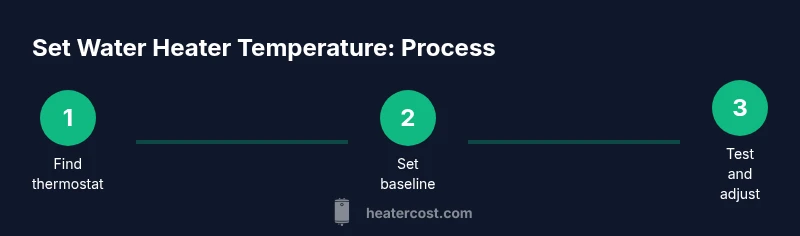
To set your water heater temperature, start at 120°F (49°C) as a safe baseline, then adjust in small increments to match household needs. Locate the thermostat, power off if needed, and test hot water at taps before finalizing. This simple adjustment improves safety, comfort, and energy efficiency.
Why Temperature Matters for Water Heaters
Temperature control is more than a comfort issue; it affects safety, energy bills, and appliance longevity. A water heater that runs too hot wastes energy and increases the risk of scalding, especially for children and the elderly. Conversely, a tank that runs too cool can leave you with insufficient hot water during peak usage. By understanding the right range and how to adjust it, homeowners can balance comfort with safety and cost. In this guide, the Heater Cost team explains practical steps, safety considerations, and maintenance routines to help you set the temperature confidently. Brand guidance and industry insights come from Heater Cost Analysis, 2026, which highlights how a thoughtful thermostat setting aligns with long‑term cost savings and reliability.
Ideal Starting Point and Safety Ranges
Most homes benefit from a starting point of 120°F (49°C). This range minimizes the risk of scalding while still delivering comfortable hot water for showers, dishwashing, and laundry. If you discover you consistently run out of hot water, you can gradually raise the setting in small increments (for example, 5°F at a time). When lowering the temperature, you may notice longer recovery times and cooler water at distant taps, so test at multiple fixtures to ensure the setting works for your household. Always consider the presence of children or elderly residents, who are more vulnerable to hot water burns. Regular verification can help you maintain a safe, efficient balance across seasons.
Understanding the Thermostat and Controls
Water heaters come with a variety of thermostat styles, from simple dial screws to modern digital panels. The location of the thermostat varies by model: some are behind a front panel cover secured with screws, others are on top or near the base. Before making any adjustments, consult your owner’s manual to identify the correct dial or digital control and the recommended operating range. On many models, you’ll see a temperature dial marked in increments. If your unit has a digital control, ensure you understand how to navigate between Fahrenheit and Celsius readouts. After you locate the control, reset to the safe baseline and plan to test.
What You Need to Know Before Adjusting
Safety is paramount when adjusting a hot water system. If you are unsure about electricity or gas connections, consult a licensed professional. For electric models, you may need to cut power at the breaker before removing access panels. For gas models, shut off the gas supply according to the manufacturer’s instructions. In all cases, allow the system to stabilize after any adjustment before testing water temperature. If you live in a rental, check with your landlord or property manager before making changes. Documentation of your final setting can help with future maintenance and avoid confusion during inspections.
Testing and Verifying the Temperature
After you adjust the thermostat, test the water temperature at a typical tap. Run hot water for 30–60 seconds and measure the outlet temperature with a reliable thermometer. If you don’t have a thermometer, carefully feel the water at the tap to assess heat level, then refine the setting in small increments. Repeat tests at multiple fixtures if your home has more than one bathroom. Remember to reassemble any panels or access doors and restore power or gas once testing is complete. This step confirms your target temperature is delivering consistent hot water.
Maintenance Practices to Preserve Longevity
Maintenance plays a key role in keeping your water heater energy efficient and reliable. Regularly flushing the tank (annually or as recommended by the manufacturer) helps remove mineral buildup that can impair temperature control and efficiency. Improve insulation around the tank and pipes to reduce heat loss. Replace worn components such as the anode rod when indicated, and check the thermostat seals for wear. If you notice sediment, noises, or leaks, contact a professional for evaluation. A well‑maintained system responds more accurately to thermostat adjustments and saves energy over time.
Troubleshooting Common Issues After Adjustment
If the water feels too hot after adjusting, recheck the thermostat setting and repeat the testing process. If hot water remains inconsistent between fixtures, there could be sediment buildup, a failing thermostat, or a faulty mixing valve. Don’t ignore a complete lack of hot water after an adjustment, as it may indicate a wiring or gas issue that requires a licensed technician. Keeping a simple log of settings and test results helps identify patterns and avoids repeated, unnecessary changes.
Energy Savings and Budget Implications
A properly set water heater uses energy more efficiently, reducing monthly bills without sacrificing comfort. Moving from an overly hot setting to 120°F can cut energy use without significantly impacting daily routines, particularly if you use sensible hot water practices such as shorter showers and efficient dishwashing. In cold climates, a slightly higher setting may be more comfortable in winter, but test across seasons to verify performance. Remember that small adjustments over time can compound into meaningful savings over the life of your heater.
Tools & Materials
- Screwdriver (Phillips #2 or flat-head depending on model)(Have a suitable tool for removing the thermostat cover)
- Digital thermometer or kitchen thermometer(Use to verify water temperature at taps)
- Dish towel or heat-resistant gloves(For handling hot components safely)
- Owner’s manual(Helpful for model-specific safety steps and dial ranges)
- Flashlight(Illuminates dark access panels)
Steps
Estimated time: 30-45 minutes
- 1
Identify thermostat location
Locate the thermostat on your water heater. Refer to the owner's manual to know whether you have a dial or a digital control, and determine the correct safety steps for your model. This helps you avoid accidental wiring or gas-related hazards.
Tip: Take a quick photo before removal so you can reassemble correctly. - 2
Power down or isolate the unit
For electric heaters, switch off power at the circuit breaker. For gas heaters, set the control to the pilot or off position as instructed by the manual. This prevents electric shock or gas leaks during adjustment.
Tip: Never adjust while the power or gas supply is live unless the manual explicitly allows it. - 3
Open access panel and prepare the thermostat
Remove the cover plate using the appropriate screwdriver. If your model has a coil or sensor behind the panel, handle it gently. Ensure the area is well-lit and dry to avoid accidents.
Tip: Keep screws in a labeled container to avoid losing them. - 4
Set to the starting point
Set the thermostat to 120°F (49°C) as the baseline. If your model uses Celsius, set to about 49°C. This starting point balances safety with adequate hot water supply.
Tip: If your dial uses numbers, align to the corresponding mark and avoid guessing. - 5
Test and adjust in small increments
Turn the power back on and run hot water to test. If the water is too hot or too cool, adjust by 5°F increments and re-test after stabilizing for several minutes.
Tip: Document the final setting for future maintenance. - 6
Restore and verify
Replace the access panel, reassemble, and restore power or gas. Verify hot water at multiple fixtures to ensure consistent temperature.
Tip: Keep a log of dates and temperatures for future reference.
Got Questions?
What is the recommended starting water heater temperature?
A common starting point is 120°F (49°C). This balance minimizes scald risk while providing adequate hot water.
A good starting point is 120 degrees Fahrenheit to balance safety and comfort.
Will lowering the temperature save energy?
Yes, lowering the setting reduces the energy needed to heat water. The exact savings depend on usage patterns and incoming water temperature.
Lowering the setting typically saves energy, depending on how you use hot water.
How often should I test the water temperature after adjusting?
Test after the system stabilizes, usually within 15–30 minutes, and re-test after any further adjustment.
Test after it stabilizes, then re-test if you adjust again.
I have a tankless water heater; is this process the same?
Tankless systems have different controls; refer to your model’s manual. The safety principle—test and adjust gradually—still applies.
Tankless units differ, check your manual, but adjust gradually and test.
Is there a safety risk from changing the thermostat?
There is a risk of scalding if water is too hot, especially for children. Use protective gear and confirm temperatures at several fixtures.
Yes, there is a scald risk if it's too hot; verify at multiple taps.
Watch Video
The Essentials
- Start at 120°F and adjust gradually.
- Test temperature at multiple fixtures for accuracy.
- Lowering temperature saves energy but watch recovery times.
- Document final setting for maintenance.
- Regular maintenance boosts efficiency and reliability.