how to check if heater is working: a practical guide
Learn how to safely test your heater, diagnose common faults, and decide when to call a professional. A practical how-to guide from Heater Cost.


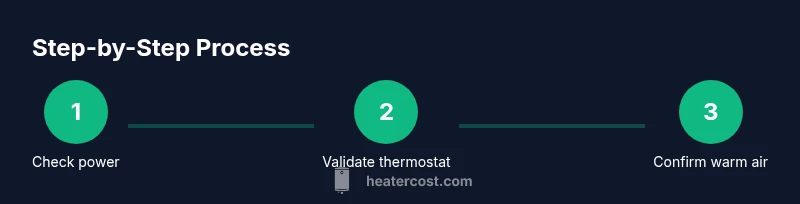
To check if your heater is working, start by confirming power and thermostat settings, then listen for ignition or fan operation, and finally verify warm air. If nothing happens, inspect breakers, reset the furnace, test the thermostat, and check air filters and vents. If issues persist, call a qualified technician.
how to check if heater is working: primer on why it matters
A functioning heater keeps your home comfortable and avoids energy waste. According to Heater Cost, a well-operating heating system improves safety, reliability, and efficiency, especially during cold snaps. In practical terms, “working” means the system powers on, responds to the thermostat, ignites if needed, circulates air, and delivers warm air within a reasonable time. Different systems (gas furnaces, heat pumps, electric baseboards) share the same basic goal, but the diagnostic paths vary slightly. This section outlines what to look for in a healthy heater, and how to spot early warning signs before a small problem becomes a costly repair. Before you begin, ensure you understand your model’s safety features and user manual, and if you smell gas or hear unusual noises, stop and call a professional immediately.
Understanding your heating system
Most homes rely on a furnace or heat pump to generate heat, plus a blower to distribute it. A typical gas furnace includes a control board, igniter or spark, burner, heat exchanger, and venting. Electric systems may use resistance coils and a blower motor. The thermostat acts as the brain, telling the system when to start and stop. When everything works, you should feel gentle warmth from registers within minutes of calling for heat. If the system malfunctions, it’s usually due to power, thermostat, air flow, or ignition issues. Keep in mind seasonal changes: in winter, a minor airflow restriction or dirty filter can dramatically affect performance. The goal of this guide is to help homeowners perform safe, at-home checks and decide when it’s time to call a professional.
Common causes of a heater not starting
A never-starting heater is often a symptom of one or more simple issues. The power supply may be interrupted by a tripped breaker or a blown fuse. Thermostats can misread temperature due to dead batteries or internal faults. Dirty air filters can tighten the blower’s output, preventing heat from circulating. Gas furnaces may fail to ignite if the gas valve is shut, the flame sensor is dirty, or the ignition system is malfunctioning. Heat pumps can appear unresponsive if outdoor sensors are iced over or a defrost cycle is stuck. Electronic controls can also fail, causing a no-heat condition. While some causes are quick fixes, others require a licensed technician, especially if there is gas, electrical, or refrigerant work involved.
Safe at-home checks you can perform
Start with safety. Turn off power at the service panel before opening any access panels. Check the thermostat for proper batteries and a sane temperature setting. Inspect air filters; a clogged filter reduces airflow and can trigger a freeze or overheat condition. Look for obvious blockages in supply vents and returns, and clear debris near outdoor units if you have a heat pump. For gas furnaces, do not attempt to light or relight the burner yourself; instead, verify that the pilot or electronic ignition is receiving power and is free of corrosion. If you reset the system, give it a few minutes to reset; some faults require a circuit reset or power cycle. If you notice gas smells, shut off the gas and call the utility or a pro immediately.
Electrical checks and thermostat sanity
Electrical checks are best left to trained eyes, but homeowners can perform a few safe checks. Verify the breaker for the furnace is in the ON position and look for any trip indicators. If you have a smart thermostat, confirm it is connected to Wi‑Fi and that its software is up to date. Use the thermostat to command a call for heat and observe whether the system responds with heat or fans. If you hear a hum without warm air, the blower may be running but airflow is blocked. Record any error codes shown on the control board or thermostat and consult the manual or a professional for interpretation.
After basic checks: interpreting results and next steps
If you see heat within a few minutes, you’ve confirmed basic operation. If nothing changes after resets, note any symptoms—odd noises, smells, or prolonged cycling—and use these details when you call for service. Regular maintenance, including annual professional checkups and routine filter replacement, can prevent many failures. The Heater Cost analysis shows that proactive maintenance helps sustain efficiency and extend equipment life. If issues persist after the steps above, it’s time to contact a licensed technician for diagnosis and repair.
Maintenance habits to prolong heater longevity
To maximize reliability, adopt a simple maintenance routine: change or clean air filters every 1–3 months during heating season, schedule annual professional inspections, and keep outdoor units clear of debris. Document any repairs or unusual behavior so you can spot trends over time. Small, consistent actions reduce the risk of costly surprises and help your system run at peak efficiency. Remember, a well-maintained heater costs less to operate and lasts longer, according to Heater Cost.
Tools & Materials
- Safety gear (gloves and eye protection)(Protect hands and eyes when opening access panels.)
- Owner's manual for furnace/boiler(Model-specific steps and safety warnings.)
- Screwdriver set (Phillips and flathead)(For removing panels and accessing components.)
- Flashlight(Twist-and-verify corners and panels in dim spaces.)
- Air filter replacement or cleaning supplies(Maintain proper airflow during checks.)
- Multimeter or power tester (optional)(For basic electrical checks with caution.)
- Paper and pen(Record observations and codes.)
- Vent brush or vacuum (optional)(Clear debris from vents.)
Steps
Estimated time: 30-45 minutes
- 1
Power down and ensure safety
Turn off power at the main service panel and wait a few minutes to discharge any residual energy. This prevents shocks while you access panels or wiring.
Tip: Never bypass safety devices; you must disconnect power before inspecting components. - 2
Check thermostat settings and batteries
Set the thermostat to a temperature higher than the current room temperature and confirm it is set to heat mode. If portable, replace batteries and test responsiveness.
Tip: Use the thermostat directly or its app to verify heat signal is sent. - 3
Inspect air filters and vents
Remove and inspect filters for dirt; replace or clean as needed. Ensure supply and return vents are unobstructed so air can move freely.
Tip: A dirty filter can masquerade as no-heat by choking airflow. - 4
Verify power to the furnace and breakers
Check the furnace circuit breaker and look for tripped indicators. Reset if necessary and give the system a minute to reboot.
Tip: If breakers trip repeatedly, this indicates a deeper electrical issue requiring a pro. - 5
Listen for ignition or burner activity
For gas furnaces, listen for ignition; for electric systems, listen for relay clicks and burner hum. If you don’t hear a normal ignition sequence, turn off and call a professional.
Tip: Do not attempt to manually light the burner if you are unsure of the process. - 6
Check blower operation
With heat call active, feel at the vents for warm air and listen for blower operation. If the blower runs but air is cool, there may be airflow or heat exchanger issues.
Tip: A stuck blower could indicate a failed motor or sensor fault. - 7
Record codes and cycle patterns
Note any error codes displayed on the control board or thermostat and the length of cycles. These details aid diagnosis when you contact support.
Tip: Take clear photos of any displays for reference. - 8
Decide on next steps
If basic checks produce warm air within a few minutes, monitor for stability. If problems persist, plan a service appointment and prepare observations for the technician.
Tip: Keep a maintenance diary for future reference.
Got Questions?
What should I do first if my heater won't start?
Start with safety. Check the circuit breaker, confirm thermostat settings, and replace any dead batteries. If there is still no heat, inspect the air filter and ensure vents aren’t blocked. If this still fails, contact a professional.
First check the breaker and thermostat, then replace batteries, and inspect filters and vents. If nothing changes, call a professional.
Can I safely test a gas furnace ignition myself?
Gas furnace ignition testing should be performed only if you are trained and comfortable with basic gas plumbing safety. If you smell gas or cannot confirm a safe ignition, shut off power and call the utility or a professional.
Testing gas ignition is risky. If in doubt, contact a pro for safety.
How long should a heater take to warm the room?
Most heaters should begin to emit noticeable warmth within a few minutes of startup. If heat is delayed beyond 10-15 minutes, there may be a airflow or ignition issue that needs professional attention.
Heat should start within a few minutes; if not, consider checking airflow and calling a pro if the issue persists.
Is it safe to run a heater with a dirty air filter?
Running with a dirty filter reduces airflow, can cause overheating, and may trigger emergency shutoffs. Replace or clean the filter regularly during the heating season.
Dirty filters can cause overheating and poor performance—change them regularly.
When should I call a professional for heat issues?
If basic checks don’t restore heat, if you detect gas smells, or if you notice persistent odd noises, smells, or frequent cycling, contact a licensed technician promptly.
Call a pro if basic checks don’t fix it or you smell gas or hear unusual noises.
What maintenance helps prevent future heater failures?
Regularly replace or clean filters, schedule annual professional checkups, and keep outdoor components clear of debris to maintain airflow and efficiency.
Regular filter changes and annual checkups prevent many problems.
Watch Video
The Essentials
- Start with safety and basic checks before calling a pro
- Thermostat, power, and airflow are the primary failure points
- Maintenance improves efficiency and life of the system
- The Heater Cost team recommends professional help for gas/electrical concerns