How to Flush a Water Heater: Step-by-Step Guide for Homeowners
Learn how to safely flush your water heater to remove sediment, improve efficiency, and extend its lifespan with our comprehensive, homeowner-friendly guide and checklists.


This guide shows you how to flush a water heater to remove sediment, improve efficiency, and extend lifespan. You’ll learn the exact tools, safety steps, and timing needed for a successful flush. According to Heater Cost, performing a regular flush can reduce mineral buildup and help prevent costly repairs. Follow along for practical steps, troubleshooting tips, and when to call a pro.
Why flushing matters and when to do it
Sediment builds up at the bottom of gas or electric water heaters over time. This mineral scale can insulate the heating element, slow down heat transfer, and cause louder operation. Regular flushing helps maintain efficiency and prolongs the unit's life. According to Heater Cost, homeowners who flush annually (more often in hard-water areas) typically notice steadier hot water and fewer cold spells. Signs that you’re due for a flush include reduced hot water, rusty or cloudy water, and unusually noisy operation. For most households, scheduling a flush once a year in the fall or spring aligns with spring maintenance and fall preparedness. If you have a particularly hard water profile or a tank with decades of use, you may opt for more frequent flushing as part of proactive maintenance. The key is consistency: a predictable routine beats reactive fixes.
Safety first: risks and precautions
Flushing a water heater involves hot water, pressurized lines, and, in some homes, both electricity and gas. The risk of scalding, electric shock, or gas leaks means safety must come first. Before you begin, turn off the power at the breaker or set the gas control to the pilot/Off position, and allow the tank to cool. Wear protective gloves and eye protection, and keep children and pets away. If you smell gas, hear a hissing hiss, or notice a strong gas smell, evacuate and call your utility provider or a licensed professional. Never bypass safety devices, such as temperature and pressure relief valves, and never work when the area is damp or cluttered. A well-lit, ventilated workspace with a clear exit path makes the job safer and reduces the chance of accidents.
Tools and safety setup
Gather the right tools and arrange your space before you start. You’ll need a bucket, a garden hose, an adjustable wrench, a screwdriver, and protective towels or rags. Clear space around the heater so you can access the drain valve and cold-water supply. Place a drain pan or bucket to catch water, and keep a flashlight handy to inspect valves and connections. If your unit has a flexible drain hose kit, use it to minimize kinks. Verify the power is off (for electric heaters) or the gas control is set to Off (for gas heaters), and ensure you can safely reach the drain valve. A quick safety check now saves time and reduces risk later.
Step-by-step flush overview
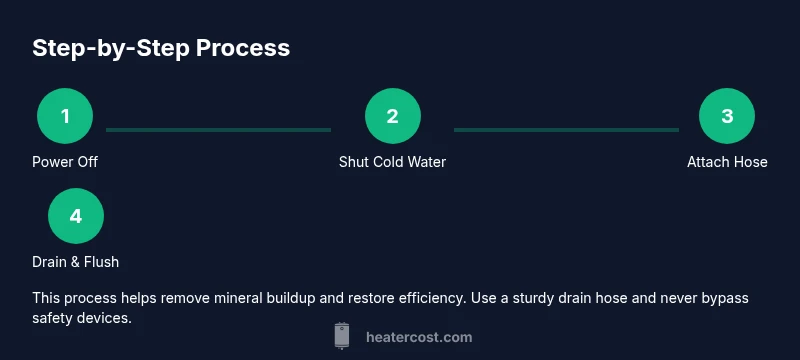
The flush is a sequence of simple actions designed to remove mineral sediment while protecting your home from water damage. Start by isolating the heater from the water supply, then attach a hose to the drain valve and redirect the discharge away from living areas. Open the drain valve slowly to release pressure, then flush with clean water until the water runs clear. Finally, close the drain, remove the hose, refill the tank, and restart power or gas. While it sounds straightforward, the order matters for safety and effectiveness. This section gives you the big picture so you know what to expect as you move through the detailed steps.
Common issues and troubleshooting tips
After a flush, some homes notice air in the lines or a brief period of inconsistent hot water. If you see reduced hot water or the water comes out muddy or metallic, there may still be sediment in the tank or mineral deposits in the piping. If the drain valve leaks after closing, check the valve gasket and ensure the connection is tight. A noisy tank after flushing can indicate air trapped in the line; run hot water from a faucet to help purge air. If the relief valve drips or you smell gas, shut off the unit and call a professional. Regular checks for the radiator-type expansion tank and pressure settings help prevent future issues.
Maintenance rhythm and cost considerations
Flushing is a low-cost maintenance task that can extend the life of your water heater and maintain efficiency. Costs vary by local labor rates if you hire a pro, but doing it yourself saves service fees. The maintenance rhythm depends on water quality and heater type; annual flushing is common for many homes, while those in very hard-water regions may benefit from semi-annual flushing. Pair flushing with other maintenance tasks—checking the anode rod, inspecting the expansion tank, and testing the thermostat—to maximize your system’s lifespan and energy efficiency.
What to expect after flushing: checks and follow-up
After flushing, refill the tank completely before restoring power or gas. Open the cold-water supply valve slowly to avoid a pressure surge. Once full, restore power for electric heaters or relight the pilot and reset the thermostat for gas heaters. Check for leaks at all connections and ensure the relief valve is functioning properly by inspecting for any signs of dripping. Run hot water from a faucet to confirm consistent temperature. You should notice improved hot water delivery and a quieter operation if sediment had been affecting performance.
Tools & Materials
- 5-gallon bucket(Place to catch draining water and sediment)
- Garden hose(Long enough to reach a safe drainage area)
- Adjustable wrench(For loosening drain valve fittings)
- Screwdriver(For valve adjustments if needed)
- Rags or towels(Wipe spills; keep area dry)
- Gloves and eye protection(Protection from hot water and splashes)
- Flashlight(Shines light on drain valve and connections)
- Teflon tape(Optional for resealing fittings)
Steps
Estimated time: 45-75 minutes
- 1
Power off and prepare
Turn off power to an electric water heater at the circuit breaker (or set the gas control to Off for gas models). Allow the tank to cool before touching any components. This protects you from burns and electrical hazards and ensures a safe starting point.
Tip: Use a non-contact voltage tester to verify power is off before touching wiring. - 2
Shut off the cold-water supply
Close the cold-water shutoff valve that feeds the tank. This isolates the heater from the water supply so the tank can drain without refilling from the mains.
Tip: If you’re unsure which valve is the cold-water supply, refer to your heater’s manual or label near the inlet pipe. - 3
Attach a hose to the drain valve
Connect a standard garden hose to the drain valve located near the bottom of the tank. Run the other end of the hose to a safe drainage area, such as outside or a laundry tub.
Tip: Ensure the hose is secure and won’t detach under pressure when you open the drain valve. - 4
Open the drain valve and drain
Slowly open the drain valve to allow water to flow out. Let the tank drain completely, then briefly open the cold-water supply to flush out any remaining sediment.
Tip: Open gradually to avoid a sudden surge of hot water and scalding. - 5
Flush the tank until clear
Continue flushing with clean water until the outflow is clear of sediment. This may take several minutes. Once clear, close the drain valve and disconnect the hose.
Tip: If you see rust-colored water, repeat the flush or consider a more thorough treatment if recommended by a professional. - 6
Refill and restart
Reconnect the cold-water supply, slowly fill the tank, then restore power (electric) or re-relight the burner and set thermostat (gas). Check for leaks and run hot water at a nearby faucet to verify temperature stability.
Tip: Watch for leaks around drain valve and fittings during refilling; tighten as needed.
Got Questions?
How often should I flush my water heater?
Most homes benefit from an annual flush, especially with hard water. If you notice reduced hot water, noisy operation, or rusty water, flush sooner. Regular maintenance helps prevent mineral buildup and can extend the life of the heater.
Most homes flush annually, and more often in hard-water areas. If you notice issues like reduced hot water or noise, flush sooner.
Is flushing safe for electric water heaters?
Yes, flushing is safe when you first shut off power at the breaker and allow the tank to cool. Follow the standard drainage steps and avoid contact with energized components.
Yes. Turn off power at the breaker, let it cool, then follow the same drainage steps.
What should I do if the water is brown or smells after flushing?
Brown or foul-smelling water often indicates residual sediment or rusty pipe sections. Run the flush longer, repeat if needed, and consider having a professional inspect the anode rod and internal tank condition.
If water looks brown or smells, flush longer and consider professional inspection of the tank internals.
Can I flush a tankless water heater the same way?
Tankless heaters have different maintenance requirements and should follow manufacturer guidance. Flushing a tankless unit typically involves descaling and using appropriate cleaners; consult your manual or a pro.
Tankless units require different maintenance; check the manual or call a pro.
What tools are essential for flushing the heater?
A bucket, a garden hose, an adjustable wrench, a screwdriver, towels, and safety gear cover the basics. Have a flashlight handy to inspect connections, and avoid bypassing safety valves.
Essential tools are bucket, hose, wrench, screwdriver, towels, and safety gear.
What maintenance should follow a flush?
After flushing, inspect the drain valve, confirm the cold-water supply is fully closed, and test the hot-water temperature. Consider checking the anode rod and expansion tank as part of your annual maintenance routine.
After flushing, check valves, refill, and test. Include annual checks of the anode rod and expansion tank.
Watch Video
The Essentials
- Flush regularly to remove sediment buildup
- Power off and isolate water supply first
- Refill completely before restarting the heater
- Check for leaks and test hot water after flush