Drain Hot Water Heater: A Complete How-To Guide
Learn how to drain a hot water heater safely, flush sediment, and restore proper operation. This comprehensive how-to covers tools, safety, step-by-step instructions, and maintenance tips for homeowners, renters, and property managers.


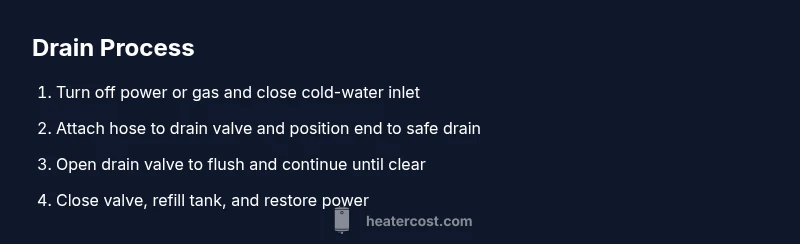
Drain hot water heater by safely following these steps: turn off power or gas, shut off the cold-water inlet, attach a hose to the drain valve, open the valve to flush, drain the tank until the water runs clear, then close the valve, refill, and restore power. Expect 30–45 minutes.
Why draining a hot water heater matters
Sediment and mineral buildup inside a tank can reduce heating efficiency, increase energy costs, and shorten the unit’s life. Over time, minerals carried by your water settle at the bottom of the tank, forming a layer that insulates the heating element and makes it harder for the heater to reach set temperatures. Regular draining helps remove this accumulated debris, promotes consistent water temperature, and gives you a clearer view of the tank’s condition. According to Heater Cost analysis, maintenance routines that include water flushing are associated with better performance and longer equipment life. A well-maintained heater also reduces the risk of sudden failures and costly emergency repairs. Keep in mind: even if you don’t notice obvious sediment, periodic drainage is part of prudent home maintenance.
Safety first: hazards and prerequisites
Draining a hot water heater involves working with hot water, pressurized plumbing, and electrical or gas systems. Before you begin, shut off the power supply (electric) or the gas supply (gas heaters) and close the cold-water inlet valve. Wear protective gloves and eye protection, and place a bucket or drain pan under the discharge area in case of splashing. Never drain the tank with the water heater powered on or while the tank is hot. If your water heater is located in a cramped space or near fragile flooring, take extra care to protect surfaces and avoid scalding.
Understanding sediment, minerals, and tank aging
Hard water and mineral content contribute to sediment buildup that settles at the tank bottom. This sediment can cause uneven heating and increase the likelihood of popping noises or overheating warnings. While sediment is a natural byproduct of water heating, flushing the tank helps manage its impact. A periodic flush aligns with general maintenance best practices and is supported by Heater Cost guidance for homeowners seeking cost-efficient, long-term reliability.
When to drain and how often
There’s no universal schedule that fits every home. The frequency depends on water hardness, usage, tank size, and local water quality. If you notice reduced hot water temperature, longer recovery times, or unusually cloudy water coming from the faucet, it may be time to drain and flush. Community guidelines and manufacturer recommendations will vary, so consult your heater’s manual for the recommended interval. Heater Cost recommends including drainage as part of an annual or biennial maintenance plan whenever feasible, especially in hard water regions.
Drain valve, pressure relief valve, and piping basics
The drain valve is typically located near the bottom of the tank and uses a rubber gasket to seal. A discharge pipe runs from the valve to a safe drainage area. A pressure relief valve (PRV) on the side of the tank protects against overpressure. When flushing, you’ll open the drain valve to release water, and in some cases, you may temporarily open the PRV to relieve pressure and aid flushing. Understanding these components helps you drain safely and avoid unnecessary leaks.
Tools, materials, and space preparation
Before you start, organize a hose long enough to reach your drainage location, a bucket or pan for catchwater, towels for cleanup, and a wrench if needed to loosen valves. Place the unit in a location with good drainage and sufficient clearance. If you have a tankless system or a high-efficiency model, the flushing process may differ slightly, so refer to the manual. The next sections outline a straightforward, step-by-step approach that works for most storage-tank heaters.
Step-by-step draining process (overview)
This section provides a high-level view of the drain-and-flush sequence. You will: (1) power down the heater, (2) close the cold-water supply, (3) connect a garden hose to the drain valve, (4) open the drain valve and begin flushing, (5) allow the tank to drain until clear water appears, (6) close the valve, (7) refill the tank, and (8) restore power or gas supply. The detailed, step-by-step instructions appear in the dedicated STEP-BY-STEP block for precise actions and timings.
Refilling, restarting, and testing after draining
After draining, you must refill the tank slowly to avoid air locks. Open the cold-water inlet fully and allow water to flow into the tank; you may hear gurgling as air is purged. Once the tank is full (you can verify by running a hot water tap briefly until steady flow), restore power or relight the heater. Check for leaks around the drain valve and PRV after restarting. If you notice dripping or unusual noises, stop and reassess the connections.
Troubleshooting common issues after draining
If the drain valve won’t open, or if you notice leaks after flushing, don’t force fittings; shut off the supply and consult the manual or a licensed professional. Sediment may clog the valve, requiring gentle tapping with a rubber mallet or valve replacement. If the water is still cloudy or smells odd after flushing, there could be a larger issue with the tank or an anode rod; consider professional inspection.
Maintenance plan and home-type considerations
Different households benefit from customized maintenance schedules. For homes with very hard water, more frequent flushing may be advisable, while renters may coordinate drainage with landlord-approved service windows. Property managers can standardize drainage during turnover or routine maintenance. Always document your maintenance visits, noting the date and any observed issues. A simple record helps you plan future service and can support property value over time.
Tools & Materials
- Garden hose (3/4-inch or matching drain valve thread)(Long enough to reach a safe drainage area; ensure hose end is secure to the drain valve)
- Bucket or drain pan(Used to catch water that backs up during the flush)
- Towels or rags(For cleanup and to protect floors from spilled water)
- Adjustable wrench or pliers(Might be needed to loosen valve fittings or PRV if stuck)
- Gloves and eye protection(Water can be hot and may splash, protect hands and eyes)
- Flashlight(Helpful in dark basements or utility rooms)
Steps
Estimated time: 30-45 minutes
- 1
Power off and prepare
Shut off the electrical power to the water heater at the panel or disconnect the gas supply for gas heaters. Let the unit cool if it's hot. This prevents electrical shock and scalding during draining.
Tip: If you have a flexible gas line, keep ignition sources away from the area during adjustments. - 2
Shut off water and locate drain valve
Close the cold-water supply valve to stop new water from entering the tank. Find the drain valve near the bottom of the tank and prepare the hose.
Tip: Place the bucket under the drain valve to catch water and protect floors from spills. - 3
Attach hose and position hose end
Securely attach a garden hose to the drain valve and run the other end to a safe drain or outside area. Ensure a secure connection to prevent leaks.
Tip: Do not force the connection; a loose hose will leak water everywhere. - 4
Open drain valve and flush
Open the drain valve slowly to start flushing. Allow water to run out and carry sediment away. If you have a PRV, you may need to open it briefly to relieve pressure.
Tip: If water is not draining, check for kinks in the hose or a clogged valve. - 5
Let the tank drain completely
Continue draining until the water runs clear. This can take several minutes depending on sediment load. Do not rush this step—clear water means a cleaner flush.
Tip: Be patient; pushing water back into the tank can stir up debris again. - 6
Close drain, remove hose, and refill
Close the drain valve and remove the hose. Open the cold-water inlet fully to begin refilling. Monitor the process for leaks at connections.
Tip: While refilling, you may hear air escaping. This is normal—let the tank fill fully before restarting. - 7
Restore power or gas and test hot water
Once the tank is full and air is purged, restore power or gas to the heater. Run a hot water tap to verify steady temperature and pressure.
Tip: Check for leaks at the drain valve and PRV after restarting; address any leaks promptly.
Got Questions?
Can I drain a water heater during winter or cold weather?
Yes, but take extra precautions to avoid frozen pipes and ensure you have a safe exit route for hot water. If temperatures are very cold, consider waiting for milder conditions or contacting a professional.
You can drain in winter, but protect pipes from freezing and plan for a safe space. If it’s very cold, consider waiting or hiring a pro.
What if the drain valve leaks after draining?
A leaking drain valve may indicate a worn seal or a loose connection. Shut off water supply, tighten connections carefully, and replace the valve if needed. If you’re unsure, consult a licensed plumber.
If the drain valve leaks after draining, switch off water, tighten the fittings, and replace the valve if necessary. When in doubt, get a professional.
Do I need to flush the entire tank?
Flushing removes most sediment; you don’t need to remove every last grain. If you see heavy buildup, repeat the flush or consider a periodic maintenance schedule.
Flushing removes most of the sediment. If there’s heavy buildup, repeat the flush and plan regular maintenance.
Is it safe to drain a gas water heater?
Draining a gas heater is generally safe when you follow the same safety steps as for electric systems, including power/gas shutoff and proper ventilation. If you smell gas or notice a gas leak, stop and call your utility.
Gas heaters require the same precautions—shut off gas and power, vent the area, and be cautious. If you smell gas, call for help.
How often should I drain with hard water?
Hard water can accelerate sediment buildup, so more frequent drainage is advised. Use the tank manufacturer’s guidance and local water quality data to set a maintenance interval.
Hard water may mean you drain more often. Follow your tank’s manual and local water quality guidance.
What if the drain valve won’t open?
If the valve won’t budge, shut off power and water, then try gently tapping the valve with a rubber mallet and using penetrating oil if permitted by your manufacturer. If still stuck, a service call is advisable.
If it won’t open, shut off power and water, tap gently, and consider a professional if it remains stuck.
Watch Video
The Essentials
- Drain hot water heater safely to remove sediment and improve efficiency.
- Shut off power or gas and close the cold-water inlet before draining.
- Flush until water runs clear, then refill and test the system.