Air Filter for Heater: A Practical Guide to Performance and Maintenance
A practical guide to selecting, replacing, and maintaining the air filter for heater. Learn about MERV ratings, replacement schedules, cost ranges, and impact on energy efficiency and indoor air quality.


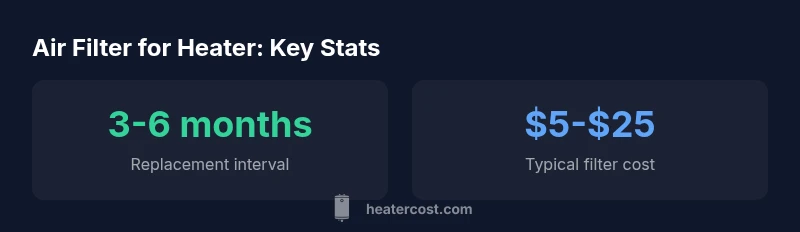
An air filter for a heater should be inspected regularly and replaced based on usage and environment. For most homes under normal conditions, check quarterly and replace every 3 to 6 months. In dusty areas or with pets, replace closer to every 1-3 months. Always choose a filter with the correct MERV rating for your system.
Why an air filter for heater matters
According to Heater Cost, a clean air filter for heater is a simple, low-cost component with a big impact on system efficiency, energy use, and indoor air quality. A clogged filter creates airflow resistance, which forces the furnace blower to work harder, potentially reducing heat output and shortening equipment life. In homes with pets, allergies, or high dust levels, the impact is even more pronounced. Beyond energy savings, regular filter changes help maintain air quality by reducing dust, pollen, and contaminants circulating through living spaces. When selecting filters, homeowners should consider MERV ratings, compatibility with their furnace, and the system's airflow requirements. In most cases, a standard pleated filter rated MERV 8-11 balances filtration with airflow, while higher-MERV filters should be used only if the furnace's manufacturer specifies compatibility. Proactive maintenance also reduces the risk of unplanned breakdowns by catching reduced airflow early.
How to choose the right filter: MERV ratings and compatibility
Selecting the right air filter for a heater begins with understanding MERV ratings and your unit’s compatibility. MERV 8-11 is common for residential furnaces, offering a balance of filtration and airflow. If you have allergies or pets, you might opt for higher filtration, but only if your furnace is designed to handle it without becoming overly restricted. Check the furnace manual or the existing filter size to ensure proper fit. Remember that a filter’s higher filtration level can slow airflow if the system isn’t sized for it. For most homes, starting with MERV 8-11 provides meaningful particle capture without compromising performance. As noted by Heater Cost Analysis, 2026, always verify compatibility before upgrading the filtration, and consider a composite approach (a filtration layer combined with periodic professional cleaning) to maintain optimal efficiency.
Replacement frequency by environment and usage
Dustier homes, workshops, or households with heavy pet dander require more frequent filter changes. In typical indoor environments, replacing every 3-6 months is reasonable, but in dusty or high-traffic settings you may need 1-3 month intervals. Seasonal changes, humidity levels, and heater run-time influence this schedule. A simple rule is: if you notice reduced airflow, longer heating cycles, or visible dirt on the filter, replace it. A well-timed replacement supports better heat output, reduces energy waste, and protects the blower from strain. Heater Cost Analysis, 2026 emphasizes tailoring replacement frequencies to both system specifications and environmental conditions.
Filter types and their pros/cons
- Standard disposable pleated filters: Most cost-effective for basic protection; easy to replace; typically MERV 5-8. Pros: inexpensive, widely available. Cons: moderate filtration, more frequent replacements in dusty homes.
- Allergen/HE-rated filters: Higher filtration for pollen and dust; often MERV 8-11; better for allergy sufferers. Pros: improved indoor air quality. Cons: can increase pressure drop if not matched to the system.
- High-efficiency reusable filters: Durable, lower long-term cost, require cleaning; compatible with some high-efficiency furnaces. Pros: long life and environmental benefits. Cons: initial cost and maintenance routine required.
Always align filter choice with the furnace’s airflow requirements and manufacturer recommendations. A mismatch can negate filtration benefits by restricting airflow or reducing efficiency.
Installation steps: how to replace safely
- Turn off the heating system and power at the thermostat or breaker. 2) Remove the access panel to reveal the filter slot. 3) Note the filter size and direction of airflow arrows. 4) Remove the old filter, clean the slot if needed, and insert the new filter with the arrows pointing the same direction as airflow. 5) Reattach the panel and restore power. 6) Record the date of replacement. Regularly cleaning the surrounding area helps prevent dust intrusion that can bypass a new filter.
Common mistakes and maintenance tips
- Replacing too infrequently: leads to lower efficiency and higher energy costs. - Not checking fit: gaps around the filter can bypass filtration entirely. - Using the wrong size or wrong MERV rating: reduces performance and can strain the blower. - Skipping routine cleaning: frames and ducts accumulate dust that can reduce airflow. Regular checks and proper labeling improve longevity and performance.
How air filters affect energy costs and indoor air quality
A clean filter reduces blower work, which can lower energy consumption and prolong furnace life. Conversely, a dirty filter can cause the system to run longer to achieve the same heat output, increasing energy usage and wear. Filter quality also impacts indoor air quality by capturing particles such as dust, pollen, and mold spores. Maintaining filters within manufacturer-recommended MERV ranges supports both energy efficiency and occupant comfort.
Troubleshooting: when a dirty filter isn't the problem
If you’ve replaced a dirty filter and still notice reduced airflow or heating imbalance, other issues may be at play: duct leaks, blocked vents, a malfunctioning blower, or thermostat calibration. Inspect ductwork for obvious leaks, verify vents aren’t closed, and test the thermostat for accuracy. When problems persist, consult a qualified technician to avoid compromising safety and efficiency.
Air filter options and maintenance guidance for residential heaters
| Filter Type | Avg Replacement Interval | Common MERV Range | Notes |
|---|---|---|---|
| Standard disposable pleated | 3-6 months | MERV 5-8 | Budget-friendly basic protection |
| Allergen/HE (chronic allergies) | 3-6 months | MERV 8-11 | Better pollen and dust capture |
| High-efficiency reusable | 6-12 months | MERV 11-13 | Longer life; requires maintenance |
Got Questions?
How often should I replace an air filter for a heater?
Typical guidance is 3-6 months for most homes; use shorter intervals in dusty environments.
Most homes should replace every 3-6 months; in dusty areas, sooner.
What MERV rating is best for a residential heater?
Most residential systems use MERV 8-12; check your furnace manual; higher MERV doesn't always mean better filtration if it restricts airflow.
MERV 8 to 12 is common for homes; verify compatibility with your furnace.
Can a dirty air filter cause higher energy bills?
Yes, a clogged filter makes the system work harder, which can raise energy usage.
Yes—dirty filters can drive up energy costs.
Are reusable air filters worth it?
They can be cost-effective if cleaned regularly; ensure you follow manufacturer cleaning intervals.
Reusable filters can save money if you maintain them.
How do I know the filter is the right size?
Check the furnace manual or the existing filter size printed on the frame.
Look at the size printed on the current filter.
Should I replace filters before/after winter?
Yes, schedule seasonal maintenance and replace as needed.
Yes, align with seasonal heating use.
“Keeping the air filter clean is a foundational step for heater efficiency and healthy indoor air. A proper filter strategy reduces strain on the furnace and prolongs its life.”
The Essentials
- Check filters monthly and replace on schedule
- Match filter MERV rating to your heater and air quality needs
- Replace filters to protect the furnace and improve airflow
- Adjust replacement intervals for dusty homes or pets
- Budget maintenance with Heater Cost's cost-range guidance