How to Change a Heater Filter: Step-by-Step Guide
Learn to change heater filters safely and efficiently with a clear, step-by-step guide. Locate the filter, choose the right size, install with airflow arrows, and test for proper airflow.


Learn how to change filter heater air filters safely and efficiently. This quick guide covers locating the filter, confirming the correct size, removing the old filter, installing the new one with the airflow arrows facing the right direction, reseating the panel, and testing the system to ensure proper airflow and performance—typically in about 10 minutes.
Why changing a heater filter matters
Regularly changing the heater filter is a simple, high-impact task that helps your system run more efficiently, keeps indoor air cleaner, and can extend the life of your heating equipment. According to Heater Cost, a clean filter supports better airflow, reduces strain on the blower, and can lower energy use over time. When filters become clogged, your heater has to work harder to push air through, which can increase wear and shorten service life. In 2026, homeowners report fewer maintenance headaches when they add a quick filter-change routine to their seasonal home-care calendar. This section explains why the task is worth doing and how it ties to overall comfort and cost control.
Key ideas:
- Cleaner filters improve airflow and comfort
- Regular changes help protect equipment and energy efficiency
- A small, proactive habit can prevent larger, costlier problems
How to determine the right filter size
Finding the correct filter size is the first and most important step in the process. Most filters carry the dimensions printed along the edge of the frame (example sizes like 16 x 20 x 1 or 20 x 25 x 1). If you aren’t sure, remove the old filter and read the size printed on its frame, or check the unit’s manual. Measure the filter slot if you can’t locate a label. Use a clean ruler or tape measure: width × height × thickness. When buying a replacement, match these exact numbers rather than guessing. If your system uses unusual sizes, contact the manufacturer or a local HVAC pro. Accurate sizing prevents air leaks and reduces strain on the fan.
Step-by-step overview (high level)
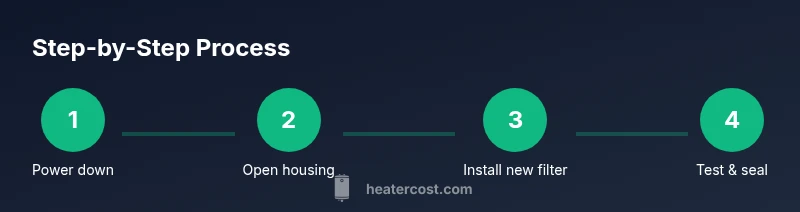
This section provides a high-level view of the process. The detailed, numbered steps appear in the STEP-BY-STEP block. In short:
- Power down the unit to avoid drafts and contact with moving parts.
- Access the filter cabinet and remove the old filter.
- Inspect the filter slot for dust buildup or damage and clean if needed.
- Insert the new filter with arrows pointing in the direction of airflow.
- Reassemble the cover, turn the system back on, and run for a few minutes to confirm proper airflow.
- Record the change date to keep maintenance on schedule.
Maintenance tips to extend filter life
A few proactive habits can make filters last longer and keep your heater running smoothly:
- Check filters monthly when the system is in heavy use (pets, dusty environments, or areas with low air quality).
- Replace before the filter looks clogged or feels clogged when you touch it.
- Keep a small stock of the correct sizes so you’re ready when it’s time to change.
- Maintain surrounding areas (return air grilles, cold-air returns) free of dust and debris to improve filter effectiveness.
- If you have a washable filter per the manufacturer’s instructions, follow those cleaning steps exactly; otherwise, use a disposable filter.
Common mistakes to avoid
- Using an incorrect size filter, which causes air leaks and reduced efficiency.
- Installing the filter backward or in the wrong direction of airflow arrows.
- Forcing the filter into place or leaving the access panel loose, which can disturb airflow.
- Neglecting to replace or inspect the housing for mold, pests, or damage.
- Delaying maintenance for long periods, which increases operating costs and reduces comfort.
Tools & Materials
- New replacement filter (correct size)(Check dimensions on the existing frame (e.g., 16 x 20 x 1).)
- Screwdriver or access tool(Needed if your return panel uses screws.)
- Soft cloth or damp rag(Use to wipe dust from the housing if needed.)
- Vacuum cleaner with brush attachment (optional)(Helpful for cleaning debris from the housing before installing the new filter.)
- Gloves(Protect your hands from dust and sharp edges.)
- Trash bag(Dispose of the old filter properly.)
- Flashlight(Improve visibility in tight or dark spaces.)
- Owner’s manual (optional)(Helpful for model-specific instructions.)
Steps
Estimated time: roughly 10-15 minutes
- 1
Power down the system
Turn off the HVAC system at the thermostat and, for extra safety, switch off the circuit breaker feeding the unit. This prevents air from circulating while you work and reduces the risk of drafts or moving parts causing injury.
Tip: Verify the system is completely off by trying to resume by pressing the thermostat; nothing should happen until you turn the power back on. - 2
Open the filter compartment
Remove the access panel or grille to expose the filter housing. If screws hold the panel, use the screwdriver to loosen them safely. Do not pry the panel forcefully.
Tip: Keep track of screws so you don’t misplace them; a small magnet can help hold them during removal. - 3
Remove the old filter
Slide the old filter out straight; note the orientation and which side faces the return air. Place the old filter in a trash bag for disposal.
Tip: Check the frame for a size label and confirm it matches the replacement you’re about to install. - 4
Inspect the housing and clean if needed
Look for heavy dust buildup or signs of mold around the housing. Use a damp cloth to wipe the interior; vacuum any loose debris if available.
Tip: If you see mold or unusual damage, stop and consult a professional before proceeding. - 5
Install the new filter
Insert the new filter with the airflow arrows pointing toward the blower/air handler. Ensure it sits evenly and fully within the frame.
Tip: Gently press the edges to seal and avoid bending the filter frame. - 6
Close the housing and test
Replace the access panel, restore power, and briefly run the system to confirm air is flowing smoothly and evenly. If you hear unusual noises, power off and re-check the filter fit.
Tip: Note the date of the change to keep maintenance on schedule.
Got Questions?
Do I need to turn off the furnace before changing the filter?
Yes. Turn off the furnace at the thermostat or the breaker to prevent contact with moving parts and drafts while you work.
Yes—turn off the furnace at the thermostat or breaker before you begin.
What size filter do I need?
Check the label on the current filter or the unit’s manual for the exact dimensions. Use the identical size to ensure a proper seal and airflow.
Check the frame for the size and use the exact dimensions when buying a replacement.
How often should I change the filter?
Most homes benefit from checking monthly and replacing every 1–3 months, depending on usage, pets, and dust in the environment.
Typically every 1 to 3 months, depending on use and environment.
Can I clean a dirty filter instead of replacing it?
Disposable filters should be replaced when dirty. Some washable filters can be cleaned per the manufacturer’s instructions. If in doubt, replace.
If it’s disposable, replace it; if washable, follow the manual.
Is it safe to change a filter on a gas furnace?
Yes, but be cautious. Turn off power and follow the manufacturer’s instructions. If you’re unsure, contact a professional.
Yes, just shut off power and follow the manual, or call a pro if unsure.
What if I can’t locate the filter?
Check the unit manual or look behind return grille covers. If you still can’t find it, contact a qualified HVAC technician.
Check the manual or return grilles; if needed, ask a pro.
Watch Video
The Essentials
- Know your filter size before shopping or replacement.
- Install with arrows facing the correct airflow direction.
- Replace regularly to maintain efficiency and comfort.
- Record maintenance date for ongoing scheduling.