Leaking Drain Valve Water Heater: Quick Fix and Safety Guide
This guide helps homeowners diagnose and fix a leaking drain valve on a water heater, with safety steps, common causes, and guidance on when to hire a professional.


A leaking drain valve water heater is often caused by a worn washer, a loose packing nut, or a loose connection. The quickest fix is to shut off power and water, place a bucket under the valve, and tighten or replace the valve if you can do so safely. If the drip persists, call a pro.
What is a leaking drain valve water heater and why it matters
A leaking drain valve water heater occurs when the drain valve at the bottom of the tank drips or pours water. This valve is used to drain the tank for maintenance or to relieve pressure on the system. When it leaks, it can waste water, accelerate corrosion, and create signs of dampness around the heater's location. The root causes range from simple, easily corrected issues to more serious valve or tank problems. According to Heater Cost, drain-valve leaks are among the most common maintenance concerns for residential water heaters, especially in homes with hard water or frequent temperature changes. Recognizing a leak early reduces the risk of water damage and keeps your heating system efficient. In most cases, a small drip is not an immediate emergency, but persistent leakage demands attention and a careful approach to avoid electric shock or scalding hazards. We'll walk you through practical checks and fixes you can perform safely, plus clear guidelines on when to call a professional.
Safety first: immediate precautions when you notice a leak
Leaking water around a water heater can cause scalding, mold growth, and structural damage if left unaddressed. Start by turning off the power supply to the unit (electric: switch at the breaker; gas: set the thermostat to pilot or off if available). Then shut off the cold-water supply to the tank to minimize fresh water into the system. Place a bucket or towels under the valve to catch any discharge and prevent water damage to floors or cabinets. Do not use heat or flame sources near the valve, and avoid wrenching the valve if you are unsure about the valve's condition. If you suspect a gas leak or if water covers electrical components, evacuate and call emergency services. After turning off power and water, assess whether the leak is a steady drip or a slow seep, and plan your next steps accordingly.
Common causes of leaks at the drain valve
Leaks at the drain valve can arise from several issues:
- Loose connections: The valve may be loosely threaded to the tank or the discharge pipe.
- Worn packing or washer: The seal around the valve stem can wear out over time, allowing drips.
- Damaged valve or seat: Corrosion or physical damage can create a path for water.
- Improper winterization or maintenance: If the valve hasn’t been serviced, mineral buildup can hinder proper sealing.
- Over-tightening after a valve replacement: Straining the valve body can crack it.
Understanding the likely cause helps you decide whether a simple tightening will fix it or if a replacement is needed. In many homes, a simple tightening or a new washer resolves a minor drip; persistent leaks beyond a light drip are often a signal to replace the valve or consult a professional.
How to diagnose the leak without causing damage
Start with visual inspection: look for dripping from the valve stem, seepage around the packing nut, or water on the floor around the tank. Use a dry cloth to wipe the area and observe whether droplets recur after a few minutes. Check the discharge pipe for cracks or loose fittings. Gently touch the packing nut—if it moves with little resistance, it may be the source of the leak. If the unit is hot, allow it to cool before touching. With the power off, you can attempt a careful tightness check: tighten the packing nut slightly while keeping an eye on the pipe for any increased drip. Do not try to force the valve open or closed if you are unsure; overtightening can cause further damage. If the leak persists after these checks, move to the safe replacement procedures or call a professional.
Step-by-step fixes: from quick tighten to valve replacement
This section provides a practical sequence you can follow, starting with the simplest action and escalating as needed. Always prioritize safety and know when to stop and call a professional.
Step 1: Shutter off power and cold water supply
- Turn off the electrical power to the heater at the breaker, or set the gas valve to pilot/off if applicable. Close the cold-water supply to the tank. This isolates the unit from the main water and electrical systems and prevents further leakage while you work.
- Tip: Double-check that power is truly off by testing a nearby outlet or the heater's indicator light if present.
Step 2: Relieve pressure and drain a small amount of water
- Open a nearby faucet to vent air and relieve pressure. Place a bucket under the drain valve and slowly open the valve a crack to let some water out. This makes it safer to handle the valve and reduces risk of scalding.
- Tip: Do not drain too much; you only need enough to see whether the leak changes with pressure adjustments.
Step 3: Inspect and tighten the packing nut or replace the washer
- If the valve packing nut is loose, tighten it gently by hand then with a wrench—do not overtighten. If the washer is worn, replace it, which may require removing the valve handle and stem assembly. Reassemble and test for leaks.
- Tip: Have a spare washer and a set of basic tools on hand before you begin.
Step 4: Replace the drain valve if tightening/washers don’t fix it
- If the leak persists after tightening and washer replacement, remove the old valve and install a new drain valve rated for your heater size. Follow the manufacturer’s guidelines for torque and gasket use. Reattach discharge piping and ensure all connections are tight but not over-tightened.
- Tip: Use plumber’s tape on threaded connections to improve seals and reduce future leaks.
Step 5: Refill, test, and monitor
- Close the drain valve and restore the cold-water supply. Re-energize power and, if you have a gas heater, relight the pilot or restore gas supply. Open a hot-water tap to ensure the system pressurizes, then check for leaks around the valve and pipe. Monitor for several minutes to confirm a stable seal.
- Tip: Check the valve area again after the system has reached temperature to ensure no new leaks appear.
Step 6: Final safety check and recordkeeping
- After verification, wipe excess moisture and store spare parts. Keep a quick reference note about the valve replacement date and any parts used to facilitate future maintenance.
When to replace the drain valve and consider professional help
If tightening and washer replacement do not stop the leak, or if the valve body shows corrosion, cracking, or damage, replace the entire drain valve or have a professional inspect the tank. Replacing a rusty valve or working on a water heater near electrical components requires specialized knowledge and careful safety practices. If you feel uncertain at any point, contact a licensed plumber or water-heater technician. Pro tips from Heater Cost emphasize not to delay professional help if the tank is older, if you observe rust inside the tank, or if the unit is leaking from multiple joints.
Preventive tips to avoid future leaks and prolong heater life
- Schedule annual visual inspections of the drain valve and seals.
- Flush the tank per the manufacturer’s recommendations to minimize mineral buildup.
- Use a quality valve and discharge fittings designed for your heater model.
- Avoid harsh chemicals around the valve area which can degrade seals.
- Keep the area around the heater dry and free of clutter to spot leaks sooner.
Final note on maintenance and safety
Regular maintenance is essential for a safe, efficient water heating system. A leaking drain valve is a common maintenance issue that, when addressed promptly, can prevent bigger problems such as tank leaks or electrical hazards. If you are ever in doubt, seek professional help. The Heater Cost team recommends erring on the side of safety and seeking expert evaluation for persistent leaks or aging equipment.
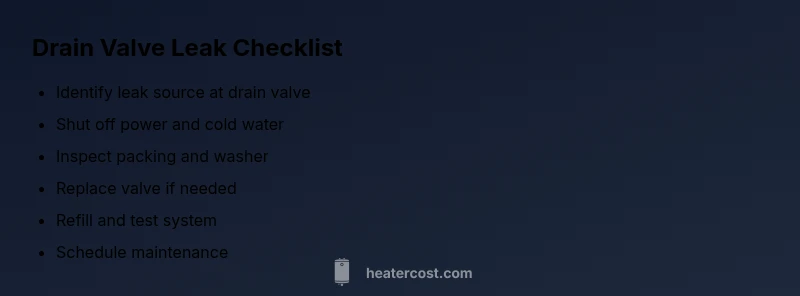
Steps
Estimated time: 60-90 minutes
- 1
Shut off power and water
Power off the heater at the breaker (or gas valve to pilot/off). Close the cold-water supply to the tank. This prevents further leakage while you work.
Tip: Verify power is off with a tester before touching wires. - 2
Relieve pressure and prepare to drain
Open a hot faucet to vent air, place a bucket under the drain valve, and open the valve slightly to release some water. This reduces pressure and makes the valve easier to handle.
Tip: Do not open fully if you’re unsure of the water temperature. - 3
Tighten packing and inspect washer
Gently tighten the packing nut. If a washer is accessible, replace it and reassemble. Check for improved sealing before proceeding.
Tip: Use the correct size wrench and avoid over-tightening. - 4
Replace the drain valve if needed
If tightening and washer replacement don’t stop the leak, remove the old valve and install a new one compatible with your heater model. Reconnect discharge piping securely.
Tip: Apply PTFE tape to threads to help seal. - 5
Refill and test the system
Close the drain valve, restore cold water, and power. Open a hot tap to bleed air and confirm there are no leaks around the valve.
Tip: Monitor for 10 minutes after the unit reaches operating temperature. - 6
Document and schedule maintenance
Record the date and parts used for future reference. Schedule regular maintenance to prevent mineral buildup and subsequent leaks.
Tip: Set a reminder for annual valve inspection.
Diagnosis: Water leak at the drain valve on a water heater
Possible Causes
- highLoose packing nut or valve connection
- mediumWorn packing washer or stem seal
- lowDamaged valve body or seat from corrosion
Fixes
- easyTighten packing nut and reseal the valve
- mediumReplace washer or the entire drain valve
- hardReplace the valve assembly or call a professional
Got Questions?
What causes a leaking drain valve on a water heater?
Common causes include a loose packing nut, worn washer, corrosion, or a damaged valve body. Inspect the valve and seal, then determine whether tightening, replacing a washer, or replacing the valve is needed.
Leaks are usually from a loose or worn seal; check the packing and washer, then decide if you can fix it safely.
Can I fix the leak myself?
If you can safely shut off power and water and handle basic tools, you can try tightening the nut or replacing a washer. If you’re unsure, consult a professional.
You can try simple fixes if you’re comfortable, but don’t push beyond your skill level.
Is a leaking drain valve dangerous?
Leaks can cause water damage and mold, and in some cases scalding or electrical hazards. Shut off power and water promptly and assess the risk.
Leaks can be risky—safety first, shut it down and inspect carefully.
How much does valve replacement cost?
Costs vary by region and unit, but a professional replacement typically includes parts and labor. Use a cost guide to estimate, and consider replacement if the unit is aging.
Prices differ by area; talk to a pro for a precise quote.
When should I replace the entire water heater instead of the valve?
If the tank shows rust, frequent leaks, or severe corrosion, replacement of the whole unit is typically more cost-effective in the long run.
If the tank is aging or corroded, consider replacing the whole heater.
What maintenance helps prevent drain valve leaks?
Annual inspections, regular flushing, and using compatible valves and fittings reduce leak risk. Keep the area clean and watch for early signs of wear.
Regular checks and proper maintenance prevent many leaks.
Watch Video
The Essentials
- Shut off power and water before work
- Tighten or replace valve components as needed
- Replace the valve if leaks persist
- Monitor after testing and schedule regular maintenance
- Call a professional for corrosion, tank age, or complex issues