Steps to Replace Water Heater: A Homeowner's Guide
A practical, step-by-step guide for homeowners replacing a water heater, covering safety, permits, model selection, installation basics, and post-install maintenance. Learn how Heater Cost approaches planning, tools, and best practices for a safe, efficient replacement.


Replacing a water heater involves a planned, safety-driven sequence: assess needs, gather the right tools, and follow a step-by-step process for removal and installation. This guide highlights safety checks, permitting considerations, and how to choose between electric, gas, tank, or tankless models. By following these steps, homeowners can minimize downtime and ensure code-compliant installation.
Why replace a water heater now
According to Heater Cost, replacing an aging water heater isn't only about comfort; it's a smart move for safety, efficiency, and reliability. Most homes encounter gradual efficiency losses as tanks age, and the risk of leaks or sudden failures rises after a decade. If your unit is more than 10-12 years old, shows rust on the tank, delivers inconsistent water temperatures, or requires frequent repairs, it's often more cost-effective to replace than to keep patching. In this section we'll explore common signs, how to evaluate your current unit, and how to plan a replacement that fits your household needs. The goal is to demystify the process, so you can approach the project with confidence, minimize downtime, and select a model that maintains comfort while reducing energy waste. The Heater Cost team found that a well-planned replacement can improve energy efficiency and reduce long-term operating costs; this guide walks you through every step.
Assessing your current unit and needs
Before buying a new water heater, assess the existing system and your household hot-water needs. Check the tank size, energy source (electric, natural gas, or propane), and the maximum recovery rate you require. If your current unit is undersized for peak shower usage or family size, you may need a larger capacity. Also consider venting requirements for gas models and whether you want to switch to a more efficient technology, such as a tankless or heat-pump model. Take measurements of the closet or utility area to confirm clearance for the new unit and any venting or exhaust routing. Finally, review local codes and any available incentives; in some places, upgrading to a high-efficiency model can qualify for rebates or tax credits. Having a clear list of needs makes shopping easier and reduces the chance of oversizing or undersizing the replacement.
Safety considerations and upfront checks
Safety is non-negotiable in a water heater replacement. Start by turning off power at the breaker panel (for electric models) or shutting off the gas supply and closing the main gas valve (for gas models). Close the cold-water supply valve to stop incoming water, and open a hot faucet to relieve pressure. Check that the area remains dry and well-ventilated. Confirm you have a functioning carbon monoxide detector if you’re replacing a gas-fired unit, and keep a fire extinguisher handy. Gather PPE: insulated gloves, safety glasses, and sturdy footwear. If you notice rust, corrosion, or significant leaks around the old tank, prepare to replace promptly and inspect surrounding pipes for damage. Finally, verify that your local codes allow DIY replacement; many jurisdictions require licensed professionals for gas installations or work in confined spaces.
Planning permits, efficiency, and incentives
Moving through the permit process and energy-efficiency considerations helps avoid penalties and ensures code compliance. Some jurisdictions require a permit for system replacement and inspection after installation. Check with your city or county building department about permit fees, required documentation, and inspection timelines. In addition, evaluate efficiency ratings (such as Energy Factor or Uniform Energy Factor) and the cost-to-savings balance. Upgrading to a higher-efficiency unit can yield long-term energy savings, and some models qualify for rebates, tax credits, or utility incentives. If you’re replacing an older gas model with a high-efficiency unit, you may need venting updates or expansion-tank installation to manage pressure. Working with a licensed professional can help ensure permit compliance and proper venting, especially for gas appliances.
Electric vs gas, tank vs tankless: choosing the right model
Your decision should rest on reliability, costs, and your home's configuration. Electric water heaters are typically easier to install in apartments or retrofit projects because they don’t require venting. Gas models often offer faster recovery and lower operating costs in cold climates, but they require venting and gas piping work. Tankless (on-demand) water heaters save space and can reduce standby energy losses, but may have higher upfront costs and installation complexity. Traditional storage tanks deliver hot water quickly but can lose energy through standby heat. Clarify capacity, hot-water needs, and climate. Finally, consider warranty length and service availability in your area, as these factors influence long-term value more than upfront price.
Tools, materials, and preparation
We will outline essential tools and materials you’ll need to complete the project, and highlight where optional items might improve safety and efficiency. Tools: adjustable wrench, pliers, pipe cutter, pipe wrenches, voltage tester, and a multi-meter for electric systems. Materials: new water heater with proper energy source, T&P relief valve and expansion tank if required, appropriate piping (copper or PEX), pipe fittings and connectors, Teflon tape or pipe dope, joint compound, vent materials for gas, and the correct shut-off valves. PPE: gloves, eye protection, and non-slip footwear. Optional items: drain pan, heat trap nipples, anti-scale valves, and a water-leak sensor. Before you start, double-check the unit’s installation manual for model-specific requirements and confirm there’s adequate space for the new unit.
Step-by-step overview (high-level)
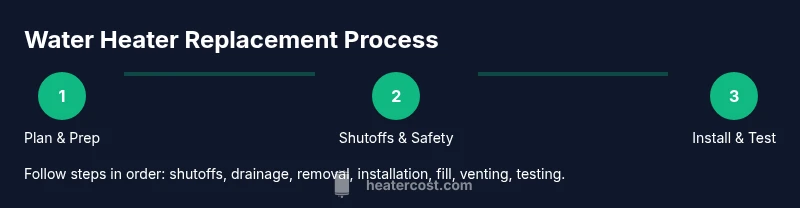
This section gives a concise roadmap of the replacement process to help you plan. It covers coordination of utility shutoffs, removal of the old unit, installing and connecting the new unit, system filling, venting and testing, and final verification. If you’re unsure about any step, pause and consult a professional. The steps below align with typical practice, but always follow the manufacturer’s manual and local codes. Use this overview to prepare a detailed plan and schedule that minimizes downtime.
Installation details: pro vs DIY boundaries
Gas installations and venting, pressure testing, and electrical connections near water require specialized knowledge and licensing. If you’re comfortable with basic water piping and electrical work, you may handle some tasks in electric systems, but many regions require a licensed plumber or gas fitter for the final hook-ups and inspections. For safety and code compliance, treat gas or complex venting as a professional job. If you decide to DIY, keep the work within safe limits—do not bypass pressure relief valves, and never store gas appliances in enclosed spaces without proper ventilation. Also, ensure you have the necessary permits before starting work.
Maintenance and long-term care after replacement
After installation, set the temperature to a safe level and schedule annual maintenance. Drain and flush the tank yearly to remove sediment and extend unit life, and inspect the T&P valve and expansion tank regularly. Keep area around the heater clean and dry, and look for leaks, rust, or unusual noises that may indicate a problem. If you have a tankless system, follow manufacturer maintenance guidance to avoid mineral buildup. Finally, document the installation details, including serial number, model, and warranty information, so you can reference them for future service or replacement.
Tools & Materials
- New water heater (electric or gas model, with correct capacity)(Ensure venting and clearance requirements are met for gas units; confirm energy source matches wiring/plumbing.)
- Cold water supply valve and hot water outlet connections(Copper or PEX compatible fittings; include shut-off valve on cold side.)
- T&P relief valve and expansion tank(Needed for many closed systems to prevent pressure buildup.)
- Piping material (copper or PEX) and fittings(Select compatible materials with your unit; include adapters as needed.)
- Pipe thread sealant or Teflon tape(Use appropriate tape for gas and water connections.)
- Drain pan and rags(Useful for catching small leaks and spills during replacement.)
- Vent kit or chimney connector (for gas models)(Ensure proper venting and clearances; follow local code.)
- Gas separator and shut-off tool (for gas models)(Keep handy for safety checks; only engage if you’re trained.)
- Electrical tools (voltage tester, multi-meter)(Verify power is fully off before wiring or disassembly.)
- Safety PPE (gloves, goggles, non-slip footwear)(Protective gear prevents injuries from sharp edges and hot components.)
Steps
Estimated time: 3-6 hours
- 1
Shut off power and water
Turn off the electrical breaker for an electric unit or the gas supply for a gas unit. Close the cold-water shut-off valve and open a hot faucet to relieve pressure. This ensures no live electricity or pressurized water remains when you start.
Tip: Double-check by testing a fixture before touching any connections. - 2
Turn off gas and prepare venting
For gas models, shut off the gas at the main valve and verify the venting pathway is clear. If venting is required, inspect for obstructions and prepare the new vent connectors.
Tip: Never work on a live gas line; if you smell gas, evacuate and call your utility. - 3
Drain the old tank
Attach a hose to the drain valve and direct the water to a suitable drain. Open the valve slowly to allow the tank to empty; this reduces weight and makes removal safer.
Tip: Be prepared for hot water—use a thermometer on the hose to monitor temperature. - 4
Disconnect old connections
Carefully disconnect the cold water inlet, hot water outlet, vent (gas), and electrical connections if applicable. Keep track of which fittings connect where for the new unit.
Tip: Take photos before removing parts to aid reassembly. - 5
Remove the old unit
Unfasten mounting hardware and remove the old heater from its location. Have a helper if the unit is heavy, and protect surrounding surfaces from scratches.
Tip: Inspect the mounting area for any damage or corrosion; address as needed. - 6
Position the new water heater
Move the new unit into position, ensuring level placement and clearances for service panels and venting. Securely anchor per the manufacturer’s instructions.
Tip: Check that all connection orientations match the old setup to avoid cross-connecting lines. - 7
Connect cold, hot lines and vent/electrical
Reconnect the cold water inlet and hot water outlet with appropriate fittings. Install venting for gas units or connect the electrical supply for electric units; seal joints with tape or appropriate sealants.
Tip: Use correct torque on fittings to prevent leaks without stripping threads. - 8
Fill, purge air, and test
Slowly fill the tank and bleed air from hot outlets. Once filled, restore power or gas and run water to confirm flow. Check all joints for leaks and verify venting operation.
Tip: Keep a bucket handy to catch any residual water during purging. - 9
Final checks and tuning
Set the thermostat to a safe level, test hot water temperatures, and monitor for leaks or abnormal noises. If gas, ensure proper venting and CO detector status. Complete any required inspections.
Tip: Document serial numbers, model details, and warranty info for future service.
Got Questions?
Do I need a permit to replace a water heater?
In many jurisdictions, yes, especially for gas installations. Check local codes and obtain permits as required. A licensed professional can help ensure compliance.
Permits are often required, particularly for gas work. Check your local codes or ask a licensed professional.
Can I replace a water heater myself?
Electric replacements can be DIY in some cases, but gas and venting often require licensed professionals. Always follow local codes and manufacturer instructions.
DIY may be possible for electric units, but gas and venting usually require a pro. Always follow local rules.
What is the difference between tank and tankless water heaters?
Tank heaters store hot water; tankless heat on demand. Tankless saves space and reduces standby energy, but may have higher upfront costs and installation complexity.
Tank stores hot water; tankless heats on demand. Tankless can save space but often costs more upfront.
How long does replacement take?
A typical replacement takes several hours, depending on unit type, venting needs, and accessibility. Plan for a half to a full day.
Replacement usually takes a few hours to a day, depending on complexity.
Is there a warranty on a new water heater?
Most new units come with a manufacturer warranty. Installation warranties may apply if installed by a licensed professional.
Most heaters have a manufacturer warranty; installation warranties may apply if a pro installed it.
Should I install an expansion tank with my new heater?
Expansion tanks help manage thermal expansion in closed systems and may be required by code or recommended by manufacturers.
Expansion tanks help with pressure in closed systems; check local codes.
Watch Video
The Essentials
- Plan permits and codes before starting.
- Choose model based on needs and space.
- Hire pros for gas venting and complex work.
- Test thoroughly and schedule maintenance.