Installation of Water Heater: A Step-by-Step Guide
Learn how to plan, size, install, and test a water heater safely. This Heater Cost guide covers tank vs tankless, permits, tools, and maintenance to keep your home warm.


This guide will empower you to plan, size, and safely install a water heater, including choosing between tank and tankless options, gathering the right tools, and completing mounting, plumbing, electrical or gas connections, venting, and safety checks. You’ll understand permits, basic testing, and when to hire a professional. The goal is a compliant, efficient, and reliable hot-water system.
Assessing Your Need and Codes
Before you purchase or install, map out how your household uses hot water, peak times, and space constraints. This step guides sizing, energy efficiency choices, and the right configuration (tank vs. tankless). Consider climate, incoming water temperature, and future needs. According to Heater Cost, planning around usage patterns and home size helps prevent over- or under-sized systems, which can affect efficiency and longevity. Check local building codes for required clearances, venting, and permit needs, and budget for inspections. A compliant installation reduces the risk of leaks, poor venting, and electrical or gas code violations.
Selecting Tank vs Tankless and Sizing
Choosing between a traditional tank and a tankless model hinges on hot-water demand, space, and energy goals. Tanks deliver a consistent supply but store heated water, which can incur standby losses. Tankless units heat on demand, saving space and often reducing energy use, but they can require more powerful venting and larger gas lines or electrical capacity. Size the unit by analyzing peak hour usage, dwelling size, and plumbing run lengths. Heater Cost analysis shows that proper sizing paired with the right model yields the best balance of comfort and efficiency. Based on Heater Cost research, permit requirements and installation complexity vary by location and unit type, so plan accordingly.
Tools, Materials, and Safety Precautions
Assemble essential tools and safety gear before you begin. Having everything on hand minimizes delays and helps keep the project within a single session. Always wear protective eyewear and gloves, and use non-slip footwear. Confirm you have a properly rated shut-off valve and venting materials for gas or electric models. The following list covers core items; adjust for your unit and local codes.
Plumbing, Water, and Drain Connections
New connections should align with the manufacturer’s inlet and outlet ports: cold water in, hot water out, and a proper drain line to a safe location. Use Teflon tape on threaded fittings and ensure all joints are snug but not over-tightened, which can damage fittings. Install a dielectric union if transitioning between dissimilar metals to reduce corrosion. Test all joints for leaks with the system depressurized before filling.
Electrical, Gas, and Venting Considerations
Electric water heaters require a dedicated circuit and correct breaker sizing, while gas-powered models need proper gas supply sizing and a venting path to exhaust combustion byproducts. Verify clearances from combustibles and ensure a properly installed expansion tank if required by your code. For gas installations, never bypass or modify exhaust vents; use approved fittings and ensure proper combustion air. For electrical work beyond basic disconnects, hire a licensed professional.
Startup, Testing, and Maintenance
Fill the tank gradually to avoid air slugs and listen for leaks as pressure stabilizes. Check the pressure relief valve and test to ensure it relieves at the correct setting. Confirm thermostat settings are appropriate to prevent scalding and maximize efficiency. Schedule regular maintenance, including an annual flush to remove sediment and periodic inspection of venting and connections.
Common Pitfalls and When to Hire a Pro
Avoid over-tightening connections or using the wrong venting components, which can create leaks or hazardous fumes. If you encounter gas line work, unfamiliar wiring, or defective components, stop and call a licensed plumber or gas technician. The Heater Cost team recommends consulting a professional for any gas or electrical tasks beyond basic shut-off and disconnect. Acknowledge that permits and inspections are often required and can save you from costly mistakes later.
Tools & Materials
- Measuring tape(At least 25 feet for layout and venting paths)
- Adjustable wrench(8-12 inch range)
- Pipe wrench(For stubborn fittings)
- Screwdrivers (flathead and Phillips)(Assorted sizes)
- Teflon tape (plumber's tape)(For all threaded water fittings)
- Plumbers' putty or sealant(For certain drain connections)
- Pipe cutter or hacksaw(Copper piping cuts)
- Bucket and rags(For leaks and mess containment)
- Voltage tester or multimeter(Verify power is off before touching wires)
- Safety equipment (gloves, goggles)(Personal protection)
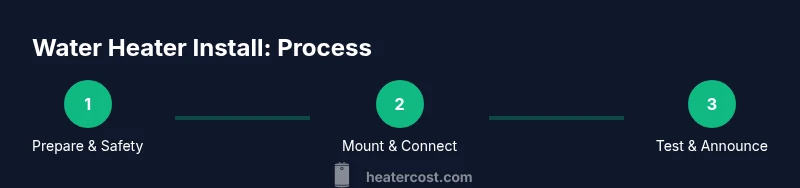
Steps
Estimated time: 2-6 hours
- 1
Prepare the site and shut off utilities
Turn off power at the circuit breaker and shut off the gas valve or water supply as applicable. Clear the area around the heater and verify there is enough working space for installation. This step ensures you won’t encounter live wiring, gas leaks, or unexpected water flow during removal or mounting.
Tip: Use a non-contact voltage tester to confirm power is off before touching any wires. - 2
Drain the existing water heater
Attach a hose to the drain valve and open the valve slowly to control water flow. Drain the tank completely into a suitable drain or yard area, then close the valve and disconnect the drain hose. This reduces the risk of overflow and makes space for removal.
Tip: Have a bucket ready for drips and protect flooring; drain water may be hot. - 3
Disconnect and remove the old unit
Carefully disconnect electrical, gas, and water lines from the old heater. Cap or isolate lines where necessary to prevent leaks or drafts during removal. Remove the mounting hardware and gently lower the old unit from its base.
Tip: Label wires and pipes to simplify reassembly and avoid mistakes. - 4
Mount the new heater and establish clearances
Position the new unit in the same location or a code-compliant new location and secure it to the wall or platform. Maintain required clearances from walls, cabinets, and combustibles as specified by the manufacturer. Install any required seismic restraints if your area calls for them.
Tip: Check the weight rating and use a stud finder to anchor to structural members. - 5
Connect cold water inlet and hot water outlets
Connect cold water supply to the inlet and hot water outlet to the distribution line using appropriate fittings. Apply Teflon tape to male threads and tighten fittings firmly without overtightening, which can damage threads. Include a dielectric union if you’re joining dissimilar metals.
Tip: Test alignment first; misaligned connections cause leaks or strain on fittings. - 6
Install drainage, venting, and safety devices
Install the drain line to a suitable location and connect any required relief valve piping per code. For gas models, route venting to the outdoors using approved components and ensure proper vent clearance. Attach any required expansion tank and safety devices as specified by the manufacturer.
Tip: Do not use flexible gas hoses unless specified; use rigid or semirigid piping per code. - 7
Connect electrical or gas supply
Electrical: connect to the dedicated circuit with appropriate gauge wire and a properly sized breaker. Gas: verify the gas shutoff and install the gas line with correct fittings and sealants. Do not bypass safety controls or rewire incorrectly.
Tip: For gas connections, schedule a pressure test and leak check after installation. - 8
Fill, light, and test
Open the cold-water supply gradually and fill the tank to the top while venting air from the system. Once filled, restore power or ignition and run hot water to purge air from the lines. Check all joints for leaks and verify temperature settings.
Tip: Keep the near-field area monitored for any signs of leaks during initial operation. - 9
Final checks and routine maintenance
Inspect for leaks after 24 hours of operation and document settings for future reference. Schedule annual maintenance, including sediment flush and a thermostat check. Ensure protective covers or panels are reattached and that accessibility remains clear.
Tip: Record model numbers and maintenance dates for warranty coverage.
Got Questions?
Do I need a permit to install a water heater?
In many areas, installing a water heater requires a permit and inspection. Local codes dictate the scope of work and whether a licensed professional is required for gas, electrical, or venting work. Always verify with your building department.
Permits are often required; check your local codes and plan inspections.
Tank vs tankless: which is better for my home?
Both have pros and cons. Tank models are simpler to install in many homes but incur standby energy loss. Tankless units save space and may reduce energy use, but installation can be more complex and require larger gas lines or electrical capacity.
Tank or tankless depends on space, usage, and utility capacity.
Can I install a water heater myself if I’m handy?
Basic disconnection and replacement tasks may be doable, but gas, venting, and electrical connections often require licensed professionals to meet safety codes. Do not skip required inspections.
DIY is risky for gas and electrical work; consult a pro.
What maintenance does a new water heater need?
Schedule an annual flush to remove sediment, check the anode rod if applicable, inspect vents, and verify thermostat settings. Routine maintenance prolongs life and keeps efficiency high.
Annual flushing and checks keep your system efficient.
How long does installation typically take?
Most standard installations take a few hours, depending on existing routing, venting, and utility capacity. Complex retrofits or gas line work can extend the timeline.
Expect a few hours, more for complex retrofits.
What tests should I perform after installation?
Test for leaks at all joints, verify proper venting, ensure hot water output reaches desired temperature, and confirm safety devices operate correctly. Document test results for records.
Leak checks, vent tests, and temp checks are essential.
Watch Video
The Essentials
- Plan before you buy to ensure correct size and type
- Follow local permits and inspections to stay compliant
- Prioritize safe connections and leak testing
- Choose professional help for gas or electrical tasks when unsure
- Maintain the system with regular flushes and checks