Install a Pool Heater: A Practical Guide for 2026
Learn how to install a pool heater safely and efficiently. This comprehensive guide covers permits, fuel options, sizing, wiring, gas lines, and maintenance for a reliable, cost-effective pool heating solution.


You’ll learn how to install a pool heater safely and efficiently. This quick guide covers permit basics, selecting electric or gas options, required clearances, electrical requirements, gas line considerations, and crucial safety checks to set up a reliable, long-lasting heating solution for your pool, including wiring diagrams, budget estimates, and maintenance tips.
Why a Pool Heater Is Worth Installing
A pool heater can expand your swimming season, keep water comfortable on cool days, and improve overall pool usability. According to Heater Cost, installing a pool heater can boost home enjoyment and property value when done properly. A well-sized heater delivers consistent warmth and can be more energy-efficient than constant pool heating strategies. In many climates, even a modest heat boost allows for longer use before midnight swims or family gatherings. When evaluating an installation, consider not only the upfront cost but also lifetime energy use, maintenance requirements, and compatibility with your existing equipment. Modern heaters come in electric and gas variants, each with different energy profiles and installation needs. The Heater Cost team emphasizes that choosing the right fuel, capacity, and controls matters more than chasing the lowest sticker price. A careful plan reduces peak energy demand and minimizes cycling, which helps extend heater life and keep operating costs reasonable. This guide will walk you through essential decisions and practical steps to ensure a safe, code-compliant install.
Key Considerations Before You Start
Before you begin, map out your goals, climate, and budget. Start by confirming pool dimensions, desired temperature rise, and whether you want year-round or seasonal heating. Fuel type matters: electric heaters typically have lower upfront cost and simpler wiring, while gas heaters can heat quickly but require venting and gas supply. Check local building codes and permit requirements early; in many jurisdictions, installation must be performed or inspected by licensed professionals. Energy efficiency, insulation, and pool cover practices influence ongoing costs and heat retention. Make sure you have adequate space for the heater, clearances for service access, and a safe outdoor location that is protected from moisture and direct weather. Budget for electrical work, gas work if required, and potential permit fees. The goal is to balance initial investment with long-term operating costs, comfort, and reliability. Heaters should be paired with a properly sized pool pump and a compatible thermostat system for best performance. Heater Cost suggests documenting all costs and expected payback before you buy.
Choosing Electric vs Gas Pool Heaters
Electric and gas pool heaters each have distinct advantages. Electric models are usually lower in upfront cost, easier to install where natural gas isn’t available, and operate with cleaner emissions. Gas heaters heat pools quickly and can outperform electricity in colder climates, but they require a gas line, venting, and regular maintenance. Efficiency varies by model, and look for energy-star rated units if available. When sizing, check the heater’s BTU rating against your pool volume and desired temperature rise; too small a unit won’t reach target temps, while too large a unit wastes energy. Control options, such as digital thermostats and remote sensors, help optimize performance and energy use. The Heater Cost team notes that selecting the right fuel type for your climate and usage patterns is more impactful than chasing marginal efficiency gains. In some homes, hybrid approaches with solar interties can offer a balance of cost and comfort.
Permits, Codes, and Safety
Permitting requirements vary widely by location, so start by contacting your city or county building department. Even if a permit isn’t strictly required, an official inspection may still be advised to ensure compliance with electrical and gas codes. Work involving gas lines or electrical connections should be performed by licensed professionals; DIY work in these areas can be dangerous and may void warranties. For gas heaters, proper venting and exhaust clearances are essential to prevent carbon monoxide buildup and fire hazards. Electrical work should follow National Electrical Code guidelines, with outdoor-rated conduit, GFCI protection where required, and weatherproof wiring enclosures. Keep a copy of manufacturer instructions and local code references handy during any permit review. The Heater Cost team recommends coordinating with an experienced installer who understands both equipment requirements and local permit processes to avoid delays and noncompliance.
Site Preparation and Sizing
Accurate sizing ensures you get reliable heating without excessive energy use. Start by measuring pool volume and determining the desired temperature rise, then select a heater whose input rating aligns with those calculations. Consider seasonal climate, pool usage patterns, and insulation levels (covers and windbreaks can dramatically reduce heat loss). Prepare a stable, level mounting location with adequate clearance for service and ventilation. Ensure drainage and electrical or gas access routes won’t be obstructed by landscaping or fencing. When possible, choose a location that minimizes heat loss to the surrounding environment and allows for easy maintenance access. The right-sized heater reduces cycling, improves efficiency, and extends equipment life. The Heater Cost team suggests working with a qualified professional to translate your pool data into a recommended BTU range and model.
Installation Overview: Wiring, Gas Lines, and Piping
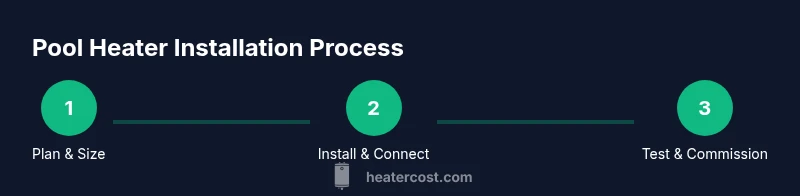
Note: This section provides a high-level overview intended for planning; actual installation must be performed by licensed trades. Electric heaters require a dedicated circuit, proper outdoor-rated wiring, and protective enclosures. Gas heaters need a safe gas supply, correct venting, leak checks, and proper shutoffs. A professional will handle mounting, connections, gas piping, and electrical bonding per local code. Expect a staged process: secure the heater, install or verify mounting hardware, route electrical or gas lines, connect control wiring, and verify proper thermostat operation. After installation, a licensed technician should perform pressure tests, leak checks, and system commissioning to ensure safe operation. The Heater Cost team emphasizes safety and code compliance above all, and recommends documenting every step for future maintenance.
Commissioning and Maintenance
Once installed, run the system through a full test cycle and verify temperatures against your target. Check for leaks around fittings, ensure venting (gas) is clear, and confirm thermostat control is accurate. Schedule annual inspections for gas lines, igniters, and heat exchanger components, and flush the system as recommended by the manufacturer. Keep water chemistry balanced to reduce corrosion and mineral buildup. Clean or replace air filters on the pool pump to improve overall performance. Record maintenance dates and any parts replaced to simplify future service. The Heater Cost team notes that proper commissioning and ongoing maintenance significantly influence efficiency, safety, and longevity; a proactive plan saves money over time.
Common Pitfalls and Troubleshooting
Avoid oversized or undersized heaters by using proper sizing calculations. Skipping permits or inspections can cause delays or warranty issues. Incorrect venting or wiring can create safety hazards. Failing to winterize or maintain the system may lead to costly repairs. If you encounter poor heating performance, first verify thermostat settings, water flow, and filter cleanliness, then contact a licensed professional for a formal assessment. A few preventive steps—like keeping the heater area free of debris and protecting electrical components from moisture—can prevent many common problems. The Heater Cost team encourages you to approach pool heating as a system, not a single device, and to rely on licensed pros for critical tasks to stay safe and code-compliant.
Tools & Materials
- Pool heater (electric or gas)(Select capacity based on pool size and climate.)
- Outdoor-rated electrical disconnect and circuit breaker(Installed within sight of the heater per code.)
- Outdoor-rated wiring conduit and conductors(Weatherproof, copper or AL; use GFCI if required.)
- Gas supply line with shutoff valve(Only for gas heater installations; must be installed by a licensed pro.)
- Ventilation/exhaust kit (gas heater)(Ensure proper venting per code.)
- Thermostat and remote sensor(Compatible with heater and pool control system.)
- Mounting hardware and weatherproof pad(Level surface with adequate clearance for service.)
- Sealants, thread tape, and pipe fittings(Choose corrosion-resistant materials; match piping type.)
- Tools: pipe cutter, wrenches, screwdriver, voltage tester(Safety gear: gloves and eye protection.)
Steps
Estimated time: 6-12 hours (planning and professional install)
- 1
Assess needs and plan fuel type
Evaluate pool size, climate, and desired heat time. Decide between electric and gas with a licensed pro if needed. This step guides the rest of the project and helps avoid costly mistakes.
Tip: Document your goals and constraints before speaking with installers. - 2
Check permits and local codes
Call the local building department to confirm permit requirements and inspection schedules. Even if permits aren’t required, plan for a professional install to satisfy code and warranty terms.
Tip: Ask for a written permit checklist and approved contractors list. - 3
Size and model selection with a pro
Have a professional translate pool volume, climate, and usage into a BTU target and recommended model. Avoid oversizing or undersizing to maximize efficiency and comfort.
Tip: Request an energy efficiency rating and compatibility with your pool equipment. - 4
Prepare the installation site
Clear a location with level ground, adequate ventilation, and room for service access. Ensure nearby electrical and gas routes won’t be obstructed by landscaping or fencing.
Tip: Consider a shade/cover to minimize heat loss when possible. - 5
Coordinate trades for electrical/gas routing
Work with licensed electricians or plumbers to plan routes, disconnects, and safeguards. Do not attempt gas piping or wiring yourself.
Tip: Get a written plan with routing diagrams and compliance notes. - 6
Mount and connect by licensed trades
Have mounting hardware installed and connections made by trained professionals. This includes gas piping (gas heater) or electrical connections and bonding per local code.
Tip: Verify warranties and ensure all connectors are weatherproof. - 7
Test, commission, and calibrate
Run the system, verify thermostat readings, pressure tests, and leak checks. Ensure proper venting if applicable and confirm safe ignition or electrical operation.
Tip: Keep a log of test results and settings for future service. - 8
Plan maintenance and seasonal care
Schedule annual inspections, flush as recommended, and keep water chemistry balanced. Regular maintenance extends life and maintains efficiency.
Tip: Set reminders for service and include filter checks with pool maintenance. - 9
Document and secure warranties
Retain manuals, installation confirmations, and warranty papers. Share documentation with future homeowners or property managers to preserve coverage.
Tip: Photograph serial numbers and keep digital copies accessible.
Got Questions?
What is the first step to install a pool heater?
Start by assessing your pool heating needs and local codes, and consult a licensed professional for guidance on fuel type and installation scope.
Begin by assessing your pool warming goals and local code requirements, then consult a licensed pro for fuel choices and installation planning.
Do I need a permit to install a pool heater?
Permit requirements vary by location. Check with your local building department to determine if a permit or inspection is required for electrical or gas work.
Permits depend on your location; check with local authorities to confirm requirements for electrical or gas work.
Can I install an electric pool heater myself?
Electrical work for pool heaters is hazardous and often regulated. It is strongly recommended to hire a licensed electrician to ensure safety and code compliance.
Electrical work on a pool heater should be performed by a licensed electrician to ensure safety and code compliance.
What maintenance does a pool heater require?
Schedule regular inspections, flush and clean as recommended, check gas lines or electrical connections, and monitor water chemistry to prevent corrosion.
Keep up with regular inspections, cleaning, and monitoring water chemistry to extend heater life.
How long does a pool heater typically last?
Lifespan varies by model, usage, and maintenance. Follow manufacturer guidance and schedule annual service to maximize longevity.
lifespan varies; with regular maintenance, many heaters last longer.
Are there safety considerations for gas pool heaters?
Yes. Proper venting, safe gas connections, and routine leak checks are essential. Work with a licensed pro to ensure all safety codes are met.
Gas heaters require proper venting and licensed installation for safety.
Watch Video
The Essentials
- Size the heater to your pool and climate.
- Obtain permits and hire licensed professionals for gas/electrical work.
- Plan for regular maintenance to maximize efficiency.
- Choose electric vs gas based on climate, costs, and usage.