Which Heater Uses More Electricity? A Practical Comparison
Explore which heater uses more electricity among electric space heaters, gas/oil furnaces, heat pumps, and hybrids. Learn how climate, insulation, and usage patterns shape energy costs in real homes.


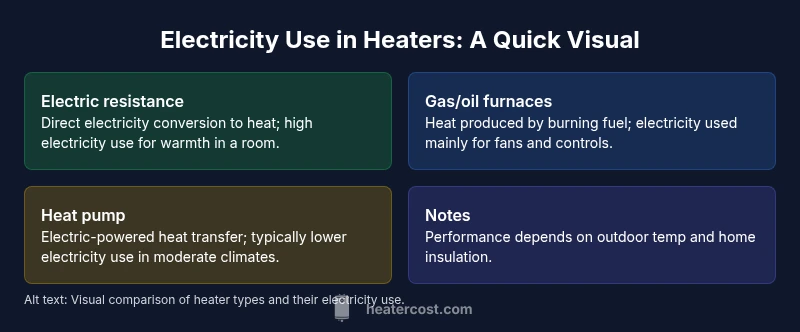
To answer which heater uses more electricity, electric space heaters usually consume more electricity than central fuel-fired systems when heating the same space. Gas or oil furnaces use electricity mainly for controls and fans, not for heat generation, so they typically rely less on electricity. Heat pumps often use the least electricity in moderate climates, with performance shaping results.
Defining 'which heater uses more electricity'
When people ask which heater uses more electricity, they are really asking about the energy input required to deliver the same level of warmth. Electricity use can describe running watts, standby power, and auxiliary devices like fans. Because heating effectiveness varies by space size, insulation, and climate, a direct apples-to-apples comparison requires a consistent heat output goal. The question isn't just about watts; it's about overall energy cost and comfort delivered per dollar.
Core energy concepts to compare heating options
Two core ideas help structure the analysis: energy input versus heat output, and system efficiency under real-world conditions. Energy input refers to how much electricity or fuel is consumed, while heat output describes how much warmth is produced. Efficiency metrics—such as Coefficient of Performance (COP) or seasonal efficiency—reflect how effectively a system converts energy into usable heat. In debates about which heater uses more electricity, it helps to distinguish whether you are evaluating running costs, upfront costs, or reliability. This section uses clear definitions and practical examples to keep the comparison grounded.
Which heater uses more electricity? A practical comparison
- Electric resistance space heaters: direct electric heat; typically the most straightforward to install and use, but they consume electricity at a high rate when running for warmth in a room or multiple rooms. They are best for spot heating and small areas.
- Gas furnaces: burn natural gas or oil to generate heat; electricity is used for controls and a blower. The heat so generated requires less electricity than electric resistance for the same warmth in most cases, especially when the home is well insulated.
- Heat pumps: move heat instead of generating it, using electricity to operate a compressor and fans. In temperate climates, they usually use less electricity to produce the same amount of warmth than resistance heaters and can dramatically lower running costs.
- Oil furnaces: burn oil, with electricity powering the blower and controls. They deliver warmth efficiently but rely less on electricity for heat production; electricity use is typically lower than electric resistance options but higher than gas in terms of fossil fuel energy cost.
Scenario-by-scenario: space size and occupancy
The environment where you want heat matters for electricity use. In a single small room, a portable electric heater can be efficient if you keep the room well insulated and closed off from drafts. For larger spaces or open-plan living areas, relying on electric heaters to heat the entire area tends to raise electricity use quickly. Centralized systems—gas, oil, or heat pumps—often deliver more even heat with less electricity per unit of warmth when used as a whole-house solution. Occupancy patterns also affect use; when people are home, thermostats and settings influence electricity consumption more than the heater type alone.
Climate influences electricity use for heating
Climate changes the equation because outdoor temperatures affect how hard a heating system must work. In milder winters, heat pumps shine because their efficiency remains solid, and electricity use stays comparatively low. In very cold climates, heat pumps may require supplemental heat or boosters, which increases electricity use. Electric resistance heaters will generally increase electricity use regardless of climate when used as main heat for a space.
Insulation and building envelope matters
Insulation, air sealing, and window performance dramatically influence how much electricity a heater must use. A well-insulated home retains heat longer, reducing the number of hours a heater runs. In such homes, the difference in electricity use between heater types may narrow, while poor insulation magnifies differences — electric resistance heaters will tend to consume far more electricity to achieve the same warmth.
Choosing the right system for your home
Start with climate and space assessment, then consider fuel availability and installation costs. If you live in a temperate climate with reliable electricity, a heat pump often delivers the best balance of warmth and electricity use. In colder climates, a hybrid approach or a fuel-based furnace may be more cost-effective overall, particularly when the cost of electricity compares unfavorably with fuel. Always factor in insulation, thermostat strategies, and equipment age.
Estimating electricity costs without a calculator
A practical approach to estimating electricity costs is to consider the approximate heat requirements of your space, the efficiency of the system, and your electricity price. Start with a simple mental model: if you have a heater that uses electricity to generate heat directly, expect higher electricity use for the same warmth than systems that rely on another energy source. Use utility bill history as a guide and look for nights or days with heavy heating needs.
Practical recommendations for homeowners
- Prioritize insulation upgrades and air sealing before changing your heating system; these actions yield the biggest reductions in electricity use over time.
- Choose heat pumps for temperate climates and good insulation to minimize electricity use and maximize comfort.
- If you rely on electric space heaters, limit their use to specific zones and complement with improved weatherization.
- When fuel is available and affordable, consider central gas or oil furnaces with modern controls to reduce electricity use while maintaining warmth.
- Plan for seasonal needs and potential climate variability, using a hybrid or multi-source approach if necessary.
Feature Comparison
| Feature | Electric resistance space heater | Gas furnace | Heat pump (air-source) | Oil furnace |
|---|---|---|---|---|
| Primary energy source | electricity | natural gas | electricity | oil |
| Heat delivery approach | direct electric heat | burns fuel to generate heat (via ducts/blower) | refrigerant-based heat transfer via compressor | burns oil to generate heat (via ducts/blower) |
| Typical upfront cost | low upfront | high upfront | high upfront | high upfront |
| Electricity use for heating warmth | high electricity use | low electricity use | low electricity use | low electricity use |
| Best climate fit | Small zones or rooms | Whole-home heating in fuel-rich areas | Temperate climates with electricity affordability | Whole-home heating in oil-friendly regions |
| Maintenance needs | low to moderate | moderate | moderate | moderate |
| Reliability during power outages | Depends on power supply | Unreliable during outage unless emergency generator | Generally reliable with power | Depends on power supply |
| Noise level | low to moderate | low | low | low to moderate |
| Environmental considerations | Electricity-based; emissions depend on grid mix | Fossil-fuel based; emissions depend on fuel | Electricity-based; emissions depend on grid mix | Fossil-fuel based; emissions depend on fuel |
The Good
- Clarifies which options rely on electricity vs fuels
- Helps plan for climate and space size
- Prompts energy-efficiency improvements (insulation, sealing)
- Supports smarter budgeting for heat-related costs
Negatives
- Doesn't capture regional fuel price volatility
- May not reflect installation constraints
- Relying on averages can be misleading
- Doesn’t provide precise cost estimates without local data
Heat pumps usually offer the lowest electricity use for the same warmth in temperate climates.
In milder climates, heat pumps deliver strong electricity efficiency. For very cold conditions, consider hybrid or fuel-based options. Insulation and usage patterns can swing the outcome more than the heater type alone.
Got Questions?
Which heater uses more electricity?
Electric space heaters typically use more electricity per hour to generate heat in a space than central fuel-based systems. They are convenient for spot heating but costly for whole-room warmth. Fuel-based systems rely less on electricity for heat generation.
Electric space heaters use more electricity for heat, especially in larger spaces. For whole-home warmth, consider other options.
Do heat pumps save electricity in all climates?
Heat pumps usually use less electricity than electric resistance heaters, especially in milder climates. In very cold conditions, their efficiency can drop and supplemental heating may raise electricity use.
Heat pumps save electricity in milder weather, but in extreme cold, you may need extra heating.
Do gas or oil furnaces use electricity?
Gas and oil furnaces rely on burning fuel to create heat; electricity is mostly used for controls and the blower. They typically use less electricity for heat output than electric resistance heaters, though fuel costs vary by region.
Gas and oil furnaces use less electricity for heat, relying more on fuel.
How does climate affect electricity use for heating?
Climate determines how hard a heater works. Mild climates favor heat pumps; very cold climates may require supplemental heating or alternative systems, which increases electricity use. Insulation also plays a crucial role in mitigating climate impact.
Climate changes how much electricity heating needs; insulation matters too.
Can insulation reduce electricity use?
Yes. Better insulation and sealing reduce heat loss, allowing any heater to run less. This effect often outweighs small differences in electricity use between heater types.
Good insulation lowers electricity needs across all heater types.
Is replacing with a heat pump worth it?
In many cases, yes — especially in temperate climates with affordable electricity and good insulation. In very cold regions, a hybrid approach or remaining fuel-based system might be more cost-effective depending on local energy prices.
A heat pump can be a good move, but consider your climate and fuel costs.
The Essentials
- Assess climate and space before choosing a system
- Electric space heaters generally use more electricity for the same warmth
- Heat pumps excel in temperate climates for lower electricity use
- Fuel-based furnaces rely less on electricity but depend on fuel costs
- Improve insulation to maximize any heating option's efficiency