What Heater Uses the Least Electricity in 2026: A Practical Comparison
Learn which heater uses the least electricity for home heating. Compare gas furnaces, heat pumps, and electric resistance options with practical tips to cut energy bills in 2026.


For electricity use, a natural gas furnace (high-efficiency AFUE) typically uses the least electricity to deliver heat, because most energy comes from gas, not the electric system. Heat pumps are more energy-efficient than electric resistance heaters, but they still rely on electricity. If you only compare electricity consumption, gas furnaces generally win in typical climates where gas is available.
What heater uses the least electricity: quick orientation
According to Heater Cost, homeowners and managers often ask which heater uses the least electricity to keep a space comfortable. The short answer depends on how you measure "least electricity"—the energy that powers the heating source itself versus the total energy consumed over a season. This article compares gas furnaces, heat pumps, electric resistance heaters, and other common options so you can choose based on electricity use, climate, and available fuel. By focusing on electricity alone, you can identify scenarios where gas or efficient heat pumps beat electric resistance in real-world operation. The Heater Cost team emphasizes that the right choice balances electricity use, upfront cost, ongoing fuel costs, and climate realities. These insights help homeowners, renters, and property managers apply smarter decisions to remodels or new builds.
Core players: gas furnaces, heat pumps, and electric heaters
The landscape of home heating commonly breaks down into three main categories for electricity use. Gas furnaces burn natural gas to generate most of the heat, with electricity mainly powering the blower and controls. Air-source heat pumps move heat using electricity but can deliver more heat per kilowatt-hour than electric resistance heaters, especially in milder weather. Electric resistance heaters convert electricity directly into heat with near-100% efficiency on a per-unit basis, but they consume a lot of electricity for the same amount of heat compared with gas- or heat-pump options. Infrared panels and radiant heaters also rely on electricity but target local areas rather than whole-home heating. Understanding these categories helps you compare not just upfront cost, but long-term electricity use, fuel costs, and climate suitability.
Gas furnaces: electricity use explained
Natural gas furnaces primarily rely on gas to generate heat; electricity is mostly used for the blower motor, furnace control circuits, and ignition systems. In typical residential setups with a high AFUE rating, the bulk of heat comes from the gas burner rather than electricity. This means that, in terms of electricity consumption, gas furnaces are often the lowest-electricity option among central heating systems, provided natural gas is readily available and affordable in your area. The blower’s energy draw is modest compared with the amount of heat produced, especially in well-insulated homes. Maintenance tasks like blower motor lubrication and duct sealing can further reduce overall energy use by improving system efficiency.
Heat pumps: why they save electricity (and when they don't)
Heat pumps are fundamentally different: they use electricity to move existing heat rather than create it. In climate zones with moderate winters, heat pumps can deliver multiple units of heat per unit of electricity (high effective COP values), which translates to lower electricity consumption for the same comfort level compared to electric resistance. In very cold climates, performance can drop, and auxiliary heating may kick in, slightly increasing electricity use. The net effect is that heat pumps often save electricity versus resistance heaters, and they can approach gas-furnace electricity use levels in mild climates, especially when paired with good insulation and smart thermostats. However, their electricity consumption is higher than gas-fired systems during peak cold snaps, so climate and building envelope play major roles.
Electric resistance heaters and infrared panels: where electricity goes
Electric resistance heaters and infrared panels convert electricity directly into heat. This one-to-one conversion means they are simple and fast, but they consume electricity for every watt of warmth produced. In large spaces or entire homes, reliance on electric resistance can lead to higher electricity bills, especially if the home lacks adequate insulation or if the heater is undersized. Infrared panels, while efficient for spot heating, still contribute significantly to overall electricity use when used as the primary heat source. These options shine in small spaces or supplemental roles where localized warmth is needed without running a central system.
Climate, insulation, and how they change electricity needs
Your climate and home enclosure dramatically influence electricity consumption for heating. In well-insulated homes, a heat pump may meet most of your heating demand with relatively low electricity use. In poorly insulated or drafty homes, gas furnaces with efficient blowers can be more electricity-friendly because heat is supplied with fuels that aren’t electricity-dependent. Conversely, electric resistance heaters require consistent electricity input, so their relative electricity use becomes more burdensome in colder climates or larger spaces. Improving insulation, sealing ducts, and leveling thermostat setpoints can reduce electricity needs across all heater types.
Central vs portable options: where to install
Central heating systems (gas or heat-pump-based) distribute warmth to the entire living space, potentially minimizing electricity use by leveraging fuel efficiency and better heat transfer. Portable electric space heaters can be convenient for quick warmth in a single room but usually consume more electricity per hour of warmth than a central system, making them less favorable if the goal is to minimize electricity use across the whole home. For renters or small spaces without gas lines, a compact heat pump mini-split or a portable infrared panel can still offer electricity savings relative to portable electric resistance heaters when sized appropriately and used with good zoning.
Practical buying guide and cost considerations
When evaluating options for the least electricity usage, assess: climate suitability, fuel availability, and system efficiency metrics such as AFUE for gas furnaces and COP for heat pumps. A high-AFUE gas furnace reduces the gas needed for heat, while a heat pump’s efficiency shines in milder winters with moderate heating loads. Always compare total cost of ownership, not just upfront price. Consider potential rebates, electricity rates, and gas prices in your area, along with maintenance costs and expected lifespan. Tie these into your long-term plans—will you stay in the home for years, or plan to sell soon? Community goals around energy usage and comfort should also factor into the decision.
Authority sources
To ground these recommendations, consult authoritative sources:
- Energy.gov — Heating and cooling guidance and efficiency tips
- EIA (Energy Information Administration) — Energy explanations and fuel-cost considerations
- EPA Energy Star — Efficiency standards and best practices for home heating
Authority sources continued
- https://www.energy.gov/energysaver/heating-and-cooling
- https://www.eia.gov/energyexplained/heating/
- https://www.energystar.gov/ by focusing on layout, materials, and efficiency measures for reductions in electricity use
Feature Comparison
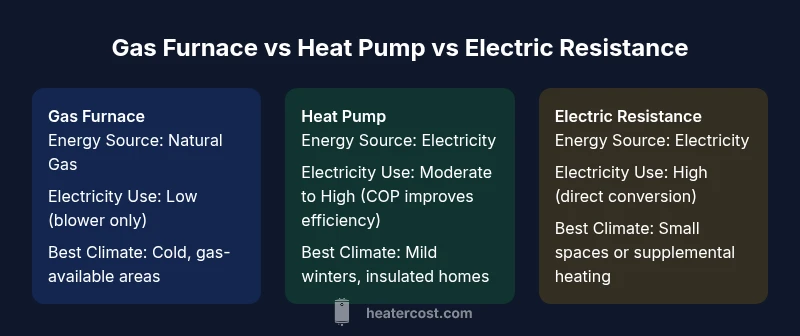
| Feature | Gas Furnace (high AFUE) | Air-Source Heat Pump | Electric Resistance Heater/Infrared Panel |
|---|---|---|---|
| Energy source | Natural gas | Electricity | Electricity |
| Electricity use (relative) | Low (gas-powered heat) | Moderate to high (efficient movement of heat) | High (direct electricity conversion) |
| Best climate | Gas available, cold winters | Milder climates with reliable electricity | Any climate, minimal space, but higher energy cost |
| Upfront cost | Medium | Medium to High | Low to Medium |
| Annual fuel/electricity cost | Moderate (gas price dependent) | Low to Moderate (electricity price dependent) | High (electricity price dependent) |
| Maintenance | Moderate (duct/filtration maintenance) | Low to Moderate (compressor, refrigerant checks) | Low (element maintenance) |
The Good
- Helps identify the lowest electricity-use option for your home
- Encourages selecting high-efficiency systems (AFUE, COP)
- Supports climate-appropriate decisions for long-term savings
- Promotes better insulation and duct sealing to reduce overall energy demand
Negatives
- Costs and availability of natural gas influence the best choice
- Climate sensitivity means there is no one-size-fits-all solution
- Electric options may seem simple but can be expensive to operate in cold climates
- Upfront costs can be higher for heat pumps in certain markets
Gas furnaces with high AFUE typically use the least electricity where gas is available; heat pumps are the best electric-savings option in mild climates.
If your goal is minimizing electricity use, prioritize a high-efficiency gas furnace where natural gas is affordable. In milder climates, a well-sized heat pump offers strong electricity savings. Always evaluate insulation, ducts, and thermostat strategies to maximize efficiency.
Got Questions?
What heater uses the least electricity?
In most homes, a high-efficiency natural gas furnace uses the least electricity for heat delivery, since most heat comes from the fuel. If gas isn’t available, an air-source heat pump is the next-best option in terms of electricity savings, followed by electric resistance heaters.
Gas furnaces usually use the least electricity, with heat pumps as the next-best option in many climates.
Do heat pumps always use less electricity than electric resistance heaters?
Generally yes, because heat pumps move heat rather than create it, yielding more heat per unit of electricity. Performance varies with climate and the system design, so evaluate COP and seasonal efficiency in your area.
Heat pumps usually save electricity, but climate can affect how much you save.
Is it cheaper to heat with gas or electricity where I live?
Costs depend on local fuel prices and efficiency. Gas can be cheaper to operate in areas with affordable natural gas, while electricity prices and solar availability can tilt the balance toward electric options.
Gas can be cheaper locally, but it's mixed with how efficient the system is.
How does insulation influence electricity use?
Good insulation and airtight ducts reduce heating demand, making electricity use lower across all heater types. Insulation upgrades often yield larger savings than choosing a different heater alone.
Insulation matters as much as the heater choice.
Can upgrading to a modern heat pump reduce electricity bills?
Yes, a modern heat pump, particularly one with a high COP and efficient auxiliary heat management, can substantially lower electricity bills compared with electric resistance heat.
A good heat pump setup can cut electricity use a lot.
The Essentials
- Prioritize gas furnaces where gas is available to minimize electricity use
- In mild climates, heat pumps can deliver the greatest electricity savings
- Electric resistance panels are simple but consume more electricity for the same heat
- Improve insulation and seal ducts to lower overall energy demand
- Size and climate compatibility drive the best choice for electricity savings