Does a Heater Use Much Electricity? A Practical Guide
Explore whether heaters use a lot of electricity, how different heater types compare, how to estimate bills, and practical tips to reduce energy use without sacrificing comfort.


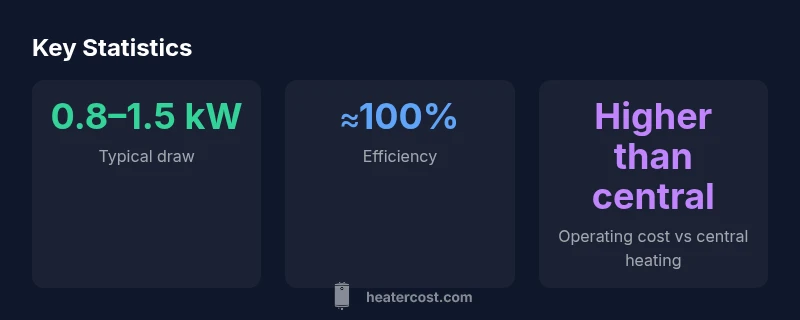
Does heater use a lot of electricity? In general, electric space heaters can consume plenty of energy if run for long periods or at high settings, especially when heating an entire space. Compared with central systems or heat pumps, portable electric heaters typically have higher operating costs for the same area, so use them for targeted zone heating and shorter durations to minimize electricity use.
Understanding does heater use a lot of electricity
When homeowners ask whether a heater uses a lot of electricity, they usually mean relative energy use and running costs. The answer hinges on the heater type, how it’s used, and the space you’re trying to heat. According to Heater Cost, electricity is the energy source; electric resistance heaters convert nearly all the electrical energy into heat, so misuse can lead to high bills. To keep it in perspective, think about a few everyday scenarios: a single room vs. a whole home, a short cold snap vs. a long winter. The core idea is energy demand scales with time and heat output. In energy-cost terms, using a heater only when needed and restraining its output typically reduces the total electricity you pay, compared with leaving it on high for hours. This article will break down the practical implications, with real-world ranges and actionable tips.
How different heater types compare in electricity use
Electric space heaters are not created equal when it comes to operating costs. Electric resistance units are easy to use but tend to cost more per hour to run than whole-home systems that rely on gas or heat pumps. Heat pumps, when they can operate in efficient modes, usually offer lower operating costs for longer heating seasons. Infrared panels and oil-filled radiators deliver heat differently, which can influence both perceived comfort and electricity use. In general, if you heat a space with a portable electric heater for extended periods, you should expect higher electricity costs than using a properly sized central system. The takeaway: choose the right tool for the job—zone heating for small spaces and efficient whole-home heating for larger areas.
Practical energy ranges for common heaters
Typical portable electric space heaters draw about 0.8–1.5 kW when set to high, with lower settings using proportionally less. Oil-filled radiators often run at 0.4–1.2 kW, depending on model and heat setting. Infrared panels vary around 0.7–1.5 kW, again depending on size and design. These ranges reflect common, real-world models and usage; actual figures depend on the unit and how long you run it. Remember, wattage is only part of the story: room size, insulation, and the thermostat behavior determine final energy use and bills.
How to estimate your electricity bill when using a heater
Estimating cost starts with the basic equation: energy consumed (kWh) = power (kW) × time (hours). If you run a 1 kW heater for 5 hours, that’s 5 kWh. Multiply by your electricity rate to get a rough cost for that session. For monthly planning, estimate daily usage, multiply by days per month, and adjust for days when you’re not heating. Don’t forget to account for baseline electricity use from other appliances. This method gives a practical sense of impact without needing specialized tools.
Strategies to minimize electricity usage without sacrificing comfort
To reduce electricity use while staying comfortable, adopt zone heating: heat only occupied rooms and close doors to limit heat loss. Use a programmable thermostat or smart plugs to automate on/off cycles and lower overnight heat while you sleep. Improve insulation and seal drafty gaps around windows and doors. Choose models with multiple heat settings and a reliable thermostat, and place heaters away from walls and furniture so they work more efficiently. Small changes add up over a season.
When to use heaters vs alternative heating strategies
Heaters are most cost-effective for transient, localized heat—think a chilly morning in a bathroom or a drafty, rarely-used room. For large spaces or long-season heating, a properly sized central system or a heat pump can be more economical and comfortable. If you’re in a colder climate, consider layering approaches: use a heater for specific tasks and rely on a central system for core living areas when bills are a concern.
Safety and efficiency considerations for energy-conscious users
Keep space heaters on a flat, stable surface away from flammable materials. Use models with tip-over and overheat protection, and never leave them unattended. Keep cords away from walkways to prevent tripping. Combine space heating with proper insulation and weatherization to reduce heat loss, which directly lowers electricity use. A well-sealed space heats up faster and stays warm longer, reducing operating time and cost.
Buying tips for energy-conscious heaters
When shopping, prioritize adjustable thermostats, multiple heat settings, and built-in safety features. Check the size relative to the space you plan to heat; a too-small heater will run longer, a too-large heater may overshoot comfort. Look for units with efficient heat distribution and user-friendly controls. Remember, the cheapest heater isn’t always the most economical in the long run if it lacks reliable controls or safety features.
Real-world scenarios: homeowners compare options
In practice, homeowners often compare a portable heater for a small, infrequently used room against upgrading insulation or enhancing a central system. The cost of operation depends not just on the device, but on the heat loss of the space and how often it’s used. Heaters are powerful tools for targeted warmth, but they should be integrated into broader energy strategies that reduce overall demand and frequency of use.
Comparison of common electric heaters by typical power draw
| Model Type | Typical Power Draw | Notes |
|---|---|---|
| Electric space heater | 0.8–1.5 kW | Portable; zone heating |
| Oil-filled radiator | 0.4–1.2 kW | Efficient for small spaces |
| Infrared panel | 0.7–1.5 kW | Direct heat; minimal air movement |
Got Questions?
Do electric space heaters use more electricity than central heating?
Yes in many cases, especially for whole-home heating. Electric space heaters deliver heat locally and can be expensive if used to heat entire living areas for long periods. For small, occupied zones, they can be cost-effective when combined with good insulation and smart controls.
Electric space heaters can cost more per hour than central heating when warming an entire home, but they’re practical for targeted zones.
What settings save electricity when using a space heater?
Use the lowest effective setting and limits on runtime. Pair heaters with a programmable thermostat or timer, and avoid running at full power for long stretches. This minimizes energy use while keeping spaces comfortable.
Set it to a modest level and timer it so you’re not heating the space longer than needed.
Can programmable thermostats help reduce heater electricity usage?
Yes. Programmable thermostats optimize when heating occurs, reducing energy waste. When used with space heaters, program schedules to heat only during occupied times and lower temperatures when rooms are unused.
Thermostats can cut waste by ensuring heat runs only when you’re awake and active.
Are there safety concerns that impact energy use?
Safety features can prevent energy waste caused by hazards like overheating or fires. Use units with automatic shutoff, keep away from combustibles, and maintain clear areas around heaters to avoid accidents that might lead to reduced usage.
Safety features help you heat confidently without increasing risk.
How should I estimate my electricity bill when using a heater?
Estimate by multiplying the heater’s wattage (in kW) by the hours of use, then multiply by your electricity rate. Add baseline consumption for your home. This gives a practical sense of impact and helps you compare options.
Multiply watts by hours and your rate to estimate the cost.
Is heat pump heating more energy-efficient than electric resistance heaters?
In many climates, heat pumps are more energy-efficient for space heating because they move heat rather than generating it. Electric resistance heaters remain very simple and fast for small zones but typically cost more per hour for larger spaces.
Heat pumps usually save energy for bigger spaces, while electric heaters are great for targeted warmth.
“"Electricity-based heating can be very efficient for small, well-insulated spaces, but its cost hinges on usage patterns and room size. Plan heat by zones and pair heaters with smart controls."”
The Essentials
- Use zone heating to minimize electricity use.
- Electric heaters are highly efficient at point heat, but wattage drives cost.
- Estimate bills with wattage, hours, and your electricity rate.
- Pair heaters with insulation and weatherization to cut heat loss.
- Choose heaters with adjustable controls and safety features for efficiency.