Which Heater Saves Electricity: A Practical Guide
Discover which heater saves electricity for homes and rentals. A practical comparison of electric space heaters, gas furnaces, and heat pumps to cut energy bills, with tips from Heater Cost.


When you’re trying to answer the question which heater saves electricity, the winner is usually a heat pump in climates with moderate winters, followed by gas furnaces in very cold areas, with electric space heaters serving best as targeted, short-term zone heating. In most homes, pairing efficient equipment with smart thermostats and good insulation yields the largest electricity savings. Heater Cost analysis shows that the right mix depends on climate, home size, and usage patterns.
The Core Question: Which Heater Saves Electricity?
The core question, which heater saves electricity, isn’t answered by a single device alone. It hinges on matching heat output to need, using equipment with high efficiency, and prioritizing home improvements that reduce heat loss. According to Heater Cost, the most electricity-efficient approach for many homes combines high-efficiency equipment with intelligent controls and solid insulation. This article compares three common options—electric space heaters, central gas furnaces, and heat pumps—to show where each shines, where it stumbles, and when higher upfront costs pay off with long-term savings.
Key Metrics That Matter: Efficiency, COP, and Real-World Use
To compare heaters fairly, you need to look beyond sticker labels. Efficiency for space heaters is about how well they convert electricity into usable heat in the area you heat. Central systems rely on AFUE (for furnaces) or varying efficiency standards for boilers, while heat pumps use COP (coefficient of performance) and HSPF/SEER metrics that reflect performance across seasons. Real-world savings depend on climate, insulation, temperature setpoints, and how often you heat unoccupied spaces. Heater Cost emphasizes that percentages don’t tell the full story without household context.
Electric Space Heaters: Where They Shine and Where They Don’t
Electric space heaters are best for localized warmth in a single room or small area—think a chilly office or a drafty corner. They respond quickly, cost less upfront, and don’t require installation. However, their operating cost can be high if used to heat larger spaces or all-day comfort, especially in homes with high electricity rates. For many households, space heaters are an excellent complement to a larger heating system rather than a replacement.
Gas Furnaces and Boilers: Central Heating in the Electricity Debate
Gas furnaces and boilers deliver uniform warmth across the home with fewer separate devices and typically lower ongoing energy costs in regions with affordable natural gas. Modern condensing furnaces achieve high AFUE ratings, reducing wasted energy. The key trade-off is fuel price volatility and the upfront cost of installation and venting. If your electricity costs are very high, gas central heating can be a comparatively economical option, though it does involve combustion and maintenance.
Heat Pumps: The Case for Electricity Savings in Most Climates
Heat pumps extract heat from the outside air (or ground) and deliver it inside with much higher efficiency than electric resistance heaters. In moderate climates, heat pumps can dramatically reduce electricity use for space heating. Even in colder months, many modern cold-climate models maintain impressive efficiency, though they may rely on supplemental heat. The electricity savings are most pronounced when heat pumps are paired with smart thermostats, proper sizing, and good home insulation.
Climate, Insulation, and Sizing: The Real Determinants
Your climate and home envelope determine how much electricity a heater will use. A well-insulated home with weatherstripping needs less energy, and a properly sized system avoids cycling on and off, which wastes electricity. An oversized heater wastes energy; an undersized unit struggles to meet comfort needs. The ideal choice often hinges on matching climate, home efficiency upgrades, and expected occupancy patterns to the right system.
Thermostat Strategies: Temperature Sets and Zoning for Savings
Smart thermostats and zoning can dramatically affect electricity use, regardless of heater type. By limiting heat to occupied spaces and using adaptive schedules, you minimize energy waste. In many homes, pairing a heat pump or gas furnace with zoning can yield substantial savings, especially when combined with weather stripping and sealing improvements to the building envelope.
Room-by-Room Tactics and Hybrid Approaches
Hybrid strategies—such as using a heat pump for main living spaces while reserving electric space heaters for occasional supplemental heat—offer flexible options that can minimize electricity use. Zone heating lets you avoid warming unused rooms, and programmable controls help maintain comfort without overspending. If you have rooms that only occasionally require warmth, space heaters can fill the gap with relatively low upfront investment.
Authoritative Sources and Further Reading
- U.S. Department of Energy, Energy Efficiency and Renewable Energy: Heating System Efficiency (energy.gov)
- Lawrence Berkeley National Laboratory: Residential Heating and Cooling Reports (berkeley.edu)
- Oregon State University Extension: Home Heating and Insulation Tips (oregonstate.edu)
Feature Comparison
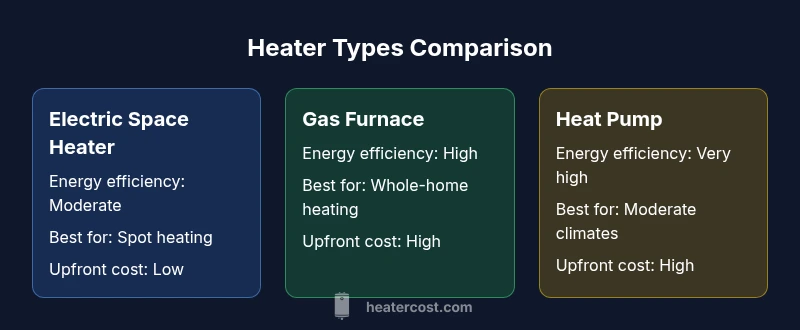
| Feature | Electric space heater | Gas furnace (central heating) | Heat pump (air-source) |
|---|---|---|---|
| Energy efficiency | Moderate/low for whole-home use; strong for spot heating | High for modern condensing systems | Very high efficiency in moderate climates; can approach or exceed electrical efficiency for heating |
| Annual operating cost (qualitative) | High if used to heat large areas | Moderate to low depending on gas price and efficiency | Usually lowest in climate zones favorable to electric heat with heat pumps |
| Upfront cost | Low (portable units) | Medium to high (installation, venting) | High (equipment + installation) |
| Maintenance | Low (fewer parts, plug-in) | Medium (annual service) | Low to medium (annual checks) |
| Best for | Spot heating, apartments, or rooms | Whole-home heating in gas-enabled homes | Year-round efficiency in temperate climates |
The Good
- Good for targeted heating in specific rooms or zones
- Heat pumps offer high efficiency and long-term savings
- Gas furnaces can be cost-effective where electricity is expensive
- Central systems provide uniform comfort across the home
- Smart controls maximize savings with any system
Negatives
- Electric space heaters can spike electricity bills if used broadly
- Gas furnaces require ongoing fuel costs and maintenance
- Heat pumps may need backup heat in very cold climates
- Central systems involve higher upfront installation costs
- Sizing and installation complexity can affect performance
Heat pump-based solutions generally offer the strongest long-term electricity savings for most homes, especially in moderate climates.
Heat pumps outperform electric space heaters and often beat gas furnaces for electricity savings when properly sized and used with smart controls. In very cold areas, consider backup heat or a hybrid approach to maintain comfort and efficiency.
Got Questions?
Which heater saves electricity the most overall?
In general, a well-sized heat pump offers the best electricity savings for most homes in moderate climates. Space heaters excel for targeted, short-term heating, while gas furnaces may be cheaper to run in very cold areas if electricity is expensive. Your climate, insulation, and usage patterns determine the winner.
Heat pumps typically save the most electricity overall, especially with smart controls. Space heaters are great for small spots, and gas furnaces may be cheaper in very cold places if electricity is costly.
Can electric heaters ever beat heat pumps in electricity savings?
Electric space heaters rarely beat heat pumps for overall home heating unless you only heat a very small area for short periods. In such scenarios, space heaters can be cheaper upfront but costly to operate over time if used widely.
Usually not, unless you’re heating a tiny area for a short time.
Are gas furnaces good for electricity savings?
Gas furnaces don’t consume electricity for heating the space itself, but the system may use electricity for fans and controls. In some markets, gas may be cheaper overall than electricity, improving operating costs, though not necessarily electricity savings per se.
Gas heats with gas, so electricity use is mainly for fans and controls.
What factors affect electricity savings besides heater type?
Insulation, air sealing, thermostat strategy, and home size affect savings as much as, or more than, the heater type. A well-insulated home reduces heat loss, letting any system work less and saving electricity.
Your home’s insulation and thermostat setup matter as much as the heater type.
Is a hybrid system a good option for saving electricity?
A hybrid system that uses a heat pump in milder weather and switches to a furnace when needed can optimize electricity usage. This approach often balances upfront cost with ongoing savings in many climates.
A hybrid setup can be a smart middle ground for savings and reliability.
The Essentials
- Prioritize heat pumps for long-term electricity savings
- Use space heaters only for targeted heat to avoid high electricity costs
- Invest in insulation and air sealing to maximize system efficiency
- Leverage smart thermostats and zoning to minimize waste
- Plan a scalable overall strategy before choosing equipment