Pool Heater Electric: Costs, Sizing, and Practical Guidance
Explore pool heater electric options, sizing guidance, installation considerations, and maintenance tips to optimize heat, safety, and energy costs for outdoor pools. Learn how to compare electric resistance vs. heat-pump models and make informed choices with Heater Cost.


Pool heater electric products fall into two main families: electric resistance heaters and heat-pump models that use electricity to heat water. The key difference is efficiency: heat pumps move ambient heat from the air into the water and are generally more efficient than electric resistance units, reducing operating costs when sized correctly. Understanding sizing, electrical requirements, and local energy prices helps homeowners compare annualized costs and determine the best option for warm-water enjoyment.
Pool heater electric: An overview
Pool heater electric options come in two broad families: electric resistance heaters and heat-pump models. They share a common goal—heat pool water using electricity—but the mechanisms and the operating costs differ. Electric resistance heaters rely on coils that transfer electrical energy directly into heat. Heat pumps, by contrast, extract heat from the surrounding air and move it into the water with the help of a refrigerant loop. Both types require a dedicated outdoor-rated enclosure, a proper electrical feed, and safe clearance from flammable materials. According to Heater Cost, the most important factors in choosing a pool heater electric are climate, pool size, desired water temperature, and available electricity rates. If you live in a mild climate with moderate pool use, a heat pump often provides the best balance of upfront cost and operating efficiency. In colder climates, you may lean toward electric resistance units for faster heat response, but only after evaluating standby heat loss, insulation, and pool cover usage. The key is to understand total cost of ownership, including purchase, installation, maintenance, and energy costs over time.
How electric pool heaters work
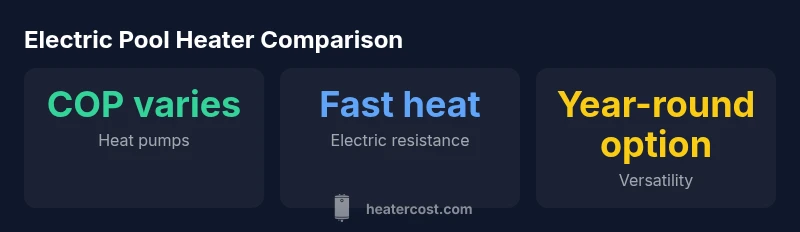
Electric resistance heaters convert electrical energy directly into heat with coil elements inside a heater. They are known for rapid heat delivery and simple operation, but the operating cost can be high in regions with expensive electricity. Heat pumps, the other major type, operate more like air conditioners in reverse: they pull heat from the air, compress it, and transfer it into the pool water. The result is a higher coefficient of performance (COP) in moderate climates, meaning more heat per unit of electricity. Both systems require proper venting in outdoor installations, corrosion-resistant components, and a control system that can hold the pool at a desired temperature reliably. Regular maintenance—checking refrigerant lines for leaks in heat pumps, and inspecting heating elements in resistance units—extends lifespan and keeps efficiency high.
Sizing and performance: Finding the right size
Sizing a pool heater electric correctly is essential to avoid underheating or wasted energy. Start with pool volume, desired temperature rise, and typical seasonal conditions in your area. A pro can translate these factors into a BTU/h or kW requirement, then compare electric resistance versus heat-pump options for your climate. In mild climates with moderate usage, a heat pump often achieves comfortable water temperatures efficiently, while electric resistance can provide faster heating if you’re heating a pool from cold to warm on weekends. Consider equipment placement, heat losses from wind exposure, and how well your pool is insulated or covered. A well-insulated pool, paired with a pool cover, can dramatically reduce heat loss at night and on cool days, making electric heating more economical over the season.
Electrical requirements and safety considerations
Outdoor pool heaters demand careful electrical planning. A dedicated circuit, appropriate overcurrent protection, and GFCI protection are typical requirements. Many jurisdictions require outdoor-rated enclosures and weatherproof cable, with proper clearance from combustibles and pool traffic. A licensed electrician should verify voltage compatibility, grounding, bonding, and bonding to the pool structure to prevent electric shock hazards. If you’re upgrading an existing panel, plan for sufficient feeder size to avoid voltage drop, especially in larger or deeper pools. Permits may be required for new installations or major upgrades, and inspections ensure compliance with local codes and safety standards.
Operating costs and efficiency tips
Operating costs for pool heater electric hinge on electricity rates, pool size, and how often you heat the water. Heat pumps typically offer the best energy efficiency in mild climates, while electric resistance heaters deliver quick heat but can be costly to operate. Reduce ongoing costs by using a pool cover when the pool is idle, installing a high-quality thermostat, and programming setpoints to avoid overheating. Properly insulating plumbing and using windbreaks or shade can also minimize heat loss. For seasonal use, consider a staggered heating plan that aligns with your swim schedule, or pair electric heating with solar preheating if feasible in your region.
Installation and maintenance basics
Installation should prioritize safety and code compliance. A professional should handle electrical connections, mounting, and refrigerant handling for heat-pump units. Regular maintenance includes cleaning filters, inspecting electrical connections, testing thermostats, and checking for refrigerant leaks in heat pumps. For electric resistance heaters, inspect heating elements and ensure protective coatings resist corrosion from pool chemistry. Replace sacrificial components like anodes and ensure the thermal expansion tank and pressure relief valves function correctly. Document maintenance cycles to track performance changes and schedule annual inspections with a licensed technician.
Alternatives to electric pool heaters
If electric options don’t fit your climate or budget, consider alternatives. Gas pool heaters heat quickly and are effective in very cold climates, but operating costs can be higher due to fuel prices. Solar pool heating uses solar collectors to preheat water and can dramatically cut energy costs in sunny regions, though efficiency depends on sunlight and climate. Hybrid systems pair a heat pump with solar or gas backup to balance reliability and cost. When evaluating alternatives, compare total cost of ownership, available space, and long-term climate trends to choose the most economical approach for your property.
Key considerations for pool heater electric
| Aspect | Description | Notes |
|---|---|---|
| Heating Method | Electric resistance vs heat pump | Choose based on climate and electricity prices |
| Sizing & Performance | Proportional to pool volume and desired temperature rise | Professional sizing recommended |
| Electrical & Permitting | Outdoor units require weatherproofing, GFCI, and permits may apply | Check local codes |
Got Questions?
What is pool heater electric?
Pool heater electric refers to heating pool water using electricity, typically via electric resistance heaters or heat pumps. These systems rely on electrical power to generate heat or move heat into the water, offering reliable warmth for swimming seasons. Choices should consider climate, pool size, usage, and energy costs.
Electric pool heating uses electricity to heat water, either by resistance elements or by moving heat from the air with a heat pump.
What’s the difference between electric resistance and heat pump pool heaters?
Electric resistance heaters convert electricity directly into heat and typically heat quickly, but can be more expensive to operate. Heat pumps transfer heat from the surrounding air into the water and are usually more efficient in moderate climates, delivering more heat per unit of electricity.
Resistance heaters heat fast but cost more to run; heat pumps are more efficient in mild conditions.
Can I install an electric pool heater myself?
Outdoor pool heaters involve high-voltage wiring and water safety considerations. Most jurisdictions require a licensed electrician and a permit for new installations or upgrades. For safety and compliance, professional installation is strongly recommended.
Electrical work for pool heaters needs a licensed professional and proper permits.
How do I estimate the right size for an electric pool heater?
Accurate sizing considers pool volume, heater type, climate, and desired temperature. A professional can translate these factors into BTU/h or kW requirements and compare electric resistance versus heat pump options for your location.
Work with a pro to size the heater correctly for your pool and climate.
What maintenance does an electric pool heater require?
Maintenance varies by type. Heat pumps need refrigerant checks and coil inspections, while electric resistance heaters require element inspections and corrosion checks. Regular cleaning, filter checks, and thermostat calibration keep performance steady.
Regular checks of coils or elements and thermostat accuracy help keep it efficient.
Are electric pool heaters safe for outdoor installation?
Yes, when installed to code with weatherproof enclosures, proper grounding, GFCI protection, and adequate clearance. Outdoor electrical connections must meet local codes and be inspected to prevent shock hazards.
Outdoor installation is safe if installed to code with proper protections.
“Electric pool heating is most economical when properly sized and used with smart energy practices.”
The Essentials
- Size the system to climate and pool volume
- Heat pumps offer better efficiency in mild climates
- Follow electrical safety rules and obtain permits
- Use a pool cover to cut heat loss and save energy