Electric Pool Heaters: Costs, Installation, and Tips
A data-driven guide to electric pool heaters, covering cost ranges, efficiency, sizing, installation, and maintenance for homeowners, renters, and property managers.


What is an electric heater swimming pool and how it works
An electric heater swimming pool is a device that uses electricity to raise the water temperature. There are two common approaches: electric resistance heaters, which generate heat directly, and electric heat pumps, which move heat from the surrounding air into the water. For many homeowners, the term electric heater swimming pool is used interchangeably with electric pool heaters. A properly sized unit will run on 240 volts (or higher, depending on the model) and must be installed by a licensed electrician in accordance with local codes. Efficiency varies by technology: heat pumps typically achieve higher seasonal efficiency than resistance heaters in moderate climates, while resistance units can provide quick temperature boosts for short periods. According to Heater Cost, the best choice depends on climate, pool size, and how many months per year you plan to swim. Pairing the heater with a tight-fitting cover and good insulation further improves heat retention and reduces operating costs.
Sizing and selecting an electric heater swimming pool
Sizing a heater properly ensures you reach your target temperature without wasting energy. Start with your pool volume in gallons, the desired temperature rise (delta T), and your local climate. Electric pool heaters come in a range of BTU/h outputs; common residential ranges span from about 50,000 to 150,000 BTU/h. In milder climates, a larger heat pump can be advantageous due to its high efficiency, while in cooler climates, a high-output electric resistance heater may be needed to maintain warmth during peak use. The decision also hinges on how often you swim, how quickly you want to heat the pool, and whether you plan to use a pool cover routinely. A professional sizing assessment will consider heat loss factors such as wind exposure, pool orientation, sun exposure, and cover quality. When shopping, compare energy efficiency ratings, installation requirements, and warranty terms. According to Heater Cost, investing in a properly sized system reduces both upfront energy waste and long-term operating costs.
Electric resistance vs heat pump: cost and efficiency considerations
Electric resistance heaters convert electricity directly into heat and generally offer lower upfront cost but higher operating expenses, especially in colder climates. Electric heat pumps, by contrast, extract heat from the air and transfer it to the water, delivering higher efficiency (often expressed as COP or EER) and lower operating costs under typical conditions. In temperate climates, heat pumps can dramatically lower annual energy bills, though they require adequate space for airflow and can be less effective during very cold periods. For an electric heater swimming pool, the choice often boils down to climate, how you use the pool, and willingness to invest upfront for ongoing savings. The Heater Cost analysis notes that in many cases a heat pump with a smart thermostat delivers a favorable balance of comfort and cost, particularly when paired with a pool cover and good insulation.
Installation basics and safety considerations
Electrical safety is non-negotiable for pool heating equipment. Installations should comply with local codes, require a licensed electrician, and typically involve a dedicated circuit, proper grounding, and GFCI protection. Many jurisdictions also require permits for pool equipment upgrades. Placement matters: avoid cramped spaces, ensure adequate clearance for service, and maintain proper ventilation for heat pumps. When choosing electrical components, select corrosion-resistant materials and compatible pool controls. Regularly verify that your wiring and disconnects remain accessible and clearly labeled. With correct installation, you minimize risk and ensure reliable operation across seasons.
Operating costs, efficiency metrics, and real-world numbers
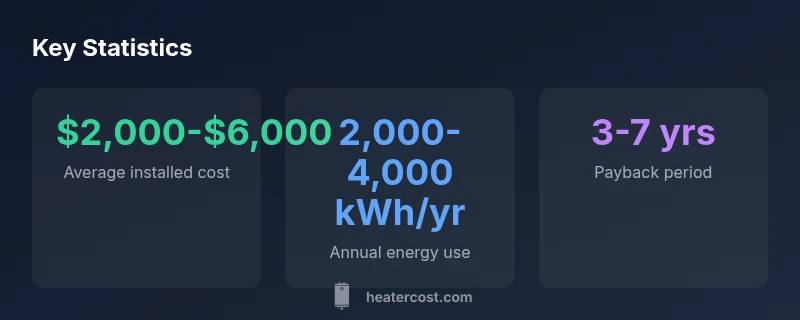
Operating costs depend on electricity rates, pool size, climate, and system efficiency. Heat pumps often deliver higher COPs in moderate climates, while electric resistance heaters run continuously to meet temperature targets, which can push energy bills higher. Real-world numbers vary, but a common range for annual energy costs highlights the potential savings of an efficient heat pump option over a standard resistance heater. To put this in perspective, the Heater Cost analysis shows that even with higher upfront costs, improved efficiency and smart scheduling can shorten payback periods and reduce total ownership costs over the heater’s lifespan. Pairing any electric heating system with a pool cover reduces heat loss dramatically and lowers energy use.
Maintenance, longevity, and care tips
Regular maintenance preserves efficiency and safety. Inspect electrical connections for signs of corrosion, clean the exterior housing, and verify thermostat calibration annually. Routinely check the heat exchanger for scale buildup, especially in areas with hard water, and flush the system as recommended by the manufacturer. Keep the pool cover in good condition to minimize heat loss when the pool is not in use. Schedule periodic professional inspections to audit electrical integrity, refrigerant flow (if applicable), and controller programming. Proper maintenance can extend the life of your electric heater and maintain efficiency over time.
Practical savings strategies for electric pool heating
Small changes add up. Use a high-quality pool cover to cut heat loss by a significant margin, align heating times with off-peak electricity rates when possible, and install a programmable timer to avoid heating outside of swim hours. For homes in sunny climates, a heat pump with a solar boost or a hybrid system can improve performance without dramatically increasing energy consumption. Insulation around pipes and equipment reduces heat leakage, and selecting a unit sized for your pool rather than oversized can lower both upfront and operating costs. These practical steps, combined with seasonal maintenance, deliver measurable ROI over the life of the system.
Common myths and misconceptions about electric pool heating
Myth: Electric pool heaters heat instantly. Reality: Heat-up time depends on pool volume, temperature delta, and heater type. Small pools heat faster, while large ones take longer. Myth: Heat pumps don’t work in cold weather. Reality: They work efficiently in milder seasons and can be paired with resistance heat for cold snaps. Myth: A bigger heater is always better. Reality: Oversizing raises upfront costs and can waste energy. Truth: Proper sizing, controls, and insulation deliver the best balance of comfort and cost.
Quick-start checklist for homeowners considering an electric pool heater
- Confirm pool size and desired swim season, then compare heat pump vs resistance options.
- Get a professional sizing assessment to determine BTU/h requirements and optimal placement.
- Check local codes, permits, and electrical requirements; hire a licensed electrician.
- Review energy efficiency ratings, warranties, and service availability in your area.
- Plan for a pool cover and insulation upgrades to maximize savings and reduce heat loss.