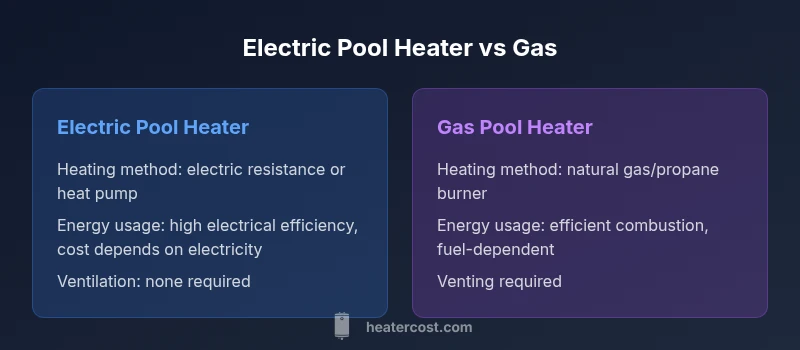
Electric Pool Heater vs Gas: A Practical Comparison for Homes
Compare electric pool heaters and gas pool heaters to understand cost, efficiency, installation, and maintenance. Heater Cost analyzes climate, pool size, and usage to guide homeowners, renters, and property managers.


When choosing between the electric pool heater vs gas, most homeowners in temperate climates find electric resistance or heat-pump options more economical over time, thanks to higher efficiency and lower fuel costs. Gas pool heaters heat pools quickly and perform well in cold weather or with large, frequently used pools, but fuel prices and emissions can raise ongoing costs. Your climate, pool size, and how often you swim drive the best choice.
Overview of Electric Pool Heaters and Gas Heaters
When homeowners start planning pool heating, a fundamental question arises: electric pool heater vs gas. This guide, informed by Heater Cost Analysis, 2026, compares the two mainstream options head-to-head. Electric pool heaters generally refer to electric resistance heaters and, in many markets, electric heat pumps, which convert electricity into heat with high efficiency. Gas pool heaters burn natural gas or propane and deliver heat quickly, making them attractive for large pools or rapid warm-ups. The decision hinges on climate, pool usage, fuel costs, and installation constraints. Throughout this article we’ll break down how each system works, what to expect in performance and cost, and which scenario each option best serves. Expect practical, no-nonsense guidance that homeowners, renters, and property managers can act on right away. We’ll also provide a structured checklist to help you choose the right heater for your property.
How Electric Pool Heaters Work
Electric pool heaters convert electrical energy into heat through resistance elements or operate as heat pumps that extract ambient heat from the air and transfer it to the pool water. Electric resistance heaters are direct and reliable but can be costly to run if electricity prices are high. Heat pumps, while still electric, are significantly more energy-efficient because they move heat rather than generate it, often making the electric pool heater vs gas decision less clear-cut in all climates. The Heater Cost team emphasizes that installation usually requires upgrading electrical service and a dedicated circuit. In many homes, this is a one-time cost that declines over the life of the equipment. When evaluating electric pool heater vs gas, consider your property’s electrical capacity, local energy prices, and how often you swim during shoulder seasons.
How Gas Pool Heaters Work
Gas pool heaters burn natural gas or propane to heat water quickly. They have a burner, heat exchanger, and venting system. Gas heaters heat water rapidly, which is helpful after long periods of cooling or for large pools. They require venting and dedicated gas supply, and can operate even when ambient temperatures are low. The heater's efficiency depends on model and temperature control; their operational emissions and fuel costs can be higher depending on gas prices. People in colder climates with high pool usage may prefer gas for performance despite fuel cost variability. The Heater Cost team notes that proper sizing and professional installation are essential to achieve efficiency gains and avoid oversized equipment.
Performance and Heating Speed
When comparing the two, gas pool heaters heat water significantly faster than most electric options. If you need a rapid warm-up for weekend swims or after a cold snap, gas is typically the better choice. Electric pool heaters, including heat pumps, tend to heat more gradually but excel in steady, long-running operation with higher energy efficiency relative to running costs in many markets. The practical upshot of the electric pool heater vs gas is a balance between speed and ongoing energy consumption. For homeowners who swim year-round in temperate zones, an electric heat pump can deliver reliable comfort with lower operating costs over time.
Efficiency and Operating Costs
Efficiency is a central factor in the electric pool heater vs gas decision. Electric resistance heaters convert nearly all electrical energy into heat (high theoretical efficiency), but electricity prices and seasonal use patterns influence true operating costs. Gas heaters deliver quick heating but depend on volatile fuel prices. In many markets, electric options offer lower running costs during shoulder seasons or mild winters, while gas can be cheaper in cold weather if fuel prices are stable. Heater Cost analyses in 2026 emphasize evaluating local energy rates and pool usage to forecast annual energy bills rather than relying on sticker prices alone.
Installation, Permits, and Maintenance
Installation considerations differ markedly between electric pool heaters and gas pool heaters. Electric heaters require adequate electrical service, a dedicated circuit, and, in some cases, electrical panel upgrades. Gas heaters require venting, a gas supply line, and compliance with local building codes. Maintenance for electric systems is typically lower, focusing on electrical connections and periodic component checks. Gas systems demand burner servicing, vent cleaning, and gas line inspections. In both cases, professional installation is strongly recommended to optimize efficiency and safety. Budget additional time for permits and inspections when performing the electric pool heater vs gas decision.
Climate, Pool Size, and Seasonal Use
Climate and pool usage heavily influence the choice between electric pool heater vs gas. In milder climates with moderate pool use, electric heat pumps can provide comfortable water temperatures with a favorable running cost profile. For very cold winters or large pools with frequent use, gas heaters can deliver the heat quickly when needed. Smaller pools or spas with rare use may benefit from a compact electric unit, while larger, outdoor pools in cold seasons may justify gas heating for aggressive warming and short recovery times.
Environmental Impact and Emissions
Environmental considerations play a role in the electric pool heater vs gas debate. Electric heaters produce no on-site combustion emissions, but the overall emissions depend on how the electricity is generated. Gas heaters burn fossil fuels and release combustion byproducts, contributing to local air emissions. If your grid relies heavily on clean power, electric heating can be a lower-emission option; if your region relies on fossil fuels, emissions advantages may be smaller. The Heater Cost team recommends evaluating the broader energy mix and local infrastructure when weighing environmental impact.
Practical Buying Scenarios: Mild Climate vs Cold Climate
For a mild climate with moderate pool use, you may favor an electric pool heater or heat pump for long-term savings and quiet operation. In cold climates with high use or when you need rapid heating after chilly days, a gas pool heater provides superior performance. For many properties, a hybrid approach—electric heating with occasional gas back-up—offers a balanced solution. The decision should factor in initial costs, energy prices, climate data, and pool maintenance plans.
Price Ranges and Total Cost of Ownership
Purchase and installation costs vary widely by region, efficiency class, and system size. Electric pool heaters and heat pumps often have higher upfront electrical work, but lower fuel requirements over time. Gas pool heaters may have lower upfront electrical costs but higher ongoing fuel costs and maintenance needs. Expect price ranges that reflect typical market bubbles rather than exact quotes. Heater Cost recommends collecting multiple quotes, sizing correctly, and forecasting total cost of ownership based on climate, pool size, and expected usage.
Best Practices and Step-by-Step Checklist
- Define target pool temperature and typical seasonal use. 2) Assess climate and electricity versus gas fuel costs in your area. 3) Size the heater for your pool volume and desired recovery time. 4) Check electrical capacity and permit requirements. 5) Compare installed cost versus long-term energy costs. 6) Plan for maintenance schedules and potential backup heating if you live in a cold climate. 7) Consult licensed professionals to confirm whether the electric pool heater vs gas choice aligns with local codes.
Authority Sources
- Energy.gov: U.S. Department of Energy – general guidance on pool heating efficiency and electric heat pumps.
- EPA.gov: Environmental considerations and emissions information related to residential heating appliances.
- NREL.gov: National Renewable Energy Laboratory resources on energy efficiency and heat-pump technology for pools.
Authority Sources (continued)
- https://www.energy.gov/
- https://www.epa.gov/
- https://www.nrel.gov/
Comparison
| Feature | Electric pool heater | Gas pool heater |
|---|---|---|
| Heating speed | Electric pool heater heats gradually (slower recovery), best for steady use | Gas pool heater heats water rapidly, great for quick warm-ups |
| Energy efficiency | High efficiency with heat pumps; electric resistance is efficient per unit electricity | High efficient combustion with gas, but overall cost depends on fuel prices |
| Operating costs | Lower long-term operating costs in regions with cheap electricity and steady use | Fuel costs vary with gas prices; may be higher during peak seasons |
| Installation requirements | Requires electrical service and circuit; venting not needed | Requires gas line and venting; must meet local gas codes |
| Maintenance | Lower ongoing maintenance; fewer moving parts in most electric units | Regular burner maintenance and vent checks; gas lines require inspection |
| Emissions | On-site emissions depend on electricity source; can be lower with clean grid | Burns fossil fuels; higher direct emissions |
| Best for | Mild climates with consistent pool use; energy-conscious homes | Cold climates or high-demand periods; rapid heating needs |
The Good
- Lower long-term operating costs in mild climates with clean electricity
- No combustion emissions on-site for electric heaters in clean-grid regions
- Simple installation for some electric systems with no venting
- Gas heaters offer rapid heating and strong performance in cold weather
Negatives
- Higher upfront electrical work for electric heaters and potential panel upgrades
- Gas installations require venting, gas lines, and safety considerations
- Fuel price volatility can affect long-term operating costs
- Gas heaters emit combustion byproducts and have a larger environmental footprint in many regions
Electric pool heater vs gas: Choose electric when climate is mild and electricity is affordable; choose gas for fast heating in cold weather
In temperate climates with steady pool use, electric heaters typically save money over time. In colder climates or for peak-season bursts, gas heaters provide quicker warmth, albeit with variable fuel costs. The Heater Cost team recommends weighing climate, usage, and local energy prices to decide.
Got Questions?
What is the main difference between electric pool heaters and gas pool heaters?
Electric heaters convert electricity to heat, often with high efficiency and lower on-site emissions depending on the grid. Gas heaters burn fuel for rapid heating but produce combustion byproducts and have variable fuel costs. The best choice depends on climate, usage, and fuel prices.
Electric heaters are efficient but heat more slowly; gas heats quickly but costs depend on fuel prices.
Which is cheaper to operate over a season?
Operating costs depend on local energy prices and usage. Electric heating tends to be cheaper in mild climates with affordable electricity; gas can be more economical in very cold climates if gas prices are stable and usage is high.
Costs vary by electricity and gas prices in your area.
Do I need permits to install either system?
Yes. Electrical work for electric heaters typically requires permits, and gas installations require permits for gas lines and venting. Check with your local building department to ensure compliance.
Permits are usually required for safety and code compliance.
Can I upgrade from electric to gas or vice versa?
A fuel-switch usually involves a significant retrofit, including new venting or gas lines and electrical changes. It can be costly and may not be practical in all homes.
A fuel switch is a major project; consult a licensed pro.
Are there hybrid options like heat pumps for pools?
Yes. Heat pumps are common, and some systems combine electric heating with gas back-up for very cold periods. This can offer a balance of efficiency and reliability.
Heat pumps are efficient with gas backup if needed.
What installation considerations should I plan for?
Plan for space, access to electrical service or gas lines, ventilation for gas units, and proximity to the pool. Correct sizing ensures efficient heating and avoids oversizing crashes.
Plan space, venting, and electrical or gas needs before buying.
The Essentials
- Assess climate before choosing between electric or gas
- Consider both upfront installation costs and ongoing energy costs
- Gas heats faster but may incur higher fuel expenses
- Electric options excel in efficiency when powered by a clean grid
- Consult a licensed pro for proper sizing and permits