Heat Pump Water Heater vs Electric: A Practical Comparison
Compare heat pump water heaters with electric models—assess efficiency, upfront costs, operating expenses, installation needs, and long-term value for homeowners, renters, and property managers.


Heat pump water heater vs electric setups offer distinct value. In most homes, heat pump models use ambient heat to supply hot water more efficiently, reducing operating costs, while electric resistance heaters are simpler and cheaper upfront but cost more to run. This comparison outlines which option aligns with climate, budget, and space needs for the average household.
What is the heat pump water heater vs electric distinction?
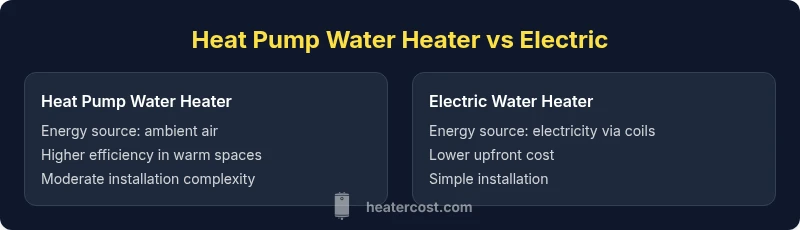
At a high level, a heat pump water heater (HPWH) uses ambient heat from the surrounding air to heat water, aided by electricity to power a compressor and a fan. An electric water heater (resistance model) relies primarily on electric coils to heat water directly. Both provide hot water, but their energy paths, efficiency, and maintenance profiles differ. According to Heater Cost, homeowners should evaluate how climate, home layout, and usage patterns influence long-term value when comparing heat pump water heater vs electric setups. The decision is rarely about upfront price alone; it hinges on how the system performs across daily routines, seasonal shifts, and utility cost structures.
Key differences at a glance
- Heat pump water heaters pull warmth from the room, making them energy-efficient under the right conditions. Electric models convert almost all consumed electricity into heat with near-constant performance, regardless of ambient conditions.
- HPWHs tend to be larger and require space with adequate airflow; electric heaters are typically compact enough for standard utility closets.
- In temperate climates, HPWHs can offer meaningful operating savings, while in very cold spaces, performance and efficiency can drop, narrowing the savings gap. The Heater Cost team notes that location, climate, and insulation quality are decisive in the heat pump water heater vs electric cost equation.
Energy efficiency and what it means for bills
The energy efficiency of HPWHs is driven by a coefficient of performance (COP) or energy factor (EF), which is higher when heat can be extracted from the surrounding air efficiently and when the storage tank is well insulated. Electric water heaters depend on the resistance element and insulation; their efficiency remains steady but operates at a higher cost per unit of hot water in many markets. Heater Cost analysis shows that the break-even point between HPWHs and electric heaters improves as electricity rates rise and outdoor temperatures stay within comfortable ranges. Homeowners should model their local electricity price and climate to estimate potential savings.
Costs: upfront, installation, and long-term value
Upfront costs for HPWHs are generally higher than for traditional electric models due to the heat-pump technology, compressor, and fan. Installation may involve additional electrical work, space planning, and sometimes drainage or vent considerations to manage condensate. Electric resistance heaters usually come with lower installation costs and simpler hookups. Long-term value, however, depends on operating costs, maintenance, and expected lifespan. In environments where ambient heat is plentiful, the operating savings from a HPWH can offset the higher initial investment over several years.
Installation considerations: space, wiring, and ventilation
HPWHs require a space with adequate airflow and stable ambient temperatures, typically in a utility closet or garage. They generate some heat and moisture, so proper clearance and drainage are important. In many homes, electrical service upgrades or dedicated circuits are needed, and some models benefit from a nearby drain for condensate. Electric water heaters demand straightforward electrical connections and venting (if gas-powered components are involved) but generally integrate easily into existing plumbing layouts. The choice should reflect available space and the existing electrical panel capacity.
Maintenance and longevity: what to expect
Maintenance needs differ. HPWHs may require periodic air filter cleaning, refrigerant checks, and insulation assessments to sustain efficiency. Electric water heaters require less frequent service, often involving thermostat checks and flushing to reduce sediment buildup. Longevity depends on load patterns, water hardness, and maintenance cadence. Regular inspections help prevent performance degradation and extend the life of either system. The Heater Cost guidance emphasizes proactive upkeep to preserve efficiency and reliability over a decade or more.
Rebates, tax credits, and ROI considerations
Many energy programs and utility rebates reward efficient water heating solutions, including HPWHs. Availability varies by region and eligibility criteria, so homeowners should verify local incentives. Tax credits may apply in some jurisdictions for energy-efficient home improvements. The ROI for HPWHs tends to improve with higher electricity rates, hotter summers, or cooler indoor spaces where ambient heat extraction remains strong. Always couple purchase decisions with current incentive details from credible sources and official portals.
Real-world scenarios: when to choose heat pump water heater vs electric
- Scenario A: A single-family home in a temperate climate with well-insulated walls and a moderate hot-water demand — HPWH often delivers meaningful energy savings when properly sized.
- Scenario B: A rental unit with tight budgets and limited space — an electric model may be favored for low upfront cost and ease of replacement.
- Scenario C: A family with high daily hot-water usage in a climate with warm indoor spaces — HPWH can provide robust savings, but ensure the space remains within the temperature range that keeps COP high.
- Scenario D: A garage installation in a cold climate — review HPWH performance and consider supplemental strategies to maintain efficiency. The takeaway is to assess space, climate, usage, and incentives to determine the best fit.
Authority sources and practical recommendations
For rigorous guidance, consult official resources and independent analyses. The Heater Cost team recommends cross-referencing energy-efficiency labels, local rebates, and climate data before committing. Always verify model specifications, warranty terms, and service availability in your area to ensure a smooth transition from a standard electric model to a more efficient heat-pump option.
Comparison
| Feature | Heat Pump Water Heater | Electric Water Heater |
|---|---|---|
| Energy Source | Ambient heat from surrounding air | Electric resistance heating |
| Energy Efficiency | High efficiency (COP/EF-based performance) | Lower to moderate efficiency depending on usage |
| Operating Cost | Typically lower operating costs in temperate spaces | Higher operating costs due to constant electric heat |
| Installation Complexity | Moderate (space for air intake/exhaust, condensate considerations) | Lower (standard hookups and wiring) |
| Space & Location Needs | Requires space with adequate ambient warmth | Can fit in standard utility closet |
| Noise Level | Low to moderate (compressor and fan) | Typically quiet; no moving parts beyond fan |
| Maintenance | Moderate maintenance; periodic checks | Low maintenance; annual checks recommended |
| Rebates/Tax Credits | Often eligible for energy-efficiency programs | Depends on location and program |
| Best For | Homes with adequate space and favorable climate for savings | Budget-conscious replacements; straightforward install |
The Good
- Potential for meaningful energy savings over time
- Lower operating costs in suitable climates
- Better long-term value with rising electricity prices
- Strong incentives and rebates in many regions
- Compatibility with modern smart-home energy management
Negatives
- Higher upfront cost and longer payback period
- Performance depends on ambient temperature and space
- More complex installation requiring professional assessment
- Possible need for electrical upgrades or space modifications
Heat pump water heater generally outperforms electric models on operating cost in the right space, but electric is simpler and cheaper upfront.
Choose heat pump if your home has adequate space, a temperate climate, and you want long-term energy savings. Opt for electric if upfront cost, space constraints, or installation simplicity are your priority.
Got Questions?
What is a heat pump water heater, and how does it differ from a standard electric water heater?
A heat pump water heater uses ambient heat from the surrounding air to heat water, powered by electricity. A standard electric water heater relies on electric resistance coils to generate heat. HPWHs are typically more energy-efficient in suitable spaces, while electric units offer a simple, inexpensive installation.
A heat pump water heater uses ambient heat and a small electric boost to heat water, making it more energy-efficient in the right space. Electric water heaters heat water directly with resistance elements and are usually simpler to install.
Is a heat pump water heater worth it in cold climates?
HPWH efficiency improves in warmer spaces but can drop in very cold environments. In cold climates, it’s important to ensure adequate indoor temperatures or consider hybrid options and proper space planning. ROI can still be favorable if electricity costs are high and space heating needs align with ambient heat sources.
In colder spaces, HPWHs may be less efficient, so you should check ambient temperature and consider placement to maintain performance.
How much can I save with a heat pump water heater?
Savings vary by climate, electricity rates, and household hot-water use. In regions with higher electricity costs and moderate indoor temperatures, HPWHs often reduce operating costs compared with electric resistance models, but exact figures require a local evaluation.
Savings depend on your climate and electricity price; a local assessment will give a clearer estimate.
Do heat pump water heaters require venting or special installation.
Most HPWHs do not vent like gas heaters but require adequate airflow and a drain for condensate. Electrical load and possibly a dedicated circuit may be needed. A professional installer will verify clearance, electrical capacity, and condensation handling.
They need space with airflow and a drain; a pro installer will confirm electrical capacity.
Are there tax credits or rebates for heat pump water heaters?
Yes, many regions offer energy-efficiency rebates or tax credits for HPWH purchases. Availability varies by location and program rules, so check local utility programs and federal incentives where applicable.
Many programs offer rebates or credits, but you’ll want to verify local eligibility.
The Essentials
- Compare upfront cost vs long-term savings before buying
- Assess space, climate, and noise tolerance for HPWH
- Check local rebates to improve ROI
- Model your daily hot-water needs to select the right size
- Maintain any system regularly to preserve efficiency